
Posts

“We’re Failing to Provide Global Solutions”

Once again, Prof. Radermacher delivers a sharp critique of Germany’s current climate policy in an interview with the magazine Entsorga. “I would even go so far as to say that our national measures are, in some cases, harming the global cause,” he emphasizes. He argues that the problem lies in policy directing funds toward the wrong priorities. Although we have long needed to think and act globally, Germany’s perspective remains focused on national issues that ultimately achieve little.

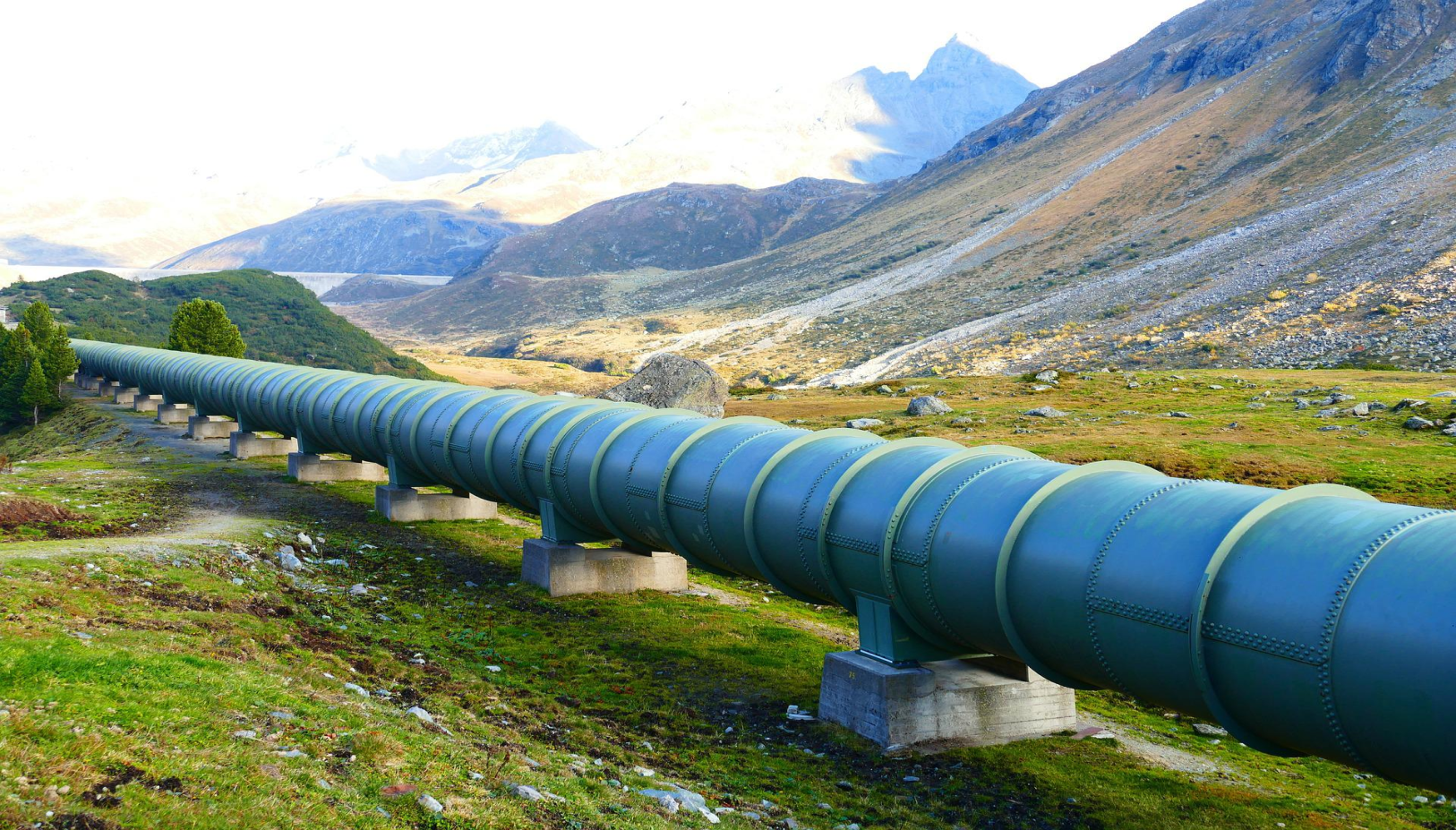
As an example, Professor Radermacher points to the coal phase-out. While Germany plans to shut down coal power plants with a total capacity of 40 gigawatts at a cost of 40 billion euros, China builds new plants with the same 40-gigawatt capacity every year. According to Radermacher, the real solution is capturing CO₂ directly at the power plant and reusing it to produce synthetic fuels.

The full Entsorga interview explores Prof. Radermacher’s views on China’s climate policy, whether nuclear energy is a viable solution in his eyes, and why Germany does not import green electricity

Source: Entsorga – The Trade Magazine for Circular Economy: Achieving Germany’s Climate Goals: Still on Track? (Published in March 2022)

Image source: Iván Tamás (Pixabay)
Fossil or Renewable Energy? Interview with Prof. Radermacher

Is phasing out fossil fuels sensible? Is it necessary for humanity to give up prosperity in the name of climate protection? In an interview with Stephan Strzyzowski, editor-in-chief of die Wirtschaft, Prof. Dr. Dr. Dr. h.c. Radermacher answers with a clear “No.”

The war in Ukraine has made Russian gas a controversial topic, but even before that, climate activists were calling for Germany to phase out coal, gas, and oil. According to Prof. Radermacher, however, moving away from fossil fuels would have serious political consequences, be extremely costly, and ultimately have little impact on the global climate. Instead, CO₂ should be captured and reintroduced into a circular system – a concept already being implemented in the U.S. and Norway. That said, Prof. Radermacher does see value in expanding renewable energy “toward doubling the current level.”

Other topics discussed in the interview include the beneficiaries of the fossil fuel phase-out, the tension between nature conservation and building wind turbines, and the broader effects of climate policy in Europe.

The full interview can be found here.

Image source: LoggaWiggler (Pixabay)

“Shaping the Future”: Prof. Radermacher at the University of Bolzano

“How sustainable is our economic growth model?” was the title of the conference at the University of Bolzano, where Prof. Franz Josef Radermacher was invited as a guest speaker. On the occasion of his visit, he was interviewed by Zett – Die Zeitung am Sonntag on addressing the climate crisis.

When asked whether the COVID-19 pandemic could be seen as a “booster” for the climate agenda, the professor stated that he does not believe we have learned anything from the pandemic regarding globalization and cooperation. Instead of collaborating globally, everyone focuses on themselves and tries to solve crises on a small scale, whether it’s the COVID-19 pandemic or climate change. This, he notes, is not effective, as “what would really help is engagement in Africa or India.”

Electromobility, he adds, is not a solution to the problem on a global scale, as it is simply too expensive for poorer countries. Instead, Prof. Radermacher highlights climate-neutral synthetic fuels and energy carriers as viable solutions. He emphasizes: “I am personally convinced that with the right innovations, we can solve today’s problems once again.”

The full interview can be found here.

Source: Zett – Die Zeitung am Sonntag

Image source: Bonnie Taylor (Pixabay)

Technology as a Key to Sustainability

“How sustainable is digitalization? What contribution can modern technologies make to environmental protection?” These and other thought-provoking questions, published in IT-Business, were addressed by Prof. Dr. Dr. Dr. h.c. Radermacher during the FIT Congress 2021.

The focus lies on the intersection of technology and sustainability. According to Prof. Radermacher, digitalization has so far mainly had negative effects on the environment because it has accelerated globalization. However, it could also help encourage people to adopt more sustainable behaviors.

Technologies, he emphasizes, could be key to creating a climate-neutral energy system—something humanity urgently needs in order to reconcile environmental and climate protection with prosperity. Changes in human behavior, he notes, tend to follow the introduction of new technical solutions rather than precede them.

The complete interview is available here.

Bildquelle: Tomasz Jagla (Pixabay)

New Podcast with Prof. Radermacher: Global Energy Solutions for the Climate

In a new episode of Think & Do – the podcast magazine of the Stifterverband – Prof. Franz Josef Radermacher shares his insights on several fundamental issues, including basic rights and the pandemic, climate protection and power, and affordable energy prosperity.

Over the past two years, the pandemic has dominated public discourse. According to Prof. Radermacher, there have been both winners and losers of the crisis, depending largely on an individual’s stage of life and financial situation. “What I missed most throughout the process was freedom,” he summarizes his criticism. He also reflects on the role of science during the pandemic and how public communication was influenced by what people wanted to hear.

Another major topic discussed is the German federal election on September 26, 2021, in which climate protection has played an unprecedented role. Yet, Prof. Radermacher takes a critical view: to truly understand sustainability and climate issues, one must look back to the 1972 World Environmental Conference in Stockholm. That was when an unresolvable tension between wealthy and developing nations first became evident – raising the key question: “Is there a way for people in poorer countries to achieve a decent level of prosperity while we still preserve biodiversity, protect the environment, and maintain a stable climate?”

Later in the podcast, Prof. Radermacher examines Germany’s climate and energy policy, emphasizing the need for international cooperation rather than insisting on producing domestically what could be achieved more efficiently and affordably abroad.

The podcast is divided into 13 thematic segments, which can be listened to individually or as a complete episode. You can access the full podcast and transcript here.

Image source: Free-Photos (Pixabay)

Prof. Radermacher in the Cyber Podcast

Artificial intelligence has now found its way into many areas of our lives. In the Cyber Podcast by the agencies Storymaker and DESIGN HOCH DREI, the topic is examined and discussed in greater depth in the context of communication and ethics.

The latest episode features an interview with Prof. Dr. Dr. Dr. h.c. Franz Josef Radermacher on the topics of “Emotions and trust in communication, and the differences between humans and machines.”

You can listen to the podcast here:

Image source: geralt (Pixabay)

Kompass (Joshua Woroniecki (Pixabay))

Prof. Radermacher and Prof. Herlyn in the “Future of Leadership” Podcast

In three episodes of the Future of Leadership Initiative podcast, Prof. Dr. Dr. Dr. h.c. Franz Josef Radermacher and Prof. Dr. Estelle Herlyn discuss the impact of COVID-19 on society and politics, the measures taken by the German federal government, the role of big data in democratic societies, the effects of climate change on organizations and society, the question of responsible business practices, and the Development and Climate Alliance of the Federal Ministry for Economic Cooperation and Development

You can listen to the podcasts here:

Image source: Joshua Woroniecki (Pixabay)

Prof. Radermacher Becomes a Member of Vodafone Germany’s New Sustainability Advisory Board

Under the motto “Shaping a Sustainable Future with Visionaries” Vodafone Germany aims to further develop and implement its sustainability strategy. To this end, management has decided to establish a Sustainability Advisory Board, bringing together individuals from civil society, academia, and business who possess recognized expertise in climate and environmental protection as well as sustainable business practices.

Prof. Radermacher is also a member of this advisory board, which will convene for the first time on September 16, 2020.

Further information can be found here.

Image source: pixabay/hpgruesen

Globalization Expert Receives the Abt Jerusalem Prize

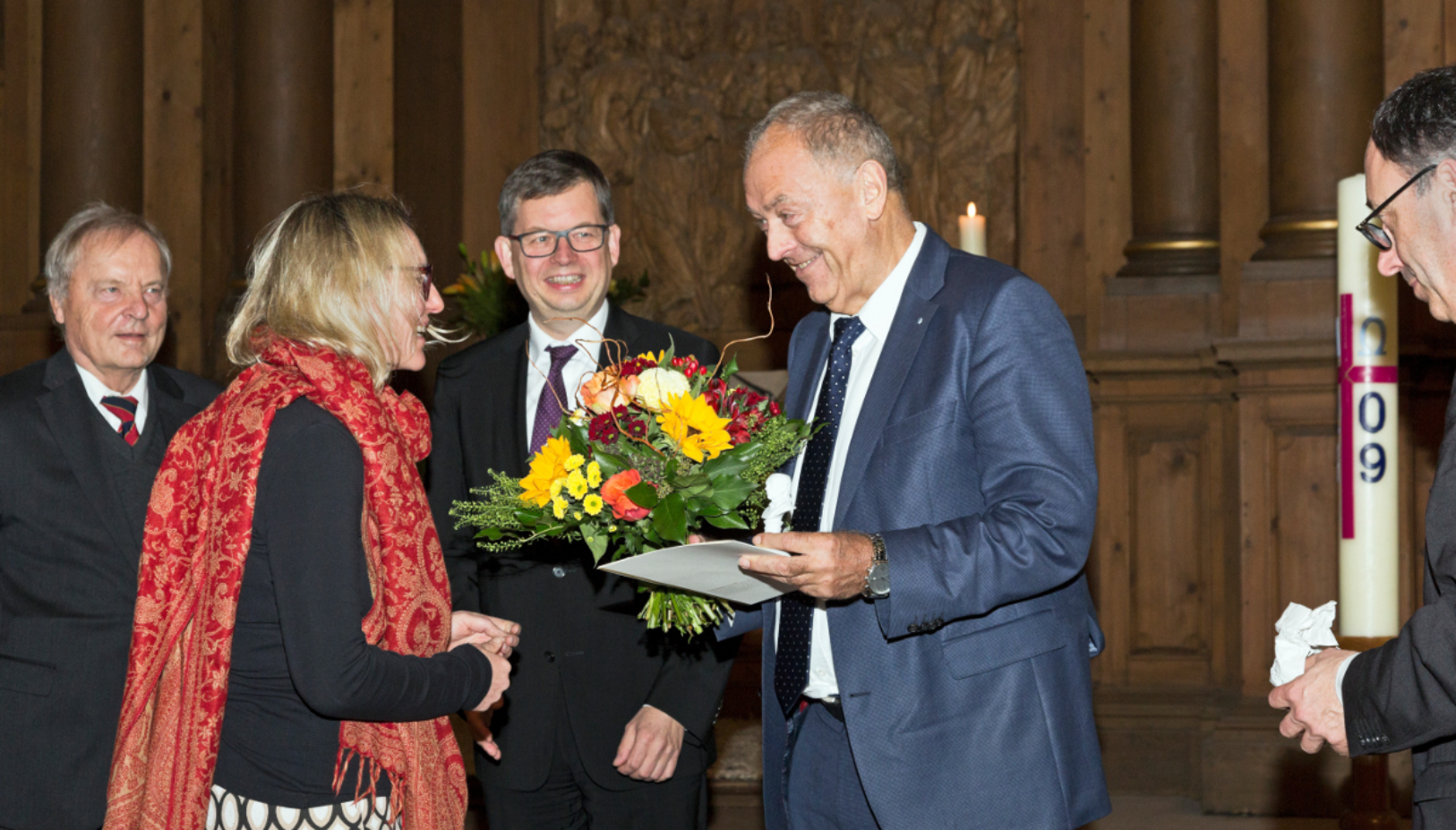
On November 26, 2019, computer science professor Franz Josef Radermacher of the University of Ulm was awarded this year’s Abt Jerusalem Prize. The Evangelical Lutheran Church of Brunswick, the Technical University of Braunschweig, the Braunschweig Scientific Society, and the Braunschweig Cultural Heritage Foundation jointly presented the award for the fifth time.

Professor Franz Josef Radermacher is best known for his advocacy of a global eco-social market economy and fair globalization. He is an expert in technology assessment, environmentally friendly mobility, sustainable development, and overpopulation. At the University of Ulm, he served as Professor of Databases and Artificial Intelligence until 2018. He heads the Research Institute for Applied Knowledge Processing/n (FAW/n) in Ulm and has been a member of the Club of Rome since 2002.

Abt Jerusalem Prize

Since 2009, the organizers have awarded the Abt Jerusalem Prize to honor outstanding scientific contributions to the dialogue between the humanities, natural sciences, and engineering. The prize carries an endowment of 5,000 euros. It is named after Friedrich Wilhelm Jerusalem (1709–1789), Abbot of Riddagshausen and co-founder of the Collegium Carolinum, the precursor to today’s Technical University of Braunschweig. Abbot Jerusalem is regarded as a pioneer of an enlightened relationship between faith and reason.
Press release: Evangelical Lutheran Church of Brunswick.

Lectures at the Award Ceremony

The laudatory speech for the presentation of the Abt Jerusalem Prize on November 26, 2019, in Braunschweig was delivered by Prof. Dr. Ulrich Menzel, TU Braunschweig and member of the Braunschweig Scientific Society (BWG)

Einen interessanten Vortrag hielt Dr. Peter Johnston. Peter Johnston ist Abteilungsleiter des New Methods of Work und Generaldirektor der Informationsgesellschaft der EU-Kommission sowie Mitglied des Club of Rome. Download des Vortrags mit dem Titel “Protecting the climate, biodiversity and sustainable diets – rethinking land-use for bio-sequestration”. An engaging lecture was also given by Dr. Peter Johnston, Head of the New Methods of Work Department and Director-General for the Information Society of the European Commission, as well as a member of the Club of Rome. Download of his lecture: “Protecting the Climate, Biodiversity and Sustainable Diets – Rethinking Land Use for Bio-Sequestration“.

Prof. Dr. Estelle Herlyn also contributed a presentation at the festive colloquium accompanying the award ceremony. You can download the slides of her presentation here: “The Alliance for Development and Climate – A Building Block for Implementing the 2030 Agenda and the Paris Climate Agreement“.

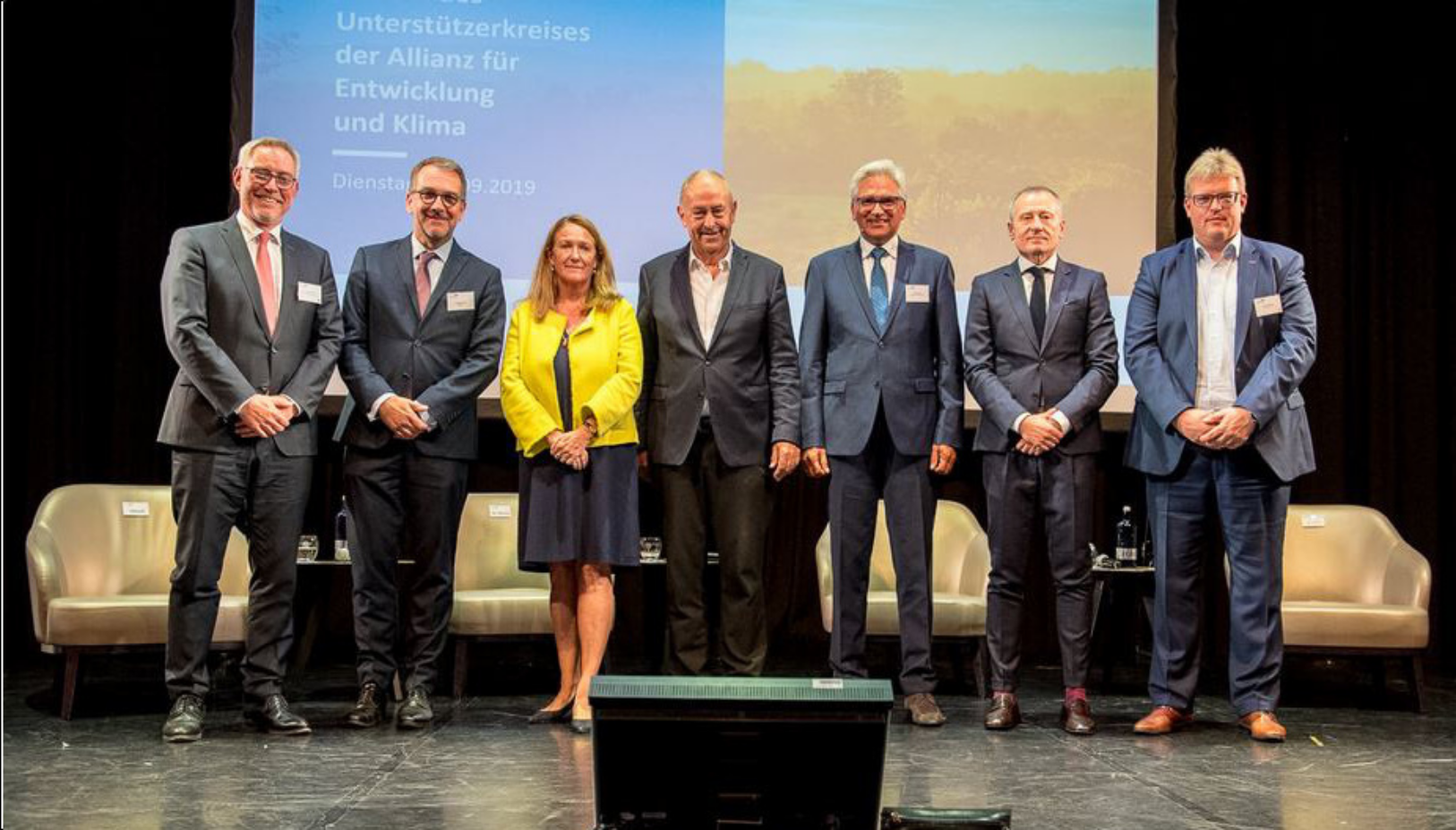
Second Meeting of the Supporters’ Circle of the Alliance for Development and Climate

On September 17, the Supporters’ Circle of the Alliance for Development and Climate convened in Bonn. Around 200 supporters and interested participants discussed the potential of additional voluntary engagement by non-state actors in climate protection and development with Federal Minister Dr. Gerd Müller and other high-ranking guests. [Link to photo gallery and article].

At the sidelines of the meeting, Federal Minister Müller presented the Alliance’s initiatives and recommendations for international climate policy. The [YouTube video] shows the press conference, which also featured contributions from Prof. Radermacher.

Photos © GIZ/Aschoffotografie