
Posts

Two Awards for FAW/n / Professor Radermacher

Austria-Germany Award

On March 21, 2019, FAW/n was informed that, together with the Universitäts.club / Carinthian Society for Science at the Alpen-Adria University Klagenfurt, it would receive this year’s Recognition Award from the Austrian-German Society. The award is presented annually on varying themes. This year, it highlights a scientific partnership between an Austrian and a German partner that has engaged over a long period with relevant research topics. The 2019 Recognition Award for science is shared equally between the Research Institute for Applied Knowledge Processing (FAW/n) in Ulm and the Universitäts.club / Science Association Carinthia at the Alpen-Adria University Klagenfurt. The awardees meet a range of criteria: longstanding, sustainable, cross-border, unconventional, broad-reaching, and dynamic engagement with science, culture, and contemporary issues. The location of both institutes outside major metropolitan areas was also deliberately viewed as a positive factor. The award carries a prize of €10,000. The festive colloquium will take place on September 19, 2019, at the Austrian Consulate General in Munich.

Abt Jerusalem Prize

On February 1, 2019, it was announced that Prof. F.J. Radermacher would receive this year’s Abt Jerusalem Prize. The prize is awarded by the Evangelical Lutheran Church of Brunswick, the Technical University of Braunschweig, the Braunschweig Scientific Society, and the Braunschweig Cultural Heritage Foundation for outstanding scientific contributions to the dialogue between the humanities, natural sciences, and engineering. The Abbot Jerusalem Prize includes a monetary award of €5,000 as well as the presentation of the Abbot Jerusalem bust by Fürstenberg. The festive colloquium for the award ceremony is scheduled for November 26, 2019, at the Monastery Church in Riddagshausen, Braunschweig.

Image source: Flickr/Patrick Lordan
Philosophical Conversations in Hagen

Interviews Following the Hagen Anniversary “Future” Event

On February 13, 2019, the Hagen City Hall hosted the 20th anniversary of the Hagen Future Events, initiated by philosopher Klaudius Gansczyk. Among the participants were Prof. Hartmut Graßl, Prof. Franz Josef Radermacher, and Prof. Ernst Ulrich von Weizsäcker, each attending their third official visit to Hagen in the context of these Future Events. On this occasion, the Mayor of Hagen honored the climate researchers by including them in the Golden Book of the City.

In a conversation with Klaudius Gansczyk, following the anniversary event, Prof. Radermacher discussed his works – “Balance or Destruction,” “World with a Future,” and “Der Milliarden-Joker (The Billionaire-Joker)” – and explored themes such as planetary consciousness, intercultural humanism, world ethics, global governance, worldwide eco-social market economy, and the Alliance for Development and Climate (AEK). He also reflected on values including global justice, peaceful conflict resolution, and sustainability. The interview is available on YouTube:

In the second interview, Klaudius Gansczyk spoke with Prof. Dr. Ernst Ulrich von Weizsäcker, Honorary President of the Club of Rome, also in the aftermath of the anniversary event, about the Club’s anniversary volume “Wir sind dran”. The interview addresses a new, sustainability-oriented enlightenment in light of planetary threats in the Anthropocene, taking into account the diversity of worldviews, ways of thinking, and logic systems worldwide, and is captured on video.

Image source: pixabay/wikiImages

Dennis Meadows in Ulm and the Presentation of the German Culture Award in Munich

Limits to Growth After 45 Years

The question of the limits to growth, as posed by the Club of Rome back in 1972, remains as relevant today as ever. During the University Days on Ecological-Social Market Economy and Sustainability on Friday, May 24, renowned U.S. economist Professor Dennis Meadows once again assessed the situation. Meadows led the research team that produced the world-famous Club of Rome report and, in his lecture, presented updated scenarios addressing the current state of the world’s resource situation. Around 350 students and interested attendees participated in the event at the University of Ulm. You can find the presentation slides available for download here.

Professor Franz Josef Radermacher, Director of FAW/n and member of the Club of Rome, introduced the highly topical subject, and University President Professor Michael Weber delivered a welcoming address. The session was moderated by Tobias Orthen.

The scenarios described by Meadows range from a sustainable world to collapse. So where do we stand in 2019?

According to Meadows, the world is currently following the “Standard Scenario” outlined in the 1972 report – global population continues to grow, resource consumption keeps rising, and humanity is heading toward ecological collapse. The visible “symptoms” include climate change, water scarcity, and loss of biodiversity.

Welcoming
– Prof. Michael Weber
Dennis Meadows | Club of Rome | Introduction
– Prof. Franz Josef Radermacher
Keynote
– Prof. Dennis Meadows
Overview of the Questions Asked
The Secret of the Lion Man – Presentation of the Gift

Humanity now faces two choices: either we steer our civilization toward sustainability, or these very symptoms will bring growth to an end.

But how close is the world we know to collapse? In his lecture, “Evaluating the Limits to Growth: Projections after 45 Years,” Professor Meadows did not spare his audience from uncomfortable truths.

The University Days on Ecological-Social Market Economy and Sustainability have been organized since 2010 by the Research Institute for Applied Knowledge Processing/n (FAW/n), the University of Ulm, and other partners including Club of Rome Germany and the Global Marshall Plan Initiative in the German-speaking world.

German Culture Award 2019 for Dennis L. Meadows

2019-Verleihung_Deutscher_Kulturpreis_Meadows-845x321
© Stiftung Kulturförderung

Fittingly for the occasion, Dennis L. Meadows was awarded the German Culture Prize 2019 in the Allerheiligen-Hofkirche of the Residenz in Munich earlier that morning. The ceremony was under the patronage of Prime Minister Dr. Markus Söder. The laudatory speech was delivered by Prof. Dr. Dr. Dr. h.c. Franz Josef Radermacher, member of the Club of Rome.

The speeches by Prof. Radermacher and Dennis L. Meadows can be accessed via the following links:

Laudation by Prof. Franz Josef Radermacher (PDF, German version)

Laudation by Prof. Franz Josef Radermacher for Dennis L. Meadows (English original) – MP3 Audio | 20.0 MB

Acceptance speech by Dennis L. Meadows (MP3 Audio), also translated from English into German by Udo E. Simonis, Professor Emeritus of Environmental Policy at the Wissenschaftszentrum Berlin (WZB), published in UNIVERSITAS magazine, issue 11/19

Words of Thanks from Dennis L. Meadows – MP3 Audio | 8.7 MB

Methanol Economy: New Article by Prof. F. J. Radermacher

Overcoming the Global Energy and Climate Crisis – Methanol Economy and Soil Improvement Close the Carbon Cycle

Franz Josef Radermacher

Abstract

The global energy and climate crisis can be solved in a way that is compatible with growth and conducive to prosperity. The increasingly panicked public debates about an impending apocalypse, climate command economies, and the complete electrification of the mobility sector fail to do justice to the multidimensional nature of the challenge. In contrast, the approach described here allows Africa, India, and other emerging economies to follow China’s development path – without negative climate impacts. Using this approach, the Sustainable Development Goals (SDGs) can be achieved by 2050. Three key elements must be combined: (1) the methanol economy, (2) soils as carbon sinks, and (3) development-promoting CO₂ compensation projects to implement the 2030 Agenda.

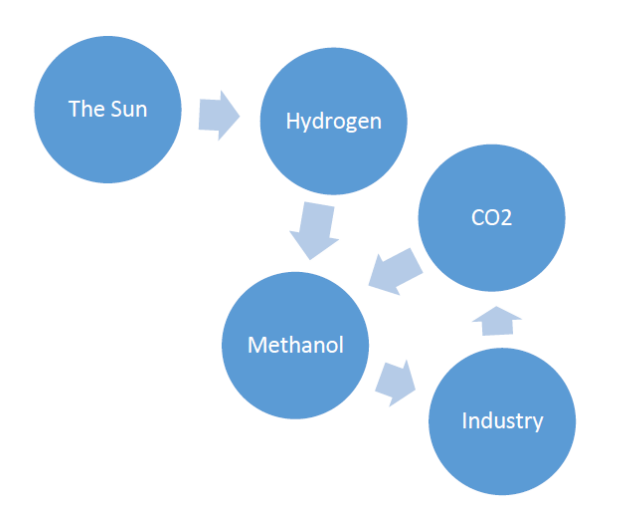
(Simplified overview)

The carbon-based liquid fuel segment of the economy could be expanded by 50% by 2050 under the proposed strategy. By recycling carbon four times within a hydrogen/methanol economy, CO₂ emissions could be reduced to about 10 billion tons per year (compared to 34 billion tons per year today), even amid strong economic growth. This investment and transformation program could be implemented by the fossil energy sector, one of the world’s most powerful industries, by 2050. Annual investments in the methanol sector are estimated at around €600 billion per year.

Through massive global reforestation, especially on marginalized land in the tropics, the promotion of humus formation in agriculture (particularly in semi-arid regions), and the use of biochar, soils could become a carbon sink for the remaining 10 billion tons of CO₂ per year. This would also increase agricultural productivity – a necessity given the rapidly growing global food demand in a prosperous world with 10 billion people. In this way, the carbon cycle can be closed. Forest and agricultural projects play a key role in the Alliance for Development and Climate, launched by the German Federal Ministry for Economic Cooperation and Development (BMZ) in 2018.

In addition to international climate protection, this initiative particularly promotes development, thus addressing the social dimension of a sustainable future. High-quality projects in developing countries simultaneously generate co-benefits across all SDGs (Agenda 2030) and achieve positive climate effects. This approach offers great potential for ensuring that the world’s population reaches its peak of 10 billion by 2050 and then begins to decline gradually.

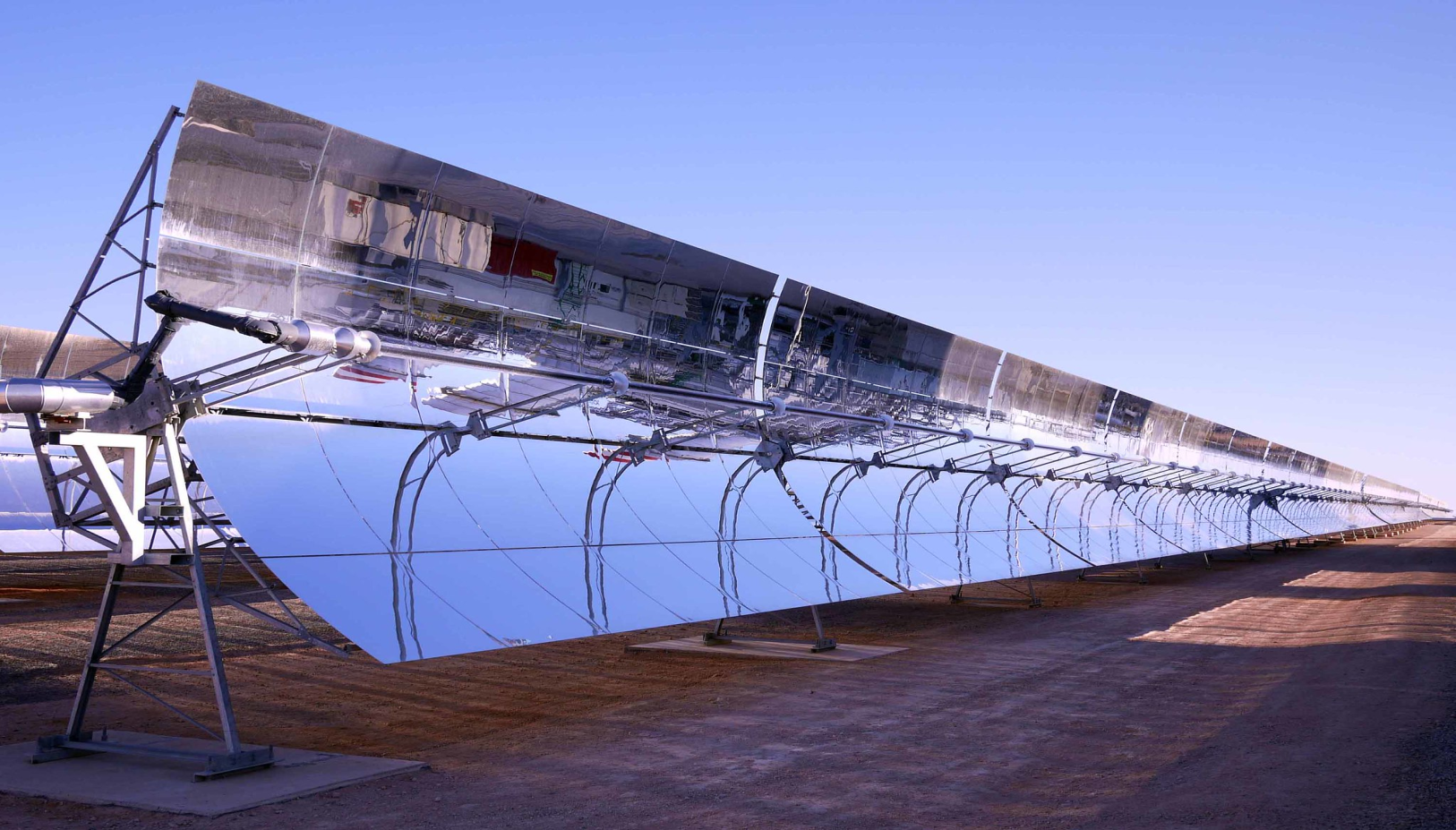
At the heart of this solution lies the methanol economy, powered by low-cost solar energy from the Earth’s sunbelt. Just as the invention of the steam engine 300 years ago unlocked the potential of coal for human prosperity, renewable energy combined with the solar potential of major deserts (Desertec 2.0) holds the key to leading humanity out of its current dead end in development, energy, and climate through a hydrogen/methanol economy.

Download: Methanol Economy and Soil Improvement (DE)

Image source: Philippe Roos (flickr) Ain-Beni-Mathar-2010-10-27-016

Transport: High-Level Advisory Board Convenes in Ulm

Ulm / SWP, February 26, 2019
Over the weekend, the Scientific Advisory Board of the Federal Ministry of Transport and Digital Infrastructure held its meeting at the Maritim Hotel in Ulm – marking the board’s second session in the city since 2011. The meeting was organized by Prof. Franz Josef Radermacher, member of the board and Executive Director of FAW/n. Following his retirement from the university, Prof. Radermacher also concluded his long-standing service on the advisory board, which he had been part of since 2000.

The full article is available on the Südwest Presse website: https://www.swp.de/suedwesten/staedte/ulm/hochkaraetiger-beirat-tagt-in-ulm-30103534.html

Image source: pixabay/Pexels

Compensating for the Climate

A clear wake-up call to policymakers and businesses: “Voluntarily make yourselves climate neutral,” says economist Franz Josef Radermacher. “Only then can we prevent the overheating of the planet.”

Read the full interview by Ernst Timur Diehn with Prof. Dr. Dr. Dr. h.c. F. J. Radermacher on the Stifterverband website.

Photo: iStock/Pogonici

Lecture: Tracking Megatrends

Under the title “Tracking Megatrends” Prof. Franz Josef Radermacher gave a lecture in Langenau on November 15, 2018. The SWP reports the following:

Globalization, digitalization, sustainability, world population growth, urbanization, and the role of women beyond the household – according to the Ulm-based professor, these are the forces shaping our world.

On Thursday evening, 180 visitors attended the lecture at the Pfleghof in Langenau to hear the 68-year-old head of the Research Institute for Applied Knowledge Processing speak live. Harald Ostermeir from the organizing Trade and Business Association (GHV) described him as “one of the most distinguished speakers in the German-speaking world”.

For around an hour and a half, Radermacher offered a lively yet sobering lecture titled “Germany as a Business Location Amid Powerful Megatrends.” He warned, “Something truly alarming is happening that could affect us all”. He highlighted the explosive growth of the world population – projected to reach ten billion by 2050, especially in Africa. While many people there face food insecurity, they have access to smartphones and the internet, opening up “a world full of possibilities”. Many, he predicted, will seek opportunities in Europe.

The full SWP article is available here.

Photo (c) Thomas Klink

IInterview: “We Need Enlightenment”

With a lecture on the topic “Globalization, Sustainability, Future: Can We Still Be Saved?”, mathematician, economist, and sustainability expert Prof. Dr. Dr. Franz Josef Radermacher enriched the recent general assembly of Pax-Bank. In an interview with Tom Veltmann, sustainability and brand management expert at Pax-Bank, Professor Radermacher shares his views on the world of tomorrow – and the role banks can play in it.

The full interview is available for download as a PDF.