“Shaping the Future”: Prof. Radermacher at the University of Bolzano

“How sustainable is our economic growth model?” was the title of the conference at the University of Bolzano, where Prof. Franz Josef Radermacher was invited as a guest speaker. On the occasion of his visit, he was interviewed by Zett – Die Zeitung am Sonntag on addressing the climate crisis.

When asked whether the COVID-19 pandemic could be seen as a “booster” for the climate agenda, the professor stated that he does not believe we have learned anything from the pandemic regarding globalization and cooperation. Instead of collaborating globally, everyone focuses on themselves and tries to solve crises on a small scale, whether it’s the COVID-19 pandemic or climate change. This, he notes, is not effective, as “what would really help is engagement in Africa or India.”

Electromobility, he adds, is not a solution to the problem on a global scale, as it is simply too expensive for poorer countries. Instead, Prof. Radermacher highlights climate-neutral synthetic fuels and energy carriers as viable solutions. He emphasizes: “I am personally convinced that with the right innovations, we can solve today’s problems once again.”

The full interview can be found here.

Source: Zett – Die Zeitung am Sonntag

Image source: Bonnie Taylor (Pixabay)

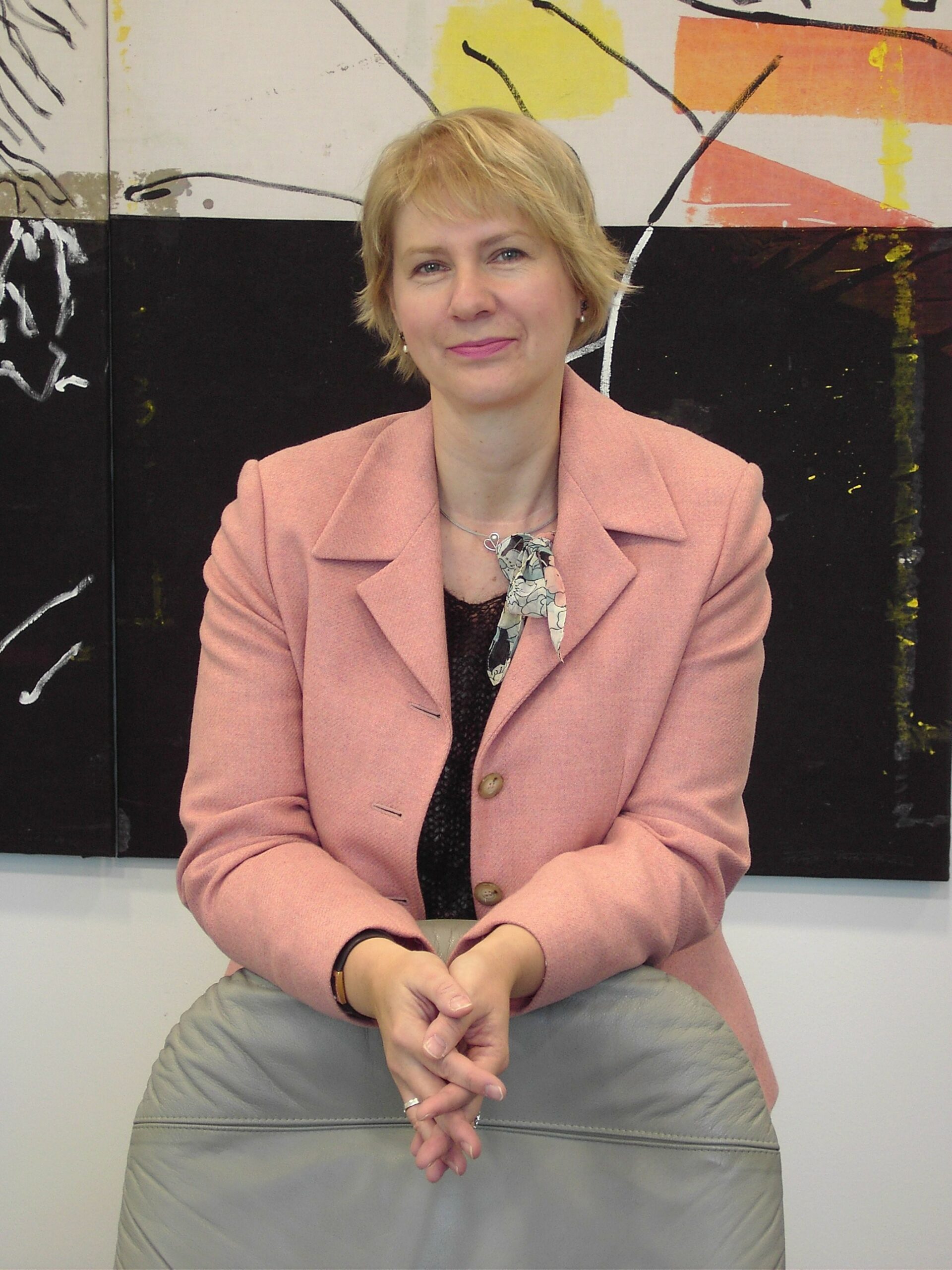
In Memory of Sabine Grau-Corsépius

The Research Institute for Applied Knowledge Processing (FAW/n) in Ulm mourns the passing of Sabine Grau-Corsépius, who died on November 30, 2021, after a long and courageous struggle with a severe illness. (*September 25, 1959 – November 30, 2021†)

Ms. Grau-Corsépius worked for more than 25 years as Executive Assistant to the Institute’s Board, always serving as a steady and calming presence. She joined FAW from the Max Planck Institute for Biological Cybernetics in Tübingen, then led by Prof. Valentin von Braitenberg, in 1989/1990, shortly after the founding of the Research Institute for Applied Knowledge Processing (FAW). There, she took on the role of Chief Assistant to the Institute Director. Through her broad overview, effectiveness, dedication, patience, and keen sensitivity for what truly mattered, she decisively shaped the work of FAW and later FAW/n. Her finesse and understanding of the essence of science, the importance of scholarly exchange, and the role of events, conferences, meetings, and the necessary associated decorum were particularly impressive. She was an outstanding assistant to the Institute Director and a valued colleague to all staff members. Without her contributions, the influence and presence of the institute, as well as its successor FAW/n, would certainly have been diminished.

It is deeply painful that Ms. Grau-Corsépius has left us and this world far too soon. We will miss her and honor her memory with lasting gratitude for the time we were privileged to spend with her.

FAW/n, its staff, leadership, project partners, and supporters

Image source: Uwe Kienle (Pixabay), FAWn