Posts

CO2 Capture: Germany’s Untapped Potential

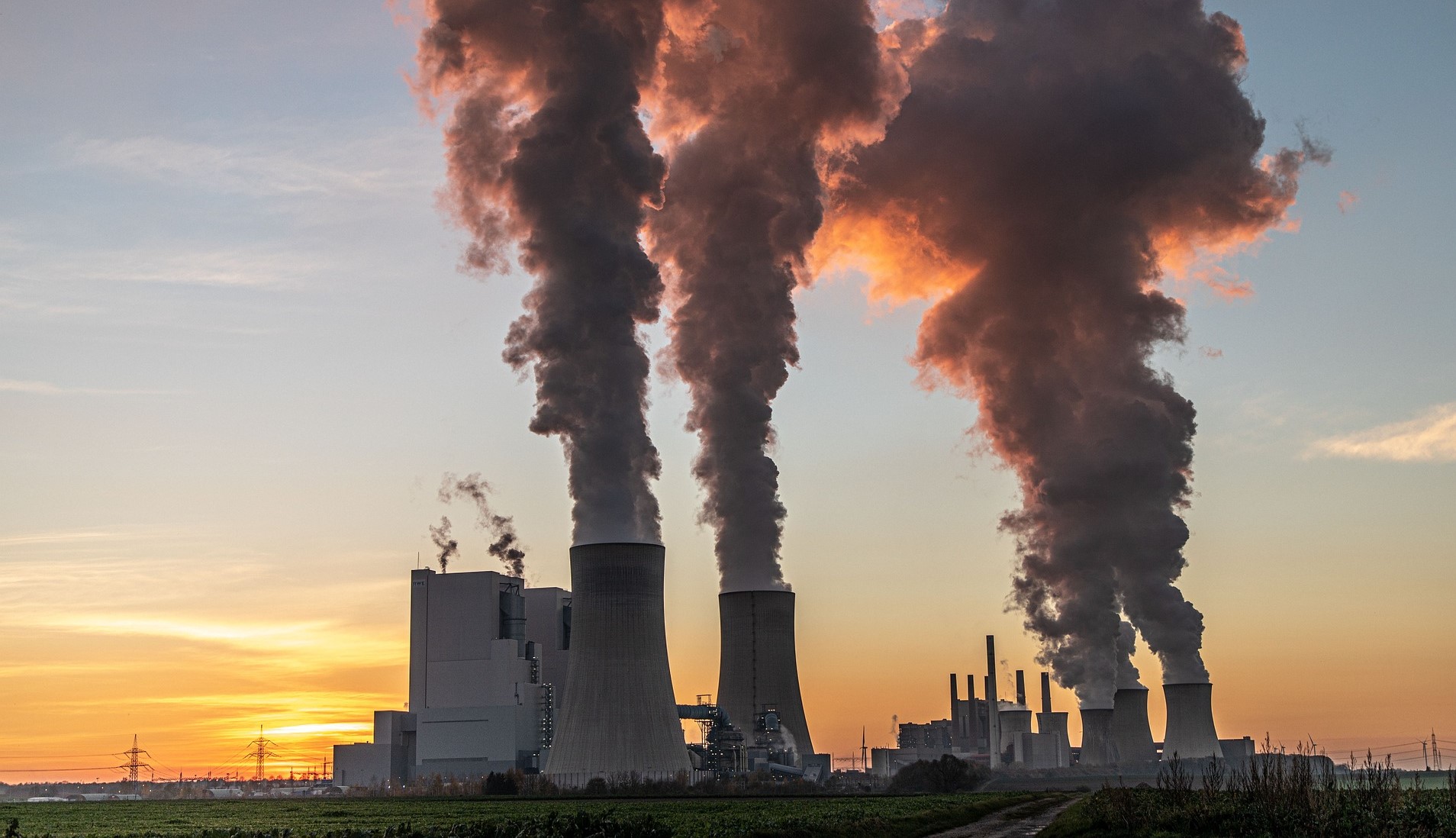
Are there alternatives to electromobility and CO2 reduction? “Yes!” is Prof. Radermacher’s clear answer. “The problem is that combustion processes release CO2 into the atmosphere. So, the question is: Can we prevent this?”

To achieve this, we need to capture CO2 where it’s emitted, such as at coal power plants and cement factories. The greenhouse gas can then be used to produce e-fuels or pumped into depleted oil and gas fields.

Germany has so far given little thought to this method. The situation is different in North America and Norway, where this process – known as Carbon Capture Utilization and Storage (CCUS) – has been in use for 30 years.

Learn more about this topic in the article by Austrian magazine “ÖAMTC” and in the podcast with Prof. Radermacher. Please scroll directly to episode 31.

Image source Catazul (Pixabay)

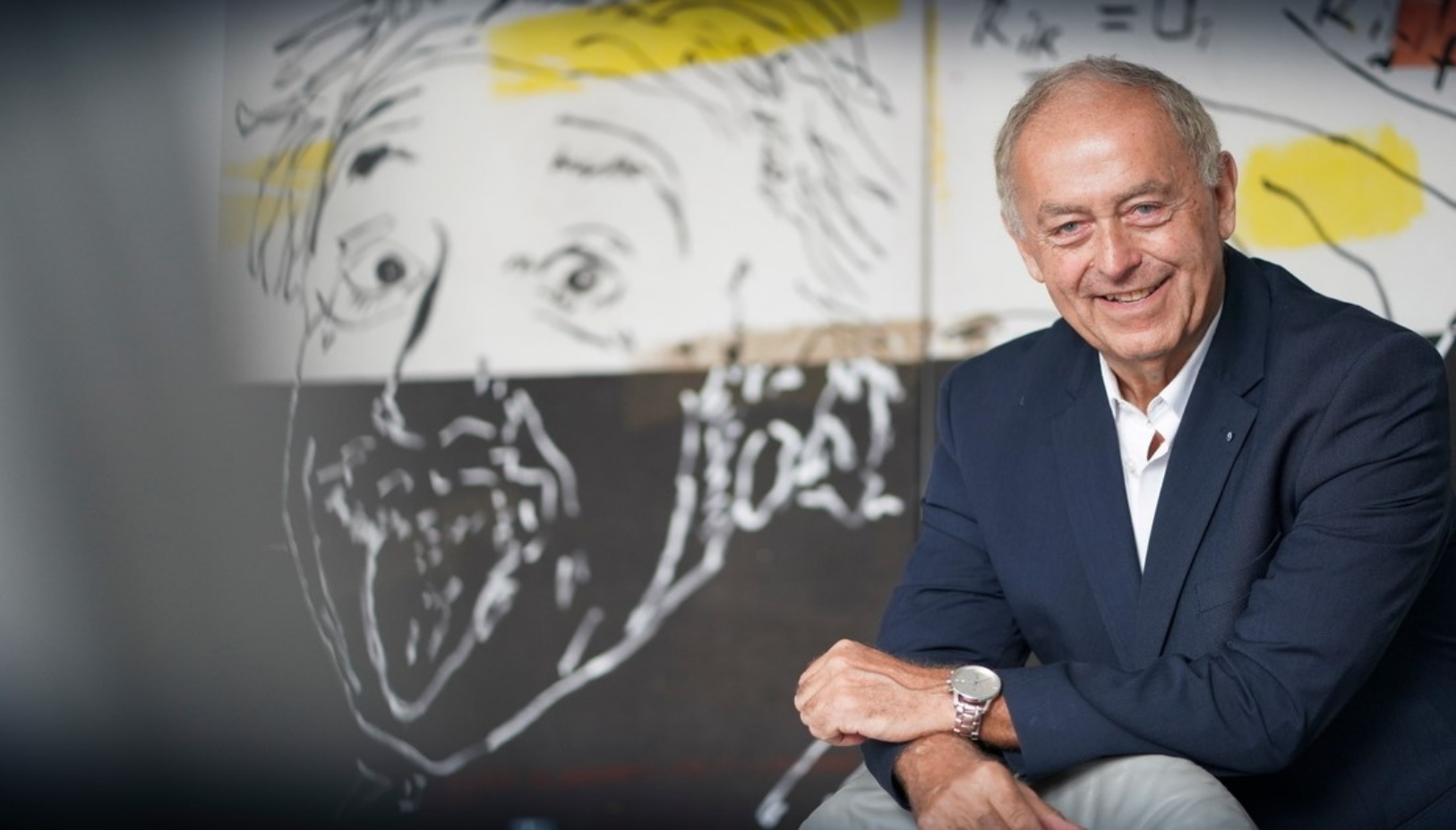
Professor Radermacher, what motivated you to join the CEET?

Prof. Dr. Dr. Dr. h.c. Radermacher answers this and other questions in a new video by the Council of Engineers for the Energy Transition (CEET).

He also responds to questions about the special expertise he brings to the CEET and why engineers, in particular, are so important in addressing climate change. You can watch the full interview on the CEET’s LinkedIn page.

Finally, Prof. Radermacher is asked for advice for current and future engineers working to advance the energy transition: “Keep all dimensions of the problem in view, and think unconventionally. Have good ideas and the courage to put them into practice. Try to develop something the world has never seen before. […] Perhaps, as a young person, you can make a real difference for the world.”

Image source: ©Südwest Presse Ulm, Volkmar Könneke

Project Completion: “Foundation Development and Climate Alliance”

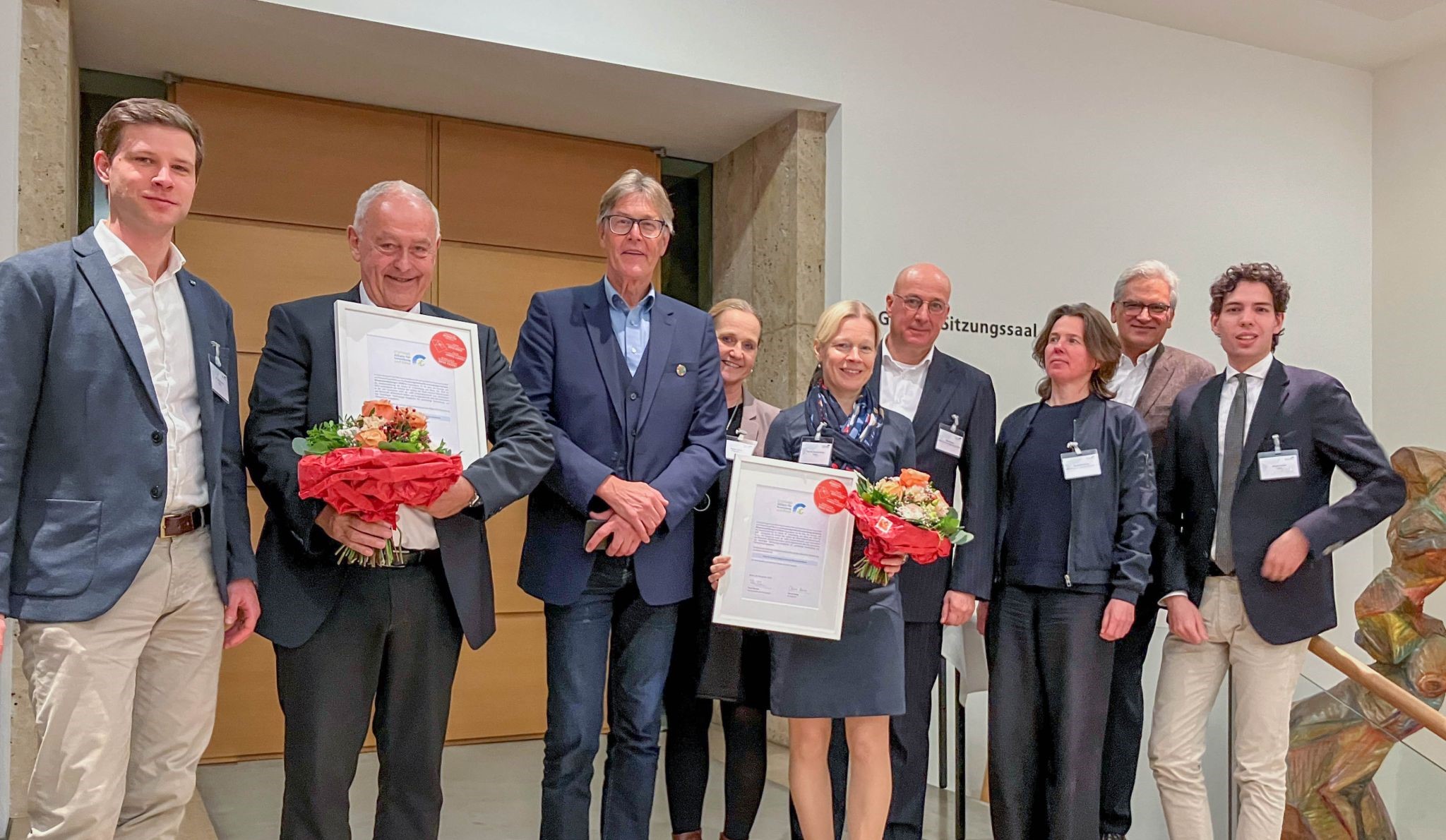
At the turn of 2022/23, FAW/n concluded, after more than four years, the accompanying research project on the Alliance for Development and Climate, funded by the Federal Ministry for Economic Cooperation and Development (BMZ). An official farewell ceremony was held at Ulm City Hall at the end of November 2022. On behalf of the foundation and the Alliance’s circle of supporters, Prof. Radermacher was presented with a certificate in recognition of his outstanding personal commitment.

After FAW/n initiated the idea of establishing a multi-stakeholder partnership—whose mission, in line with Franz Josef Radermacher’s “Milliardenjoker” concept, is the non-governmental promotion of development in accordance with the 2030 Agenda and international climate protection—this idea was incorporated into a BMZ project in spring 2018. From that point on, FAW/n, together with BMZ and later also the Deutsche Gesellschaft für Internationale Zusammenarbeit (GIZ), was responsible for conceptualizing and implementing the Alliance for Development and Climate. In 2020, the Alliance was transformed into an independent foundation.

At the conclusion of the project, a final study titled “The Alliance for Development and Climate Beyond CO₂ Compensation – Future Potentials” was produced. Its key message: the need for international contributions to the 2030 Agenda, climate protection, and biodiversity conservation is so great that the world urgently requires new instruments beyond CO₂ compensation to unlock the full potential of non-governmental actors – without which no solution to these challenges is possible.

IIn this spirit, FAW/n will continue to work on these topics even after the project’s completion, as integrating development in line with the 2030 Agenda with environmental and climate protection will need to receive far more attention in the future than it currently does.

Photo: Farewell event of FAW/n at Ulm City Hall, from left to right: Dr. Tobias Orthen (FAW/n), Prof. Dr. Dr. Dr. h.c. Franz Josef Radermacher (FAW/n), Fritz Lietsch (Managing Director, forum Nachhaltig Wirtschaften, event moderator), Regina Simon (FAW/n), Prof. Dr. Estelle Herlyn (FAW/n), Peter Renner (Board, Alliance for Development and Climate Foundation), Gesa Schöneberg (Head of Research & Consulting, Alliance for Development and Climate Foundation), Gunter Czisch (Mayor of Ulm), and Nikolas Lokau (FAW/n)

Image source: FAW/n

Appeal of the “Climate Council of Elders”

The anthology In Deep Concern – What Must Be Done Now to Save the World brings together individuals who have devoted their lives to climate protection in a wide variety of ways – though, unfortunately, with too little success so far. Among the contributors are scientists such as Prof. Franz Josef Radermacher, as well as activists, representatives of environmental organizations, entrepreneurs, and politicians. Together, they seek answers to the pressing questions of the climate crisis and issue a global call to action.

In his contribution, Prof. Radermacher once again underscores the importance of a socio-ecological market economy. He also expresses his frustration that quick national measures are often favored over thoughtful global strategies – a tendency that ultimately hinders real progress. Along with the other authors, his message is unmistakable: Decisive action is needed – and it’s needed now!

The book was published on October 26, 2022. A more detailed summary can be found in the official press release, and the book can be ordered here.

Image source: Pixabay (congerdesign), Buchcover

Radermacher: “We Are Going to Experience a Massive Loss of Prosperity”

Our society is currently facing a multitude of challenges – from the climate and energy crises to the war in Ukraine and sharply rising prices. In an interview with the magazine Wirtschaft im Südwesten (published by the Chambers of Industry and Commerce in the Freiburg administrative district), Prof. Radermacher discusses the consequences he expects from the current developments.

“One problem is that everything is urgent. The nature of these issues doesn’t allow us to tackle them one by one.” The key challenge, he explains, is to distinguish between strategies that primarily benefit wealthy countries and those that truly help the climate. As potential solutions, Prof. Radermacher highlights Carbon Capture Usage and Storage (CCUS) – capturing, utilizing, and storing CO₂ – as well as Nature-Based Solutions, such as reforestation, humus formation, rainforest protection, and related measures.

The full interview – which also covers topics such as the usefulness of the Supply Chain Due Diligence Act and whether expanding renewable energy can solve our problems – can be found here.

Image source: Cup of Couple (Pexels)

Invitation to the Event “Dare to Think 2022”

We are delighted to warmly invite you to this year’s event “Dare to Think – Companies and Regions on the Path to the GREEN DEAL.” The event will take place over three days, from Thursday, October 13, to Saturday, October 15, at the Weissensee-Haus Event and Seminar Center.

The program features lectures and discussions with 12 speakers from a wide range of fields in business and academia. Prof. Radermacher will also contribute on the first day with a presentation on the compelling topic: “The European Green Deal: Positioning It in a Challenging International Environment.”

Further information on registration and the full program is available on the event website.

Image source: Landschaft des Wissens

Prof. Radermacher Appointed to the CEET

In recognition of our work on global initiatives, Prof. F. J. Radermacher was appointed on June 1, 2022, to the UN Council of Engineers on the Energy Transition (CEET). The CEET is a highly qualified, globally oriented body of engineers and energy experts that supports the Secretary-General of the United Nations in building a coalition to achieve carbon neutrality by 2050. The council also seeks technical pathways to establish a climate-neutral energy system by the middle of the century

Professor Radermacher is now one of the 32 current members of this newly appointed council. The members represent all continents and bring diverse professional backgrounds. In the coming months, additional members will join until the council reaches a total of 50 members.

Photo: ©Südwest Presse Ulm, Volkmar Könneke

“We Must Ensure Resources for Everyone!”

Prof. Radermacher is far from satisfied with current climate policies, as he explains in his interview with ISOCELLER. “What we are witnessing is a ‘panic concert,’ where inadequate methods are being used to solve a problem that is 50 years old,” he emphasizes. According to him, the reason is that climate issues – like the situation in Ukraine or the pandemic – are often politicized to win votes, but no real solutions follow.

Germany and Austria are too small to make a significant impact at a national level. Yet funding for climate protection is expected to remain within the country, which leads to measures that are very costly but ultimately ineffective. Added to this, population growth in Asia and Africa is substantial, and “all these people want to live, and they need electricity, food, and water.”

Once again, Prof. Radermacher calls on decision-makers to pursue international solutions, such as Carbon Capture for storing and using CO₂, and e-fuels, i.e., synthetic fuels produced from water and carbon dioxide. The magazine ISOCELLER explains in detail what these terms involve.

You can read the full interview here (page 18).

Image source: Umwelt Foto (rawpixel.com – de.freepik.com)

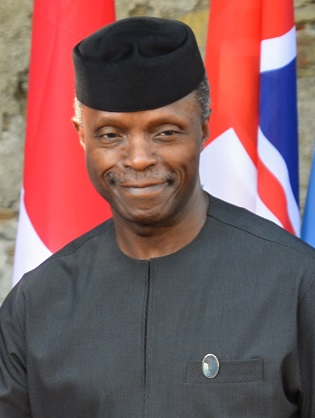
All Mere Facade? European Climate Policy from the Perspective of Nigeria’s Vice President

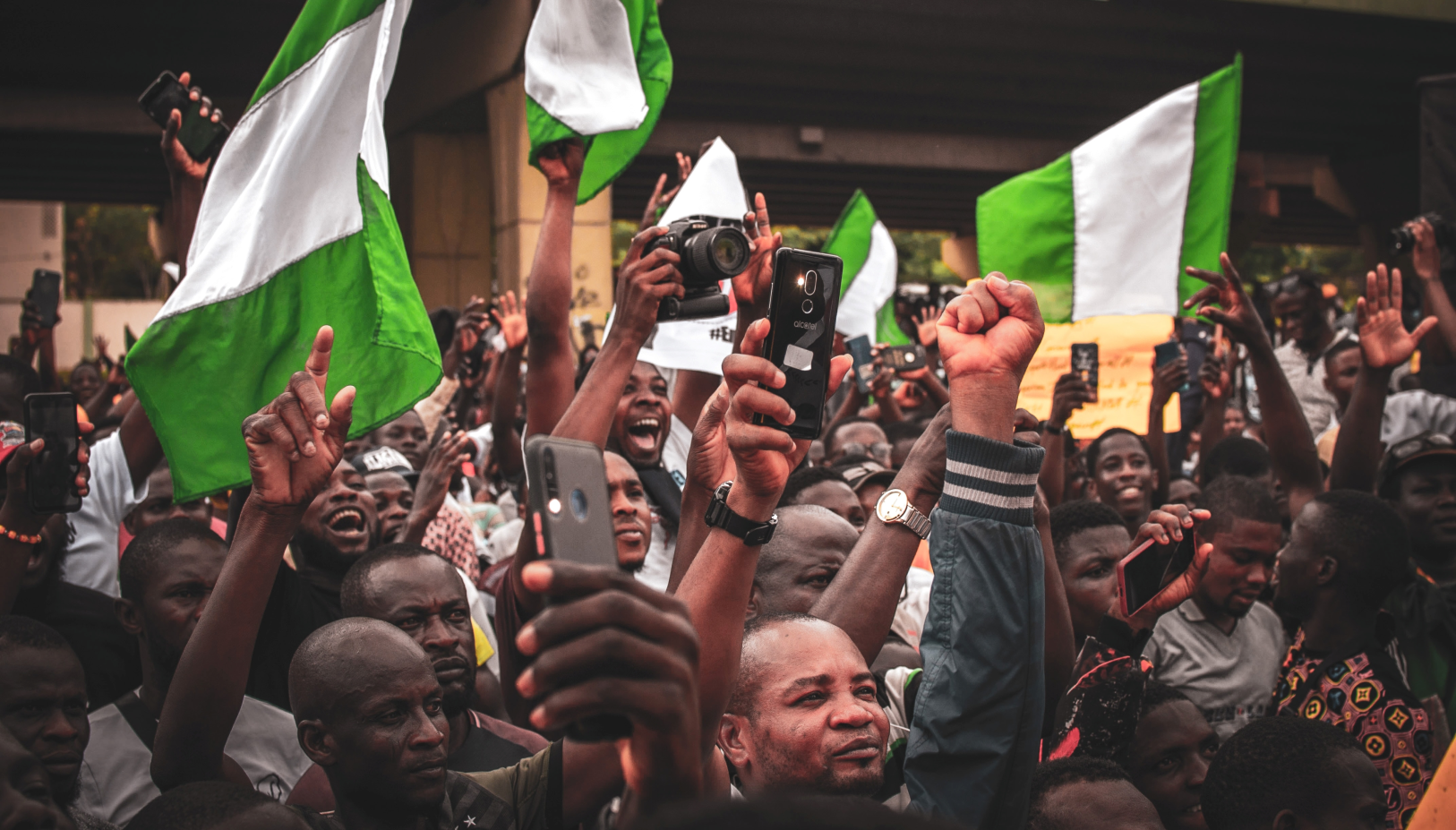
From Prof. Radermacher’s perspective, national climate policies alone are not effective. For this reason, he recommends looking beyond the German or European horizon and listening to what other heads of state, for example in Africa, have to say. Nigeria’s Vice President, Yemi Osinbajo, shared his views on the climate policies of wealthy nations in The Economist. His assessment invites reflection and reconsideration.

The focus is on energy – not simply lighting homes, but access to global energy, which is seen as essential for industry and progress. Nigeria’s growing population will also mean that by 2050, the country will require 15 times the energy currently needed. To meet this demand without harming the climate, wealthy nations call for exclusive reliance on renewable energy. However, achieving this without the support of the very nations making these demands is extremely difficult.

Osinbajo calls for support for Nigeria in areas such as renewable energy generation projects, data management systems, storage capacity, electric vehicles, and clean cooking solutions. At the same time, he argues that financing for fossil fuels in developing countries should not be entirely prohibited, since Europe itself continues to invest in gas.

You can read the full article recommended by Prof. Radermacher here.

Image source: Wikimedia, Tope A. Asokere (Pexels)

Statement: Prof. F. J. Radermacher on the Situation in Ukraine

Reference: Lecture and Media Coverage at the Königsbronner Gespräche, Saturday, April 9, 2022

On Saturday, April 9, 2022, I delivered the keynote lecture at the 9th Königsbronner Gespräche. The initiative and organization of these discussions is led by longtime German Bundestag member Roderich Kiesewetter (CDU).


The event focused on climate foreign policy, and during the debate, the Ukraine crisis was also addressed. A member of the audience asked me to comment on potential negotiation options or positions for achieving peace. I was unable to fully present my perspective at the time, as I was interrupted by the moderator during my historical overview. This appears to have caused some significant misunderstandings. I therefore wish to present my positions and concerns here in a concise manner, also as a source of information for interested parties.

Preliminary Remarks

I speak as an observer of current events. In relation to the Ukraine war, my aim is to understand the actors on all sides and explore solutions capable of promoting peace. For understanding, historical facts – at least over the last two centuries – as well as geopolitical circumstances are central. My analysis focuses on how a dangerous situation with high escalation potential might be managed through wise actions and broadly acceptable compromises, thereby creating a positive future perspective for both the parties involved and the world.

  1. The statehood of Ukraine is beyond question, even if it has only existed as an independent state for a few decades. Equally clear is that the Russian attack on Ukraine constitutes a blatant violation of international law.
  2. The primary goal in the current situation must be the pursuit of a sustainable peace – crucial for both Ukraine’s future and Russia’s. As a global power, Russia’s role is extremely significant for the world’s future.
  3. Historically, Ukraine’s statehood was long denied because other powers claimed the territory and population for themselves. To this day, similar struggles affect the Kurds (around 40 million people) (see appendix). Over the last 200 years, Russia, the Ottoman Empire, Austria-Hungary, Poland, and even Prussia and Germany were major actors in preventing Ukraine from becoming fully sovereign.
  4. Ukraine, with its own distinct culture and history, existed from 1922 as the Ukrainian Soviet Socialist Republic within the newly formed Soviet Union, not as an independent state. In 1991, the Soviet Union granted Ukraine its independence, alongside the founding of the Commonwealth of Independent States, which included Russia, Belarus, and Ukraine. Ukraine’s independence and sovereignty were quickly recognized worldwide.
  5. The transformation of parts of a large state into independent countries has often been accompanied by war and widespread destruction, as seen in the dissolution of Yugoslavia, the Ottoman Empire, and Austria-Hungary.
  6. The complexity of secession and independence is illustrated by current conflicts in Catalonia (part of Spain) and Scotland (part of the United Kingdom). In such cases, the EU consistently supports its member states, partly for legal reasons, rather than those seeking independence. In this context, proclaimed freedom alone is not a valid argument.
  7. Perhaps the most striking historical example of preventing independence is the American Civil War (1861–1865). In 1861, most southern states of the United States, due to serious political disagreements with the other states, made a coordinated attempt to secede from the Union and form a Confederation, aiming for independent statehood. This was not accepted by the North, leading to the American Civil War. It was a long and bloody conflict that ended with the victory of the North. Members of the Confederate South were forced to rejoin the United States and abandon their ambitions for independent statehood.
  8. In contrast, the dissolution of the Soviet Union occurred peacefully – without the pressure of a lost war – through acceptance by the dominant Russian side. The terms of separation from Ukraine could have been handled differently; for example, Crimea could have been assigned to Russia, or the Soviet Union could have required Ukraine to remain neutral as a condition for independence.
  9. Neutrality as a prerequisite for an independent statehood accepted by Russia was, for example, enforced by the Russian side in 1941 for Finland and after World War II for Austria.
  10. Russia voluntarily accepted the reunification of Germany, which initially did not find wide acceptance in France and Great Britain – as it also did the statehood of Ukraine and many other republics within the USSR. I am personally very grateful to the Russian political leaders and people for this historically unusual generosity. This generosity is closely associated with the name of the then President of the Soviet Union, Mikhail Gorbachev. He was awarded the Nobel Peace Prize in 1990 for his efforts to end the Cold War.
  11. In the course of German reunification, which was accepted voluntarily by Russia and very surprisingly for all parties involved, Russia had received verbal assurances that NATO would not continue moving eastward toward the Russian border without prior consultation. This was later no longer conveyed in political processes and public communication. The current developments, in the context of a publicly debated but not definitively excluded further NATO expansion toward Ukraine, are perceived by Russia – likely also due to historical experiences with brutal military pressure from the West in several major wars, as well as the increasingly evident westward orientation of Ukraine – as a threat, and Russia is unwilling to tolerate it.
  12. At this point, it should be recalled that the USA reacted similarly negatively when the Soviet Union installed missile sites in Cuba in 1962. The USA was not willing to tolerate this so close to its territory. Ultimately, Russia had to withdraw its weapon systems from Cuba. At that time, the world stood on the brink of nuclear war.
  13. The USA, as a superpower like Russia, has repeatedly shaped its own behavior according to its own interests, if necessary even against international law. In the long course of U.S. development, despite all differences in detail, there is a strong analogy to today’s situation in Crimea, namely in the “transfer” of Texas from Mexico to the United States. This also applies to the subsequent further massive expansion of U.S. territory at the expense of its “neighbor” Mexico (see Appendix).
  14. How can things move forward now? After both warring parties have had to endure significant losses – on the Ukrainian side accompanied by great suffering among the civilian population – there is a chance for a peace that does not call into question Ukraine’s sovereignty, while simultaneously taking seriously the Russian concerns and demands repeatedly articulated since the dissolution of the USSR, and potentially opening a viable perspective for Ukraine as a state.
  15. The experiences of the war have significantly strengthened national cohesion and support for state unity among the population of Ukraine, also in distinction from Russia. This is a good basis for the country’s future after a viable peace treaty, which will hopefully be reached in the coming months.
  16. A peace solution for Ukraine should, in combination with the experiences of the course of the war, at least significantly reduce Russia’s motivation for further territorial claims against its neighbors.

The full video of the lecture within the framework of the 10th Königsbronner Gespräche can be found at this link. The audience question, as well as the subsequent statement on the Ukraine conflict, can be found here.

Further information:

Image source: © Thomas Klink / T. Klink – Fotografie