Statement: Prof. F. J. Radermacher on the Situation in Ukraine
Reference: Lecture and Media Coverage at the Königsbronner Gespräche, Saturday, April 9, 2022
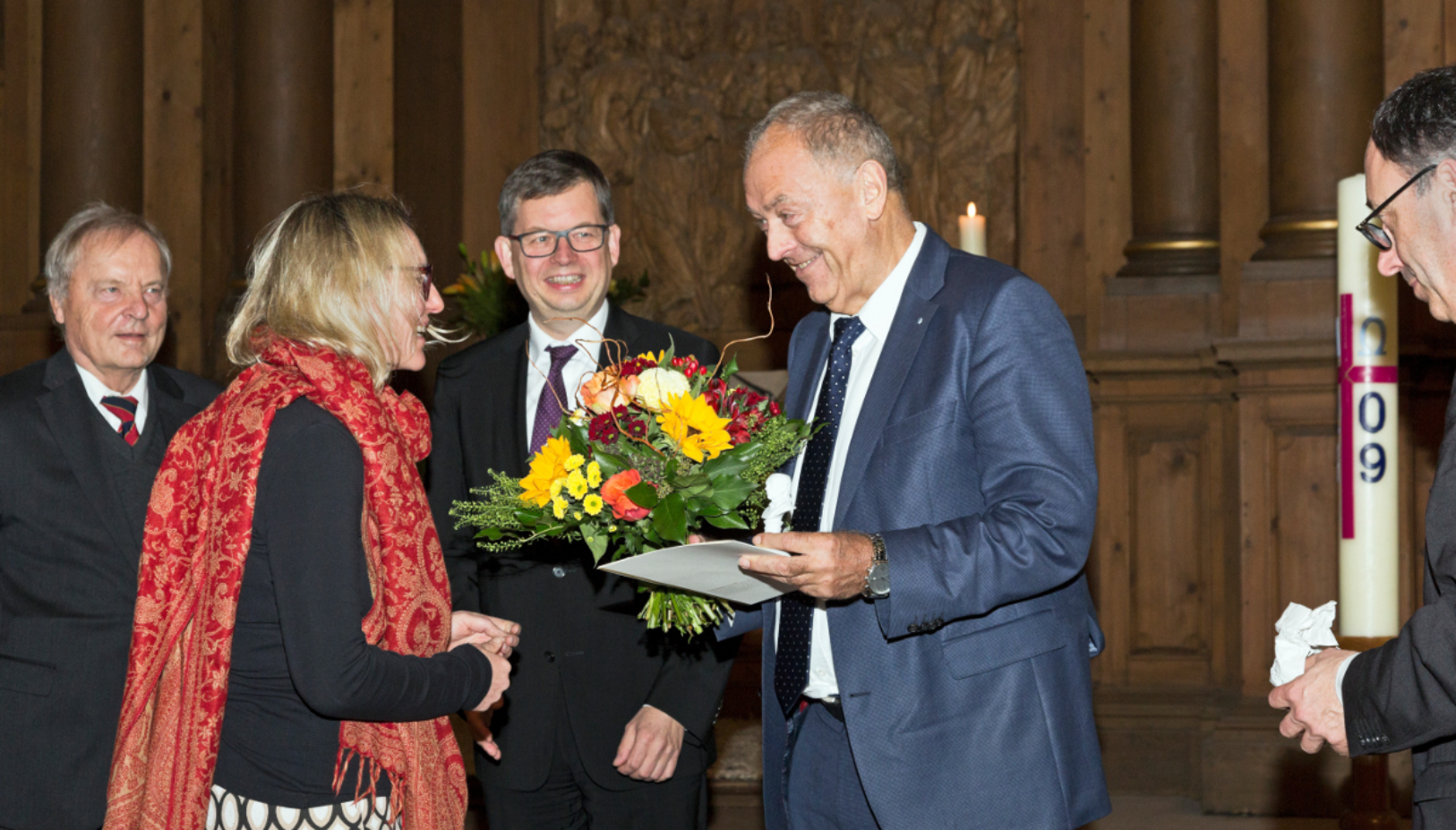
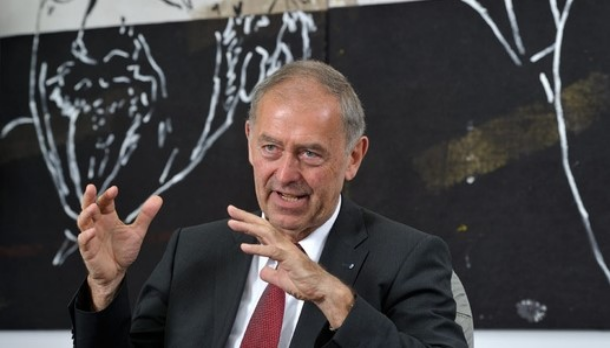
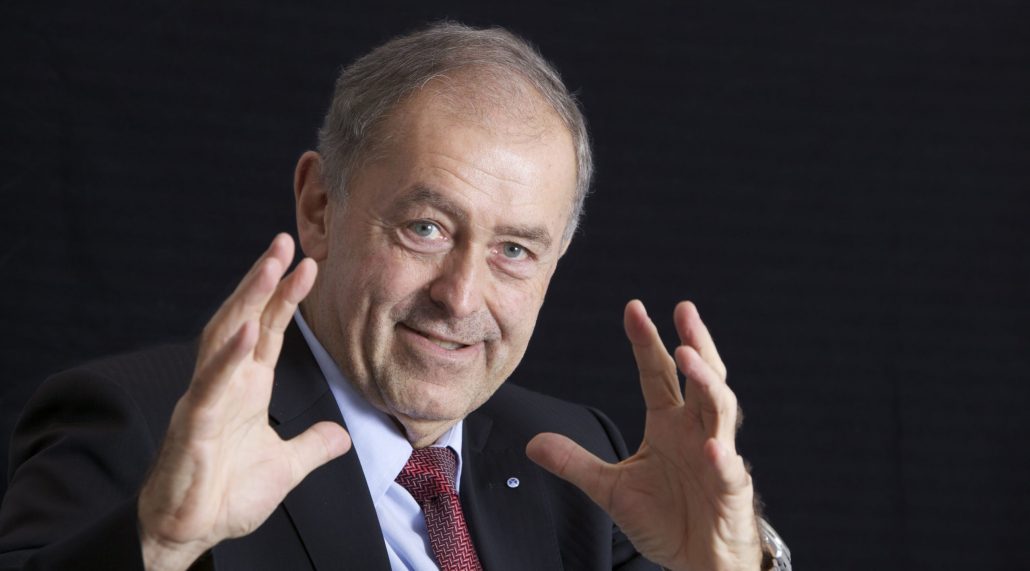
On Saturday, April 9, 2022, I delivered the keynote lecture at the 9th Königsbronner Gespräche. The initiative and organization of these discussions is led by longtime German Bundestag member Roderich Kiesewetter (CDU).
The event focused on climate foreign policy, and during the debate, the Ukraine crisis was also addressed. A member of the audience asked me to comment on potential negotiation options or positions for achieving peace. I was unable to fully present my perspective at the time, as I was interrupted by the moderator during my historical overview. This appears to have caused some significant misunderstandings. I therefore wish to present my positions and concerns here in a concise manner, also as a source of information for interested parties.
Preliminary Remarks
I speak as an observer of current events. In relation to the Ukraine war, my aim is to understand the actors on all sides and explore solutions capable of promoting peace. For understanding, historical facts – at least over the last two centuries – as well as geopolitical circumstances are central. My analysis focuses on how a dangerous situation with high escalation potential might be managed through wise actions and broadly acceptable compromises, thereby creating a positive future perspective for both the parties involved and the world.
- The statehood of Ukraine is beyond question, even if it has only existed as an independent state for a few decades. Equally clear is that the Russian attack on Ukraine constitutes a blatant violation of international law.
- The primary goal in the current situation must be the pursuit of a sustainable peace – crucial for both Ukraine’s future and Russia’s. As a global power, Russia’s role is extremely significant for the world’s future.
- Historically, Ukraine’s statehood was long denied because other powers claimed the territory and population for themselves. To this day, similar struggles affect the Kurds (around 40 million people) (see appendix). Over the last 200 years, Russia, the Ottoman Empire, Austria-Hungary, Poland, and even Prussia and Germany were major actors in preventing Ukraine from becoming fully sovereign.
- Ukraine, with its own distinct culture and history, existed from 1922 as the Ukrainian Soviet Socialist Republic within the newly formed Soviet Union, not as an independent state. In 1991, the Soviet Union granted Ukraine its independence, alongside the founding of the Commonwealth of Independent States, which included Russia, Belarus, and Ukraine. Ukraine’s independence and sovereignty were quickly recognized worldwide.
- The transformation of parts of a large state into independent countries has often been accompanied by war and widespread destruction, as seen in the dissolution of Yugoslavia, the Ottoman Empire, and Austria-Hungary.
- The complexity of secession and independence is illustrated by current conflicts in Catalonia (part of Spain) and Scotland (part of the United Kingdom). In such cases, the EU consistently supports its member states, partly for legal reasons, rather than those seeking independence. In this context, proclaimed freedom alone is not a valid argument.
- Perhaps the most striking historical example of preventing independence is the American Civil War (1861–1865). In 1861, most southern states of the United States, due to serious political disagreements with the other states, made a coordinated attempt to secede from the Union and form a Confederation, aiming for independent statehood. This was not accepted by the North, leading to the American Civil War. It was a long and bloody conflict that ended with the victory of the North. Members of the Confederate South were forced to rejoin the United States and abandon their ambitions for independent statehood.
- In contrast, the dissolution of the Soviet Union occurred peacefully – without the pressure of a lost war – through acceptance by the dominant Russian side. The terms of separation from Ukraine could have been handled differently; for example, Crimea could have been assigned to Russia, or the Soviet Union could have required Ukraine to remain neutral as a condition for independence.
- Neutrality as a prerequisite for an independent statehood accepted by Russia was, for example, enforced by the Russian side in 1941 for Finland and after World War II for Austria.
- Russia voluntarily accepted the reunification of Germany, which initially did not find wide acceptance in France and Great Britain – as it also did the statehood of Ukraine and many other republics within the USSR. I am personally very grateful to the Russian political leaders and people for this historically unusual generosity. This generosity is closely associated with the name of the then President of the Soviet Union, Mikhail Gorbachev. He was awarded the Nobel Peace Prize in 1990 for his efforts to end the Cold War.
- In the course of German reunification, which was accepted voluntarily by Russia and very surprisingly for all parties involved, Russia had received verbal assurances that NATO would not continue moving eastward toward the Russian border without prior consultation. This was later no longer conveyed in political processes and public communication. The current developments, in the context of a publicly debated but not definitively excluded further NATO expansion toward Ukraine, are perceived by Russia – likely also due to historical experiences with brutal military pressure from the West in several major wars, as well as the increasingly evident westward orientation of Ukraine – as a threat, and Russia is unwilling to tolerate it.
- At this point, it should be recalled that the USA reacted similarly negatively when the Soviet Union installed missile sites in Cuba in 1962. The USA was not willing to tolerate this so close to its territory. Ultimately, Russia had to withdraw its weapon systems from Cuba. At that time, the world stood on the brink of nuclear war.
- The USA, as a superpower like Russia, has repeatedly shaped its own behavior according to its own interests, if necessary even against international law. In the long course of U.S. development, despite all differences in detail, there is a strong analogy to today’s situation in Crimea, namely in the “transfer” of Texas from Mexico to the United States. This also applies to the subsequent further massive expansion of U.S. territory at the expense of its “neighbor” Mexico (see Appendix).
- How can things move forward now? After both warring parties have had to endure significant losses – on the Ukrainian side accompanied by great suffering among the civilian population – there is a chance for a peace that does not call into question Ukraine’s sovereignty, while simultaneously taking seriously the Russian concerns and demands repeatedly articulated since the dissolution of the USSR, and potentially opening a viable perspective for Ukraine as a state.
- The experiences of the war have significantly strengthened national cohesion and support for state unity among the population of Ukraine, also in distinction from Russia. This is a good basis for the country’s future after a viable peace treaty, which will hopefully be reached in the coming months.
- A peace solution for Ukraine should, in combination with the experiences of the course of the war, at least significantly reduce Russia’s motivation for further territorial claims against its neighbors.
The full video of the lecture within the framework of the 10th Königsbronner Gespräche can be found at this link. The audience question, as well as the subsequent statement on the Ukraine conflict, can be found here.
Further information:
- Appendix on the topic “The Never-Fulfilled Hopes of the Kurds” and “The Transfer of Texas to the USA”
- Südwestpresse newspaper article from April 10, 2022: “Understanding Russia: Ulm Professor Radermacher Causes Uproar at Conference”
- Südwestpresse newspaper article from April 11, 2022: “Negotiating Instead of Delivering Weapons: Why Prof. Franz-Josef Radermacher is a Russia Understander”
Image source: © Thomas Klink / T. Klink – Fotografie