Making a Real Difference

Call for Applications: Students and Young Professionals for the Development and Climate Academy

SAs far back as 50 years ago, Indira Gandhi summed it up at the first UN Conference on the Environment in Stockholm: development and environmental and climate protection must always be considered together.

This interconnected approach is reflected today in the UN’s 17 Sustainable Development Goals. In practice, however, we are still far from successful implementation.

The Alliance for Development and Climate makes an important contribution by motivating non-governmental actors to support projects in developing and emerging countries that both serve local communities and protect the climate.

Young people who understand the approach of the Alliance for Development and Climate Foundation, as well as the broader context, can actively advocate for the Foundation’s goals after successfully completing the Academy, while also engaging deeply with some of the major challenges of our time.

For the third time, the Development and Climate Academy – organized by FAW/n and the Hermann Ehlers Foundation – offers this opportunity. As part of the program, there will be an in-person event at the Hermann Ehlers Foundation in Kiel (September 24–26, 2022). The Alliance for Development and Climate Foundation participates as a cooperation partner.

What’s planned?

The two-day Academy in Kiel (September 24–26, 2022), along with four preparatory webinars, will cover key aspects of today’s global challenges related to international climate protection and sustainable development. Speakers include Prof. Dr. Estelle Herlyn and Prof. Dr. Dr. Dr. h.c. Franz Josef Radermacher.

Participants will be trained to motivate companies, as well as political and societal actors, to take action.

Application Process

We welcome applications including a motivation letter and CV, which can be sent to FAW/n (mende@fawn-ulm.de). Participation is limited to 20 people. Travel and accommodation costs to Kiel will be financially supported in coordination with the organizers.

Further information can be found in the official announcement.

For any questions, please contact:

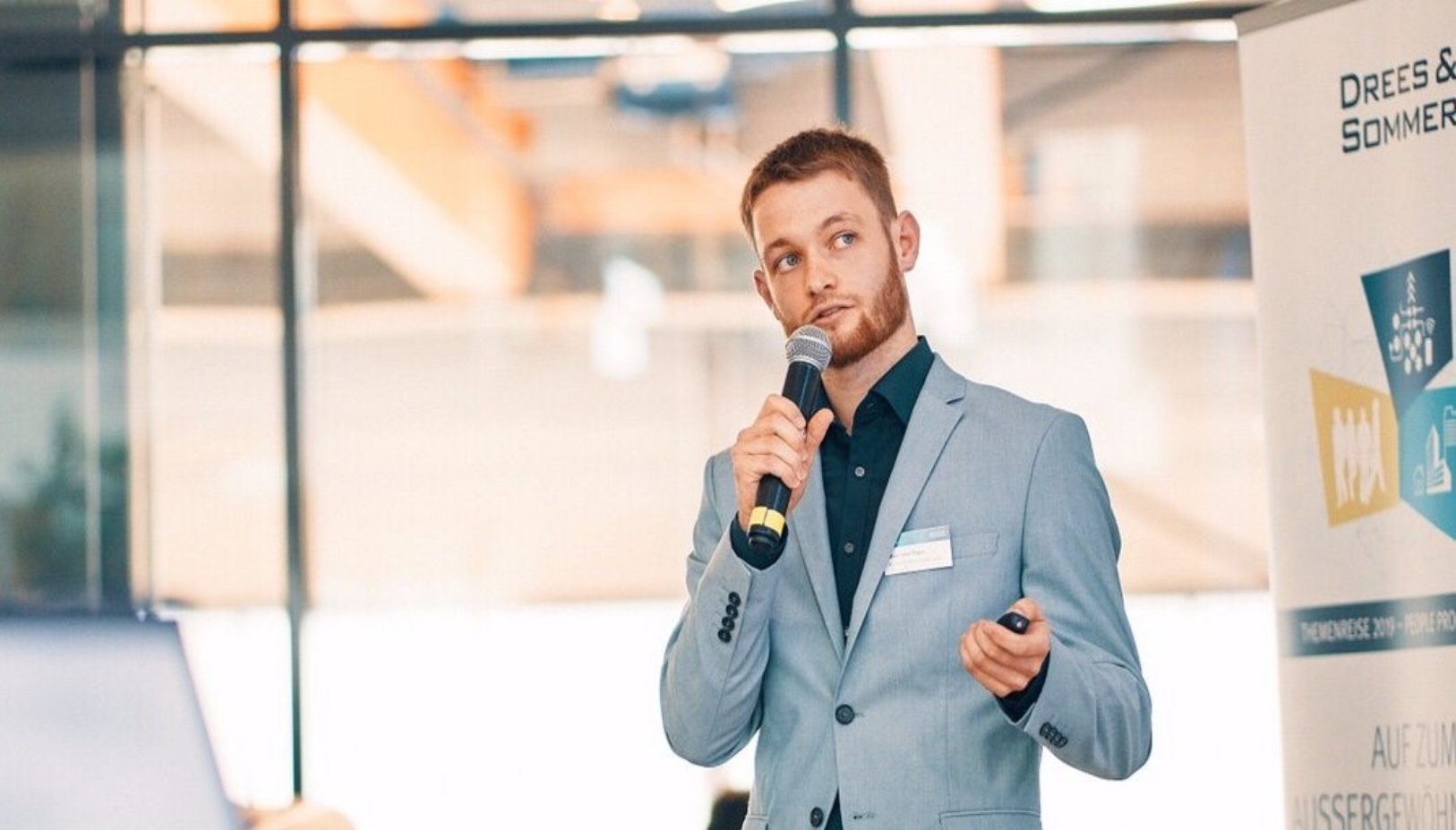
Bildquelle: Drees & Sommer SE

“Shaping the Future”: Prof. Radermacher at the University of Bolzano

“How sustainable is our economic growth model?” was the title of the conference at the University of Bolzano, where Prof. Franz Josef Radermacher was invited as a guest speaker. On the occasion of his visit, he was interviewed by Zett – Die Zeitung am Sonntag on addressing the climate crisis.

When asked whether the COVID-19 pandemic could be seen as a “booster” for the climate agenda, the professor stated that he does not believe we have learned anything from the pandemic regarding globalization and cooperation. Instead of collaborating globally, everyone focuses on themselves and tries to solve crises on a small scale, whether it’s the COVID-19 pandemic or climate change. This, he notes, is not effective, as “what would really help is engagement in Africa or India.”

Electromobility, he adds, is not a solution to the problem on a global scale, as it is simply too expensive for poorer countries. Instead, Prof. Radermacher highlights climate-neutral synthetic fuels and energy carriers as viable solutions. He emphasizes: “I am personally convinced that with the right innovations, we can solve today’s problems once again.”

The full interview can be found here.

Source: Zett – Die Zeitung am Sonntag

Image source: Bonnie Taylor (Pixabay)

In Memory of Sabine Grau-Corsépius

The Research Institute for Applied Knowledge Processing (FAW/n) in Ulm mourns the passing of Sabine Grau-Corsépius, who died on November 30, 2021, after a long and courageous struggle with a severe illness. (*September 25, 1959 – November 30, 2021†)

Ms. Grau-Corsépius worked for more than 25 years as Executive Assistant to the Institute’s Board, always serving as a steady and calming presence. She joined FAW from the Max Planck Institute for Biological Cybernetics in Tübingen, then led by Prof. Valentin von Braitenberg, in 1989/1990, shortly after the founding of the Research Institute for Applied Knowledge Processing (FAW). There, she took on the role of Chief Assistant to the Institute Director. Through her broad overview, effectiveness, dedication, patience, and keen sensitivity for what truly mattered, she decisively shaped the work of FAW and later FAW/n. Her finesse and understanding of the essence of science, the importance of scholarly exchange, and the role of events, conferences, meetings, and the necessary associated decorum were particularly impressive. She was an outstanding assistant to the Institute Director and a valued colleague to all staff members. Without her contributions, the influence and presence of the institute, as well as its successor FAW/n, would certainly have been diminished.

It is deeply painful that Ms. Grau-Corsépius has left us and this world far too soon. We will miss her and honor her memory with lasting gratitude for the time we were privileged to spend with her.

FAW/n, its staff, leadership, project partners, and supporters

Image source: Uwe Kienle (Pixabay), FAWn

Eco-Social Market Economy: A Fresh Start?

In recent days, the term “eco-social market economy” has repeatedly come up. Rheinische Post examined what politicians mean by it and also asked Prof. Radermacher for his perspective.

The 22 working groups of the “traffic light” coalition negotiators recently presented their results on various policy topics, while unresolved issues are to be clarified in leadership rounds. A central concept in these negotiations is the “eco-social market economy,” which aims to combine ecological ambitions with social responsibility. This idea implies that the state must take on new tasks to finance technological transformation and promote investments. Critics argue that this may lead to increased state control, contrary to the original social state concept, which was intended to empower people rather than dictate to them.

The term “eco-social market economy” is not new; as early as the 1970s, there were discussions about integrating environmental protection into the market economy. Advocates of this approach argue that pollution must carry a cost and that the exploitation of natural resources should be limited. Franz Josef Radermacher, a leading thinker in this area, emphasizes that eco-social economic practices must also foster innovation to maintain prosperity.

A key challenge is the global dimension of the eco-social market economy. Pricing environmental costs is often circumvented by producing in countries with low environmental standards. Achieving a true eco-social market economy requires global agreements and financial transfers from wealthy to poorer countries. In Europe, “green projects” often remain confined to national borders, limiting their global impact. Radermacher criticizes that wealthy countries focus on their own problems while poorer countries struggle with existential challenges.

He advocates for a global approach to addressing the climate crisis, which would direct more resources and innovation toward solving these problems. Currently, environmental levies are used for projects that primarily benefit wealthy countries. Radermacher warns that a focus on national solutions alone is insufficient to meet global challenges, and that a broader, cooperative approach is necessary to effectively tackle the climate crisis.

The full article can be found here (Paywall).

Image source: Dorothe (Pixabay)

Technology as a Key to Sustainability

“How sustainable is digitalization? What contribution can modern technologies make to environmental protection?” These and other thought-provoking questions, published in IT-Business, were addressed by Prof. Dr. Dr. Dr. h.c. Radermacher during the FIT Congress 2021.

The focus lies on the intersection of technology and sustainability. According to Prof. Radermacher, digitalization has so far mainly had negative effects on the environment because it has accelerated globalization. However, it could also help encourage people to adopt more sustainable behaviors.

Technologies, he emphasizes, could be key to creating a climate-neutral energy system—something humanity urgently needs in order to reconcile environmental and climate protection with prosperity. Changes in human behavior, he notes, tend to follow the introduction of new technical solutions rather than precede them.

The complete interview is available here.

Bildquelle: Tomasz Jagla (Pixabay)

Questions of the Century

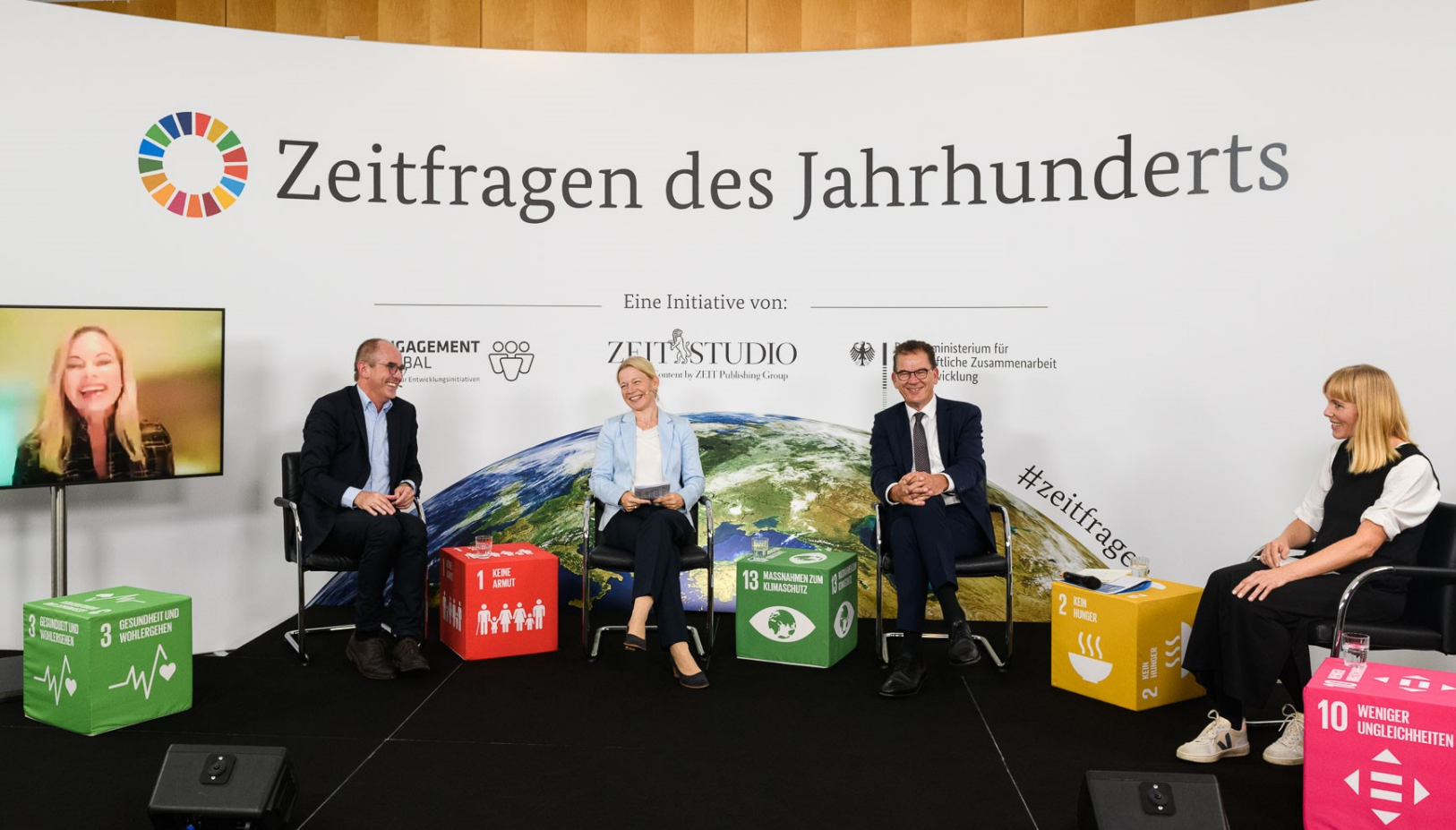
How can we reconcile global access to health, the elimination of poverty and hunger, and a healthy planet? In 2015, all UN member states agreed on the 2030 Agenda with its 17 Sustainable Development Goals (SDGs) to create a shared framework for addressing these challenges. The implementation of these goals is discussed weekly in the DIE ZEIT series “Questions of the Century.”

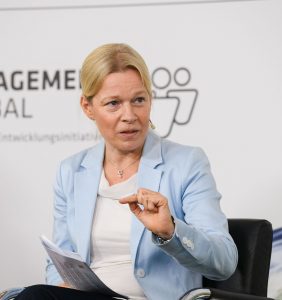
In the twelfth episode, Federal Minister for Economic Cooperation and Development Gerd Müller, Nina Ruge (journalist, TV presenter, and ambassador of the Alliance for Development and Climate), Prof. Dr. Estelle Herlyn (Scientific Director of the Competence Center for Sustainable Development at FOM Düsseldorf and Senior Researcher at FAW/n), and Christian Schneider (Managing Director of UNICEF Germany) discussed SDG 13: Climate Action.

Key themes included the issue of development—which, according to Prof. Herlyn, is often neglected—and the relationship between environmental protection and climate action. These two areas should go hand in hand, yet they are currently marked by conflicting goals. Population growth also plays a crucial role and must not be underestimated. “Climate protection is the key survival issue of the future,” emphasized Dr. Gerd Müller.

If we fail to achieve our climate goals, up to 500 million people will be severely affected, with children suffering the most from the consequences of climate change, as Christian Schneider pointed out. What does this mean for us personally? According to the panel of experts, change must begin with each individual. In this context, Nina Ruge advocates for membership in the Alliance for Development and Climate.

The FAW/n strongly supports Ambassador Nina Ruge and Senior Researcher Prof. Herlyn. At FAW/n, we explore how industrialized nations, together with developing and emerging economies, can work in unison at climate conferences toward carbon neutrality, identify the most promising and efficient solutions, and define the role of the private sector in this process.

You can find the full discussion and other episodes on different SDGs here.

Image source: Phil Dera

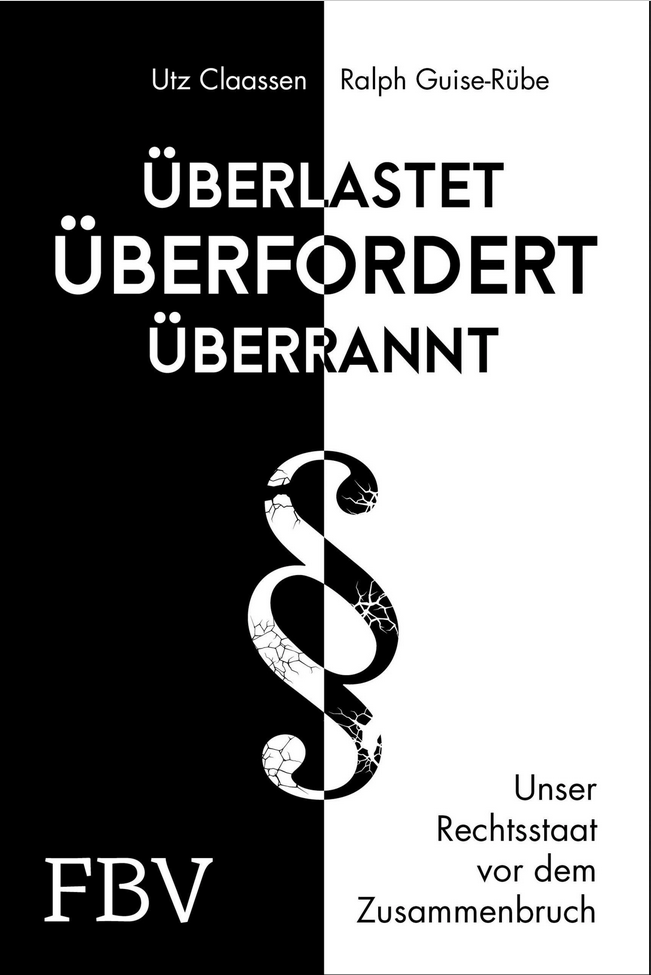
Book Recommendation: “Overloaded, Overwhelmed, Overrun” by Claassen & Guise-Rübe

The picture that Utz Claassen and Ralph Guise-Rübe paint of the Federal Republic of Germany in their book “Überlastet, Überfordert, Überrannt” (“Overloaded, Overwhelmed, Overrun”) is a sobering one. The subtitle – “Our Constitutional State on the Verge of Collapse” – sounds equally dramatic. Nevertheless, Prof. Radermacher recommends reading the book, as it addresses many issues that have long been close to his heart.

Among the topics discussed are the challenges of global population growth, the near impossibility of achieving the 1.5°C or 2°C climate targets, and Germany’s misguided focus in climate policy. The book also criticizes excessive restrictions on personal freedoms during the COVID-19 pandemic, as well as the lack of appreciation among citizens for the high standards that should apply when filling political offices. Another key point is the underfunding of the judicial system, contrasted with wasteful spending in other areas. A major focus of the book is on how digitalization and artificial intelligence are set to transform the nature of the legal system in the future.

The authors of “Überlastet, Überfordert, Überrannt” are far from unknown: Utz Claassen is a successful manager, investor, university lecturer, and publicist, while Ralph Guise-Rübe serves as a judge and president of the Regional Court of Hanover.

Image source: Weltbild, Pexels (Pixabay)

New Podcast with Prof. Radermacher: Global Energy Solutions for the Climate

In a new episode of Think & Do – the podcast magazine of the Stifterverband – Prof. Franz Josef Radermacher shares his insights on several fundamental issues, including basic rights and the pandemic, climate protection and power, and affordable energy prosperity.

Over the past two years, the pandemic has dominated public discourse. According to Prof. Radermacher, there have been both winners and losers of the crisis, depending largely on an individual’s stage of life and financial situation. “What I missed most throughout the process was freedom,” he summarizes his criticism. He also reflects on the role of science during the pandemic and how public communication was influenced by what people wanted to hear.

Another major topic discussed is the German federal election on September 26, 2021, in which climate protection has played an unprecedented role. Yet, Prof. Radermacher takes a critical view: to truly understand sustainability and climate issues, one must look back to the 1972 World Environmental Conference in Stockholm. That was when an unresolvable tension between wealthy and developing nations first became evident – raising the key question: “Is there a way for people in poorer countries to achieve a decent level of prosperity while we still preserve biodiversity, protect the environment, and maintain a stable climate?”

Later in the podcast, Prof. Radermacher examines Germany’s climate and energy policy, emphasizing the need for international cooperation rather than insisting on producing domestically what could be achieved more efficiently and affordably abroad.

The podcast is divided into 13 thematic segments, which can be listened to individually or as a complete episode. You can access the full podcast and transcript here.

Image source: Free-Photos (Pixabay)

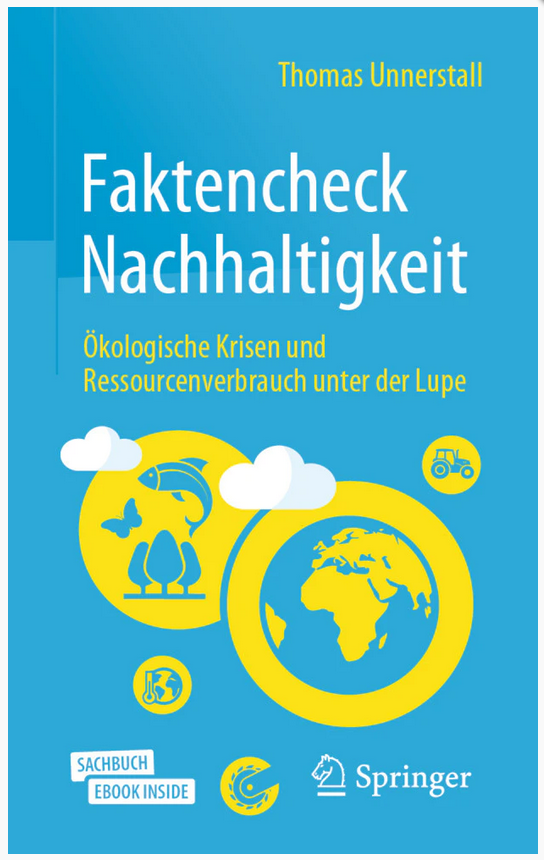
Book Recommendation: “Fact Check Sustainability” by Thomas Unnerstall

“Ecological Crises and Resource Consumption Under the Microscope” – this is the subtitle of Thomas Unnerstall’s book, and it precisely describes what he delivers in his richly illustrated work containing over 70 figures. He examines individual indicators such as biodiversity, species extinction, deforestation, and plastic waste in the oceans, weighing them against each other. His goal is neither to downplay nor to dramatize the current situation, but rather to present a comprehensive picture. From the perspective of FAW/n, this holistic view is essential in order to achieve the overarching goal of an eco-social market economy.

Dr. Thomas Unnerstall is an international consultant and author. After earning his PhD in physics, he spent several years working at the Ministry of the Environment in Baden-Württemberg before holding senior positions in the energy sector for more than two decades.

Readers interested in sustainability will find plenty of thought-provoking insights in this book. More detailed information can be found here.

Image source: Dariusz Sankowski (Pixapay), Springer Verlag

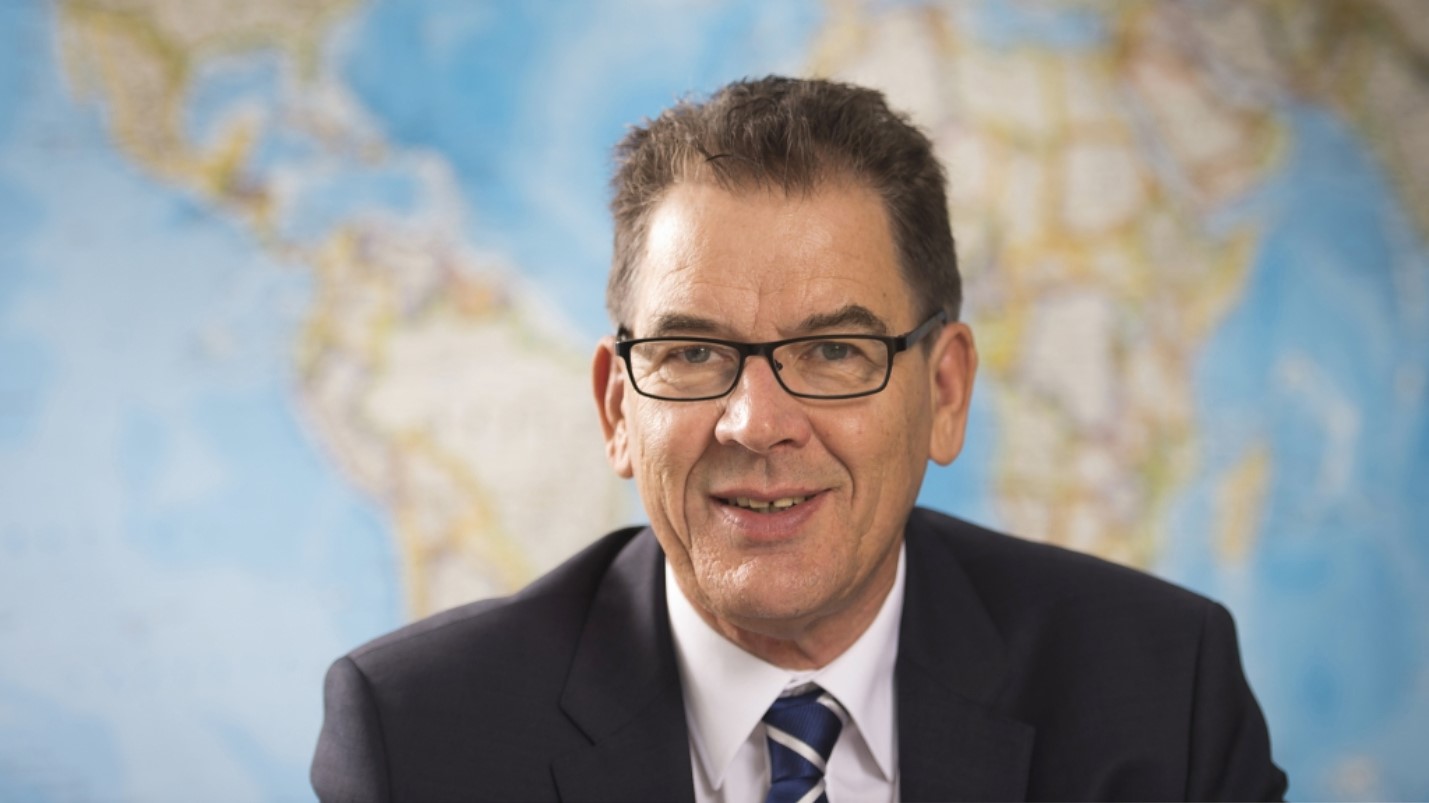
Federal Development Minister Müller to Become New Director General of UNIDO

Starting in January 2022, the current Federal Minister for Economic Cooperation and Development, Gerd Müller, will assume the position of Director General of the United Nations Industrial Development Organization (UNIDO). This marks the first time that a candidate from an industrialized country has taken on this role. The position had previously been held by Li Yong of China since 2013.

UNIDO promotes industrial development as a means of combating poverty, while also supporting globalization and environmental sustainability. It serves as an important partner for Germany in advancing global development and creating new jobs in developing countries.

Upon his nomination, Müller stated: “UNIDO can and should become the leading UN agency for implementing the 2030 Agenda, the Paris Agreement, the Convention on Biological Diversity, and the Beijing Declaration and Platform for Action on Gender Equality. The United Nations’ Sustainable Development Goals show us the path we must take. We all face enormous challenges – especially the developing countries. But we also have the opportunity to grow stronger together. We must act now, united for a better future!”

Dr. Gerd Müller is highly experienced in international development cooperation and economic development. Since 2013, he has served as Federal Minister for Economic Cooperation and Development. Through his participation in parliamentary assemblies of African, Caribbean, and Pacific states, he has gained extensive international experience. During his eight years as Parliamentary State Secretary, he was particularly committed to issues such as global food security and international agricultural development projects.

Among his most significant initiatives are the Green Button (Grüner Knopf), the Alliance for Development and Climate, and the Marshall Plan with Africa. FAW/n played a key role in the conceptualization and implementation of the latter two initiatives.

Further information:

Website of the Federal Ministry

Image source: © Michael Gottschalk/photothek.net