

Impacts of “Big Data and Analytics” on Employment and Fair Participation

Dr. Dirk Solte spoke at the OECD Global Forum on the Knowledge Economy in Tokyo about the impacts of Big Data & Analytics on employment and fair participation.

According to Dr. Solte, defining Big Data and Analytics is by no means simple, which is why he began his talk with a humorous analogy: “Trying to find a correct answer to a question through Big Data and Analytics,” he said, “is like trying to learn about the behavior of a pig by analyzing many potluck dinners using mathematical methods.”
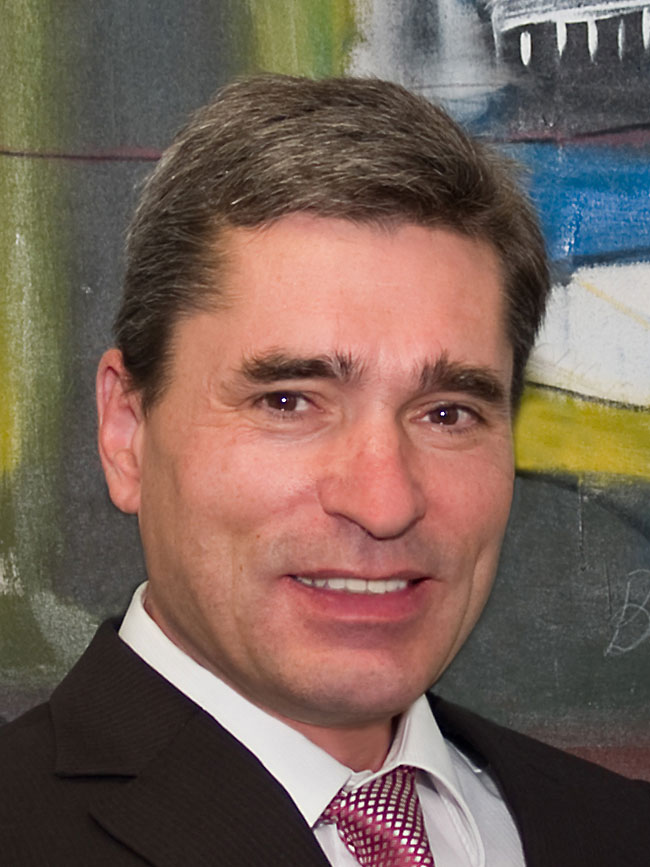
In the first part of his presentation, Dr. Solte explained what Big Data and Analytics are about and what they are used for. The key difference from conventional data and analytics, he noted, lies in the emphasis on correlation rather than causality in the traditional sense. He then provided an overview of several results from his analysis. Big Data, he said, has significant potential to promote green and inclusive growth, but it also carries the risk of technology-induced unemployment. The number of currently 26.75 million unemployed people could, according to Dr. Solte, rise to 53.5 million. However, it would primarily be middle-class jobs that are affected, while the number of highly qualified positions is expected to increase. The major question for the future, therefore, is how to close the emerging gap in the labor market.

Following Dr. Solte’s 15-minute lecture, a discussion took place with both the audience and the other invited speakers. You can find the full presentation as a video recording here.

Image source: Christina Morillo (Pexels)
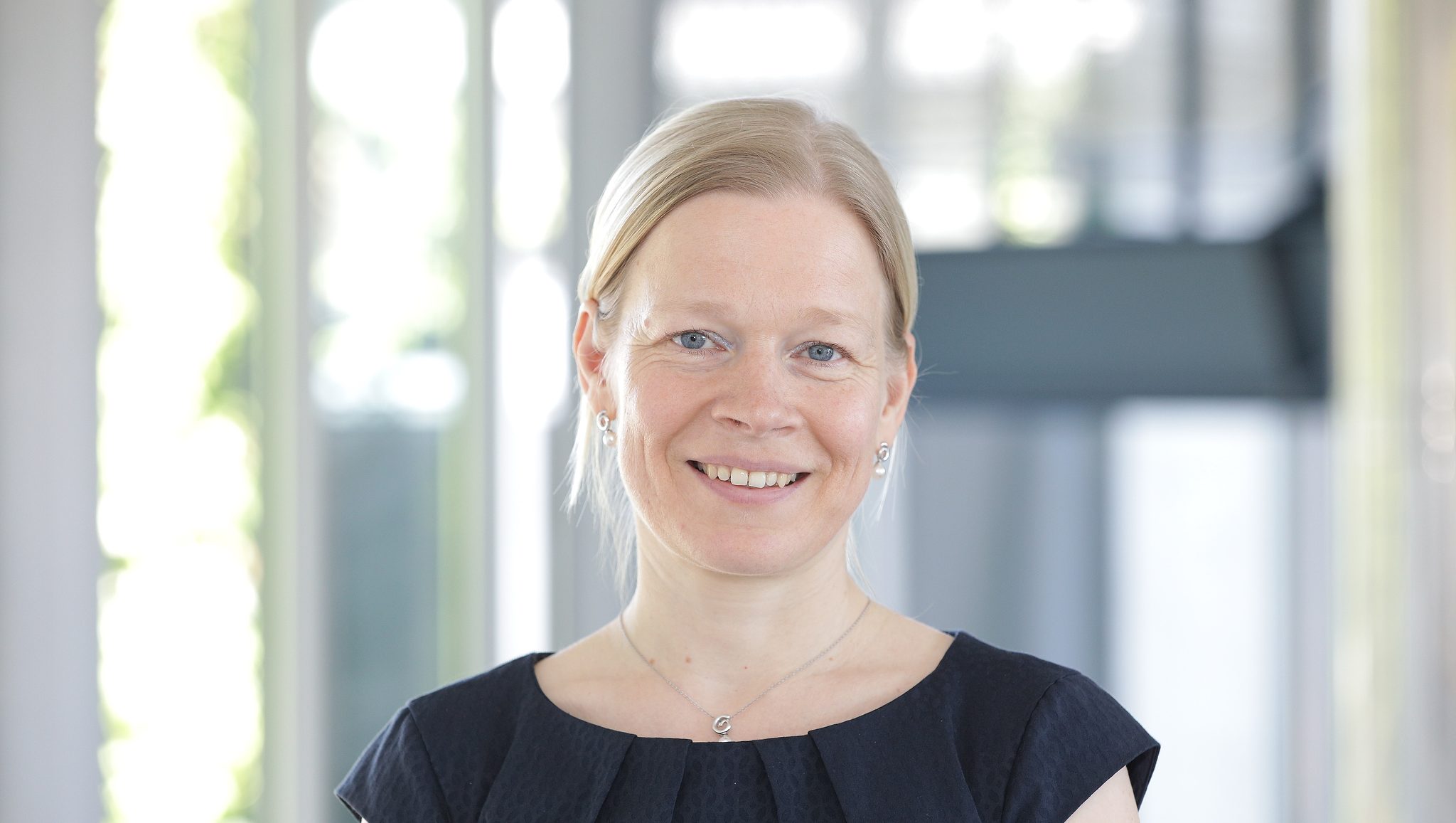
Appointment of Dr. E. Herlyn as Professor and Freelance Associate at FAW/n

Professorship Appointment during the “WissensNacht Ruhr”: Teaching Sustainability

Essen, May 22, 2014. The FOM University of Applied Sciences has appointed a new Professor of Sustainability: 41-year-old Dr. rer. pol. Estelle Herlyn. The certificate will be presented during the WissensNacht Ruhr (Knowledge Night Ruhr) on October 2 in Essen – a fitting setting for the occasion. The university will participate in the event with a comprehensive program, and the newly appointed professor will contribute directly to the lecture block “Sustainability and Climate” from 5:30 to 8:30 p.m.

“Since 2010, FOM University has been working within a rectorate project to consolidate all its sustainability initiatives and to develop an overarching strategy that defines specific areas of action for management education,” explains Prof. Dr. Stefan Heinemann. “This began with the implementation of an evaluation tool and continued with the establishment of a dedicated research institute – the Competence Center for Corporate Social Responsibility”. According to FOM’s Sustainability Officer, the creation of an additional professorship focusing on this area was therefore the next logical step.

Dr. Estelle Herlyn studierte Wirtschaftsmathematik an der TU Dortmund und arbeitete zunächst mehrere Jahre in einer Unternehmensberatung sowie verschiedenen internationalen Unternehmen. Schwerpunkte waren dabei Supply Chain Management, SAP und Projektmanagement. 2012 absolvierte sie an der wirtschaftswissenschaftlichen Fakultät der RWTH Aachen eine Promotion zu Fragen einer balancierten Einkommensverteilung als entscheidendem Aspekt der sozialen Dimension der Nachhaltigkeit. Es folgten eine Tätigkeit als Lehrbeauftragte am FOM Hochschulzentrum Aachen sowie eine bis heute bestehende freiberufliche Mitarbeit am FAW/n, einem Institut, das sich Fragen einer nachhaltigen Entwicklung in weltweiter Perspektive widmet. Sie ist außerdem Vorstandsmitglied des Forums Ökologisch-Soziale Marktwirtschaft (FÖS). Die gemeinnützige FOM Hochschule gehört zur Stiftung BildungsCentrum der Wirtschaft (BCW) in Essen. Aktuell zählt die Hochschule in über 30 Städten in Deutschland mehr als 26.000 Studierende. Das Besondere: Sie absolvieren die staatlich anerkannten und akkreditierten Bachelor- und Masterstudiengänge berufsbegleitend parallel zu Job oder Ausbildung. Dr. Estelle Herlyn studied business mathematics at TU Dortmund and initially worked for several years in management consulting and various international companies, focusing on supply chain management, SAP, and project management. In 2012, she completed her PhD at the Faculty of Business and Economics at RWTH Aachen University, researching balanced income distribution as a key element of the social dimension of sustainability. She subsequently taught as a lecturer at the FOM University Center in Aachen and continues to collaborate as a freelance associate with FAW/n – an institute dedicated to issues of sustainable development from a global perspective. She is also a board member of the Forum Ökologisch-Soziale Marktwirtschaft (FÖS), a non-profit organization promoting the ecological-social market economy. The non-profit FOM University is part of the BildungsCentrum der Wirtschaft (BCW) Foundation in Essen. Today, the university serves over 26,000 students across more than 30 cities in Germany. What makes it unique is its study model: all state-recognized and accredited Bachelor’s and Master’s programs are pursued part-time alongside professional employment or vocational training.

Webseite der FOM

Further information:

Image source: © Prof. Dr. Estelle Herlyn

Fundamental Framework for a Potential Global Climate Agreement

UN Climate Conference 2015 in Paris

Key points of the presentation explained by Prof. Radermacher:

1. Negotiation logic according to the Copenhagen formula: Industrialized countries reduce their greenhouse gas emissions annually, determining themselves by how much. Non-industrialized countries reduce their emissions relative to their economic growth rate and likewise determine the extent of reduction themselves.

2. Allowing border adjustment charges against non-signatory countries: Negotiations should include the possibility for the signatories of the climate agreement to impose border adjustment charges on non-signatory countries in the amount of the competitive advantage gained through non-participation.

3. Financing a Green Climate Fund: Industrialized countries are to provide at least USD 100 billion annually starting in 2020 to support developing countries in climate-related areas. This serves as a prerequisite for engaging them as partners in a global climate agreement.

4. Mobilizing the private sector: On the national level, in addition to specific implementation strategies (e.g. legal requirements, regulatory frameworks, tax measures, state-recognized or -supported standards, promotion of a “green race”), motivation and incentives should be provided – particularly for the premium segment of the private sector – to voluntarily achieve climate neutrality.

5. Global Neutral: Establishment of a Global Neutral initiative at the UN level (modeled after the Global Compact) to motivate companies, organizations, and individuals to pursue voluntary climate neutrality.

The text is available in German, English, French, and Spanish.

Image source: Gerd Altmann (Pixabay)

Climate Policy and the 2°C Target

The present text analyzes, in the aftermath of the World Conference in Copenhagen, how much time remains to address the climate problem in line with the 2°C target – without a loss of prosperity and while maintaining prospects for growth – and which “jokers” (special measures or decisive actions) may already be necessary today. The text illustrates how narrow the remaining timeframe for achieving the target has become. The conclusions drawn here are even more striking than those derived from examining the development of the ecological footprint (see www.ecologicalfootprint.org), which also sends a clear message. However, since the ecological footprint excludes fossil energy sources, its implications are comparatively weaker.

Download: Global Climate Policy after Copenhagen

Image source: Geralt (Pixabay)

Global Financial System at its Breaking Point

Global Financial System at the Limit – Insights into the “Holy Grail” of Globalization.

050_WFS_am_Limit_2Auflage_Vorwort_zur_2_Auflage

050_WFS_am_Limit_2Auflage-crop-nur-neue-kapitel

Image source: Pixabay

Film Recommendation: Too Big to Tell

The new film on the global financial system, society, and sustainability by Johanna Tschautscher, featuring comedian Günther Lainer

FAW/n would like to draw your attention to the new film by Austrian filmmaker Johanna Tschautscher, Too BIG to tell, who has explored the mechanisms of the global financial system over an extended period. The result is a documentary-style presentation, complemented with lighter elements in collaboration with comedian Günther Lainer. The premiere on May 9–10, 2014, in Linz received strong public interest and very positive feedback. After the screening, several of the individuals interviewed for the film – including Mr. Grzega from the Senate Institute for Public-Good-Oriented Policy Advice and Dr. Solte himself – were available for discussions with the audience, which were enthusiastically utilized.

If you are interested in organizing a public screening of the film, you can contact Johanna Tschautscher directly via email:film@johanna-tschautscher.eu

Direct link for information about the film: http://www.johanna-tschautscher.eu/filme/too-big-to-tell/ or http://www.johanna-tschautscher.eu -> Current events or Film/music

For further inquiries, you may also contact Dr. Solte at solte@faw-neu-ulm.de or +49 731 50 39 200.

Image source: geralt (Pixabay)