
Posts

Questions of the Century

How can we reconcile global access to health, the elimination of poverty and hunger, and a healthy planet? In 2015, all UN member states agreed on the 2030 Agenda with its 17 Sustainable Development Goals (SDGs) to create a shared framework for addressing these challenges. The implementation of these goals is discussed weekly in the DIE ZEIT series “Questions of the Century.”

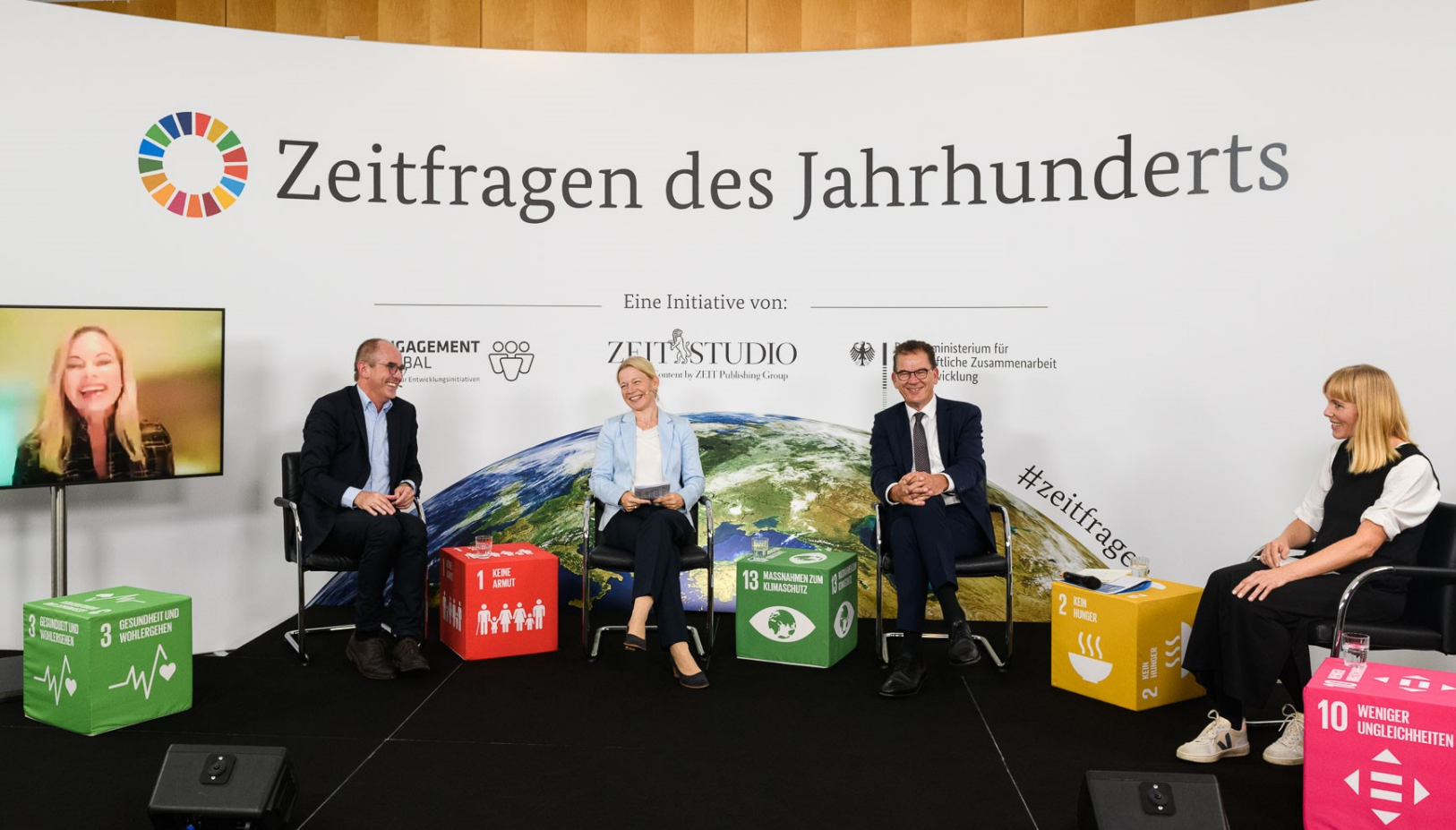
In the twelfth episode, Federal Minister for Economic Cooperation and Development Gerd Müller, Nina Ruge (journalist, TV presenter, and ambassador of the Alliance for Development and Climate), Prof. Dr. Estelle Herlyn (Scientific Director of the Competence Center for Sustainable Development at FOM Düsseldorf and Senior Researcher at FAW/n), and Christian Schneider (Managing Director of UNICEF Germany) discussed SDG 13: Climate Action.

Key themes included the issue of development—which, according to Prof. Herlyn, is often neglected—and the relationship between environmental protection and climate action. These two areas should go hand in hand, yet they are currently marked by conflicting goals. Population growth also plays a crucial role and must not be underestimated. “Climate protection is the key survival issue of the future,” emphasized Dr. Gerd Müller.
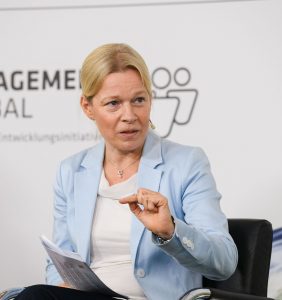
If we fail to achieve our climate goals, up to 500 million people will be severely affected, with children suffering the most from the consequences of climate change, as Christian Schneider pointed out. What does this mean for us personally? According to the panel of experts, change must begin with each individual. In this context, Nina Ruge advocates for membership in the Alliance for Development and Climate.

The FAW/n strongly supports Ambassador Nina Ruge and Senior Researcher Prof. Herlyn. At FAW/n, we explore how industrialized nations, together with developing and emerging economies, can work in unison at climate conferences toward carbon neutrality, identify the most promising and efficient solutions, and define the role of the private sector in this process.

You can find the full discussion and other episodes on different SDGs here.

Image source: Phil Dera
New FAW/n Research Project in Cooperation with the BMZ

FAW/n is working with partners in interaction with the BMZ on an exciting new mandate. Research Project: “A Better Design of Globalization: Action Potentials from a Development Policy Perspective”.

The project comprises two sub-projects: “Value Chains and Sustainability – Opportunities and Limits under WTO and EU Law” and “Implementation of the Sustainable Development Goals 2015-2030 – Requirements for Global Governance and Implementation Possibilities”.

Sub-project I of the Research Project:

“A Better Design of Globalization: Action Potentials from a Development Policy Perspective”. Study: “Value Chains and Sustainability – Opportunities and Limits under WTO and EU Law”. The topic of sustainability is gaining increasing international significance in the context of global value chains. The BMZ is particularly active in this field and, following major accidents in textile production facilities in Bangladesh and Pakistan, has launched initiatives with high public visibility. Among other outcomes, this has led to the establishment of the label “Alliance for Sustainable Textiles”, which has since been joined by a large number of German manufacturers and retail chains in the sector. The study will specifically examine six approaches of varying degrees of impact:

  1. Use of labeling instruments
  2. Subsidies via a trade levy
  3. Value-added tax options and customs preferences
  4. Public procurement
  5. Economy for the Common Good
  6. Changes at the WTO level

Sub-project II of the Research Project:

“A Better Design of Globalization: Action Potentials from a Development Policy Perspective”. Study: “Implementation of the Sustainable Development Goals 2015–2030 – Requirements for Global Governance and Implementation Possibilities”.

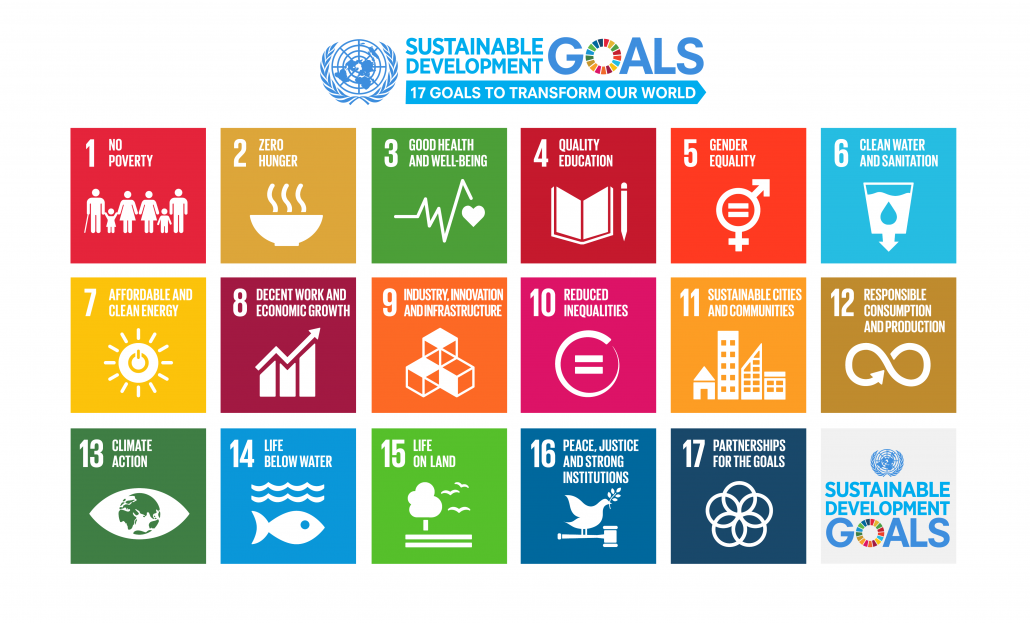
This study takes the recent adoption of the 17 so-called Sustainable Development Goals (SDGs) as its starting point. Behind the 17 SDGs lie 169 sub-goals. As with the earlier MDGs, these goals are legally non-binding, there is no dedicated budget, and the exact implementation responsibility is unclear, aside from each government’s obligation to implement them within its own territory. The absolutely necessary international interaction, without which many goals cannot be achieved, is far less clearly defined. This particularly applies to essential financing instruments, which must ultimately be borne directly or indirectly by wealthy countries if development is to succeed – similar to the newly agreed Green Climate Fund and other instruments providing at least USD 100 billion per year in support of activities in poorer countries in the climate sector.

However, providing these funds will be challenging, and many obstacles stand in the way of implementing the goals. This is especially true as some goals contradict each other, at least given current technology. Clearly, the goal of increasing prosperity for more and more people alongside rapidly growing global populations is not compatible with the formulated environmental protection goals under today’s technologies and current global market regulations. The study seeks to identify which immediate, implementable measures are still possible. It also discusses what a global governance structure with a real chance of implementation should look like – one that can potentially achieve the goals. Such a structure must also induce the development of other technical solutions that enable increased prosperity with low resource consumption while avoiding a climate catastrophe for people worldwide. This can build on the recent international reorientation toward sustainable economic systems, shifting the perspective from free markets to ecologically and socially regulated markets (green and inclusive markets as well as green and inclusive growth).