
Posts

Eco-Social Market Economy: A Fresh Start?

In recent days, the term “eco-social market economy” has repeatedly come up. Rheinische Post examined what politicians mean by it and also asked Prof. Radermacher for his perspective.

The 22 working groups of the “traffic light” coalition negotiators recently presented their results on various policy topics, while unresolved issues are to be clarified in leadership rounds. A central concept in these negotiations is the “eco-social market economy,” which aims to combine ecological ambitions with social responsibility. This idea implies that the state must take on new tasks to finance technological transformation and promote investments. Critics argue that this may lead to increased state control, contrary to the original social state concept, which was intended to empower people rather than dictate to them.

The term “eco-social market economy” is not new; as early as the 1970s, there were discussions about integrating environmental protection into the market economy. Advocates of this approach argue that pollution must carry a cost and that the exploitation of natural resources should be limited. Franz Josef Radermacher, a leading thinker in this area, emphasizes that eco-social economic practices must also foster innovation to maintain prosperity.

A key challenge is the global dimension of the eco-social market economy. Pricing environmental costs is often circumvented by producing in countries with low environmental standards. Achieving a true eco-social market economy requires global agreements and financial transfers from wealthy to poorer countries. In Europe, “green projects” often remain confined to national borders, limiting their global impact. Radermacher criticizes that wealthy countries focus on their own problems while poorer countries struggle with existential challenges.

He advocates for a global approach to addressing the climate crisis, which would direct more resources and innovation toward solving these problems. Currently, environmental levies are used for projects that primarily benefit wealthy countries. Radermacher warns that a focus on national solutions alone is insufficient to meet global challenges, and that a broader, cooperative approach is necessary to effectively tackle the climate crisis.

The full article can be found here (Paywall).

Image source: Dorothe (Pixabay)

Harmonizing Market Economy with Sustainability Goals

In an interview with RATIO kompakt, a magazine by RKW Baden-Württemberg, Prof. Dr. Dr. Dr. h.c. Radermacher advocates for implementing rules for sustainability on a global scale.

A worldwide eco-social market economy is a goal that Prof. Radermacher and FAW/n have long supported. In the interview, the professor explains exactly what he means by this and why there does not have to be a conflict between the market and sustainability. He emphasizes that only a global approach can lead to the desired results. The established system must be “overcome” so that capitalism does not operate at the expense of the environment, nature, and poorer countries. To achieve this, “one must understand the world as a community,” says Radermacher. Professor Radermacher also outlines both the failures and successes of recent years, highlighting the crucial role played by the private sector.

The full interview on these topics, as well as on overcoming the COVID-19 crisis as a gateway to sustainable growth, can be found here.

Image source: geralt (pixabay)

Prof. Radermacher Elected Honorary President of the Senate of Economy

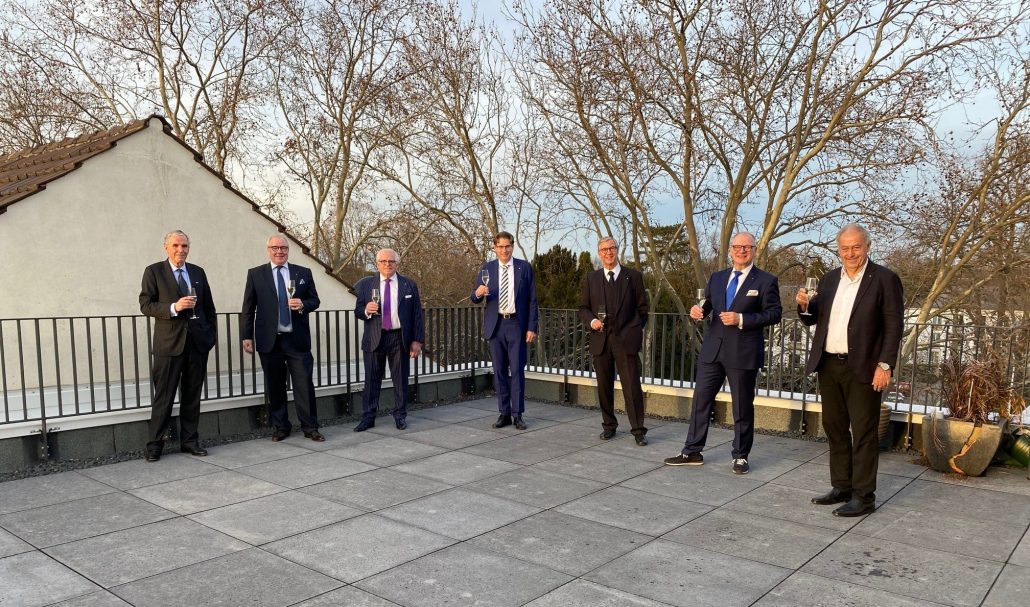
After eleven years serving as President of the Senate of Economy, Prof. Dr. Dr. Dr. h.c. Radermacher did not stand for re-election to this position and was elected Honorary President with a large majority during a digital members’ assembly on February 19, 2021. In addition, Prof. Radermacher continues to serve as Vice President on the Executive Board of the Senate e.V.

The Senate of Economy Germany e.V. and the Senate of Economy Foundation currently include more than 900 leading figures from various sectors of society – among them representatives from business, science, and culture as well as politics, diplomacy, and public life. The Senate is entirely oriented toward the common good and does not represent the individual interests of companies or industries.

The goal of the Senate is to develop solutions for the major challenges of our time. These include promoting an eco-social market economy on both national and international levels, with a focus on ecological sustainability, as well as supporting Germany as a business location. Over the past years, many of the Senate’s initiatives have been taken up by parliaments and governments and translated into real policy.

During his presidency, Prof. Radermacher played a decisive role in shaping the goals of the Senate. Through discussions and events with government officials, leading politicians, and scientists, he represented the interests of both the Senate and the FAW/n. In appreciation of his work, a video clip was created highlighting some of the most memorable moments from his presidency

The Senate of Economy Foundation for Common Good–Oriented Policy is one of the founding donors of the FAW/n. Through this generous support, the institute’s research work is made possible

Further information:

Website of the Senate of Economy

Image source: © Thomas Klink / T. Klink – Fotografie, Senat der Wirtschaft

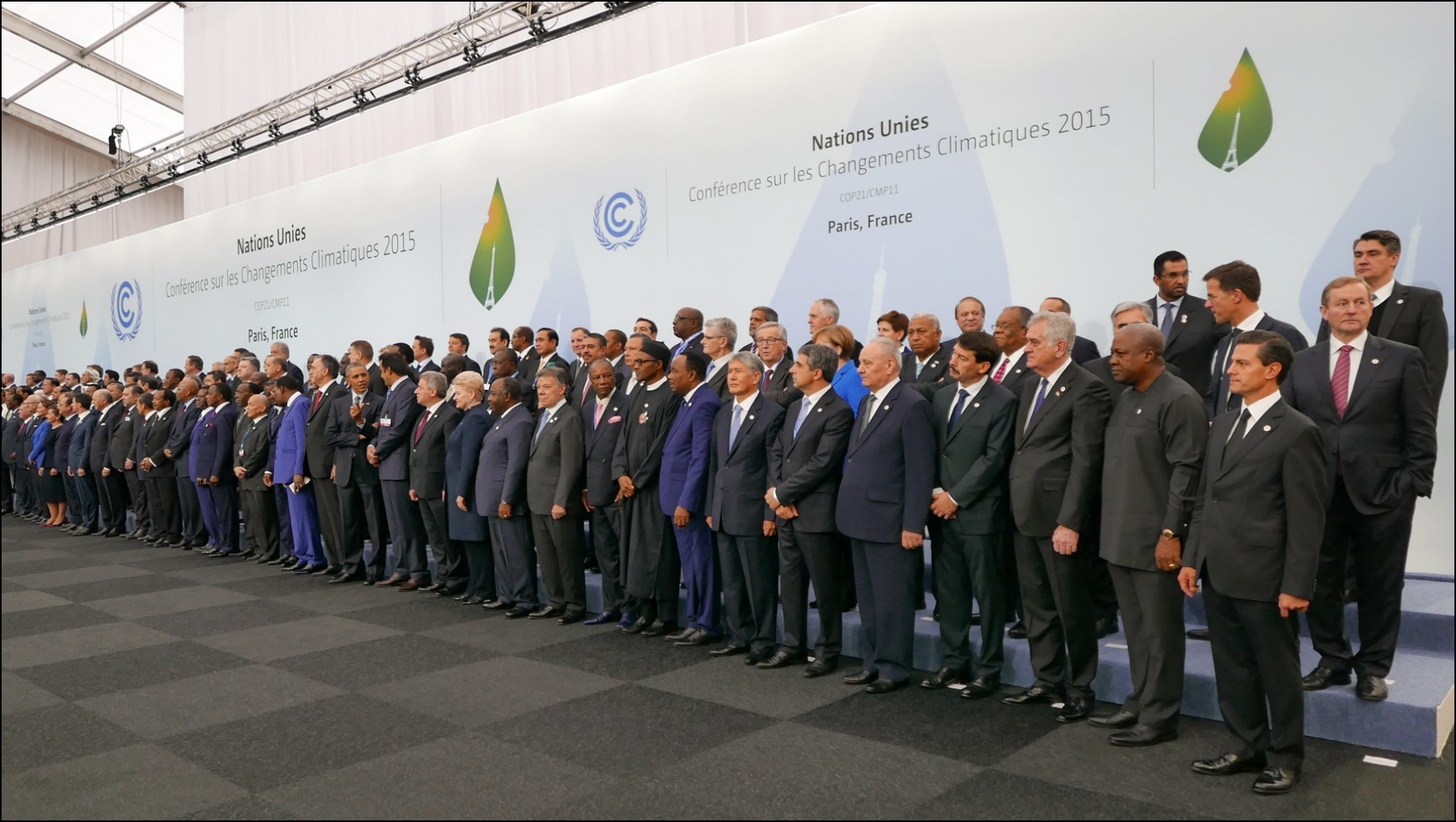
UN Climate Conference in Paris 2015: Press Release

Prof. Franz Josef Radermacher, President of the Senate of Economy International, welcomes the results of the Paris Climate Summit. What was achieved there is a major step forward. Of course, many had hoped for more – but that was not realistic. What has now been achieved represents half the battle on the path toward meeting the 2°C target – and perhaps it may even be possible to stay below it. The current outcome opens up an opportunity for the private sector to deliver the other half. Voluntary climate neutrality and corresponding measures by companies, organizations, and individuals are the key. The World Forest Initiative of the Senate illustrates what now needs to be done.

https://www.fawn-ulm.de/wp-content/uploads/2015/12/Delegates_to_the_COP21-300x200.jpg

In a sense, politics has now closed the gap that previously prevented the private sector from truly addressing the issue of climate change. We now have a kind of upper limit for future CO₂ emissions, and that is good news, because it means we can now work toward a defined target. We expect that this agreement will reduce cumulative global CO₂ emissions by around 500 billion tons by 2050 compared to the levels that would have been emitted without the agreement. This is not enough to fully meet the CO₂ target, but it is still significant – roughly half of the total task ahead. And now that we have an upper limit, we know what still needs to be done: approximately another 500 billion tons by 2050. The private sector can achieve this through voluntary programs, provided that political actors support this approach. In particular, the private sector can – and will – voluntarily invest, beyond legal obligations, to retire emission rights and/or to tighten the annual amounts of greenhouse gas emissions available to countries and governments through contractual arrangements or other mechanisms.

The complete press release can be found here.

Image source: Wikimedia