
Posts

Radermacher: “We Are Going to Experience a Massive Loss of Prosperity”

Our society is currently facing a multitude of challenges – from the climate and energy crises to the war in Ukraine and sharply rising prices. In an interview with the magazine Wirtschaft im Südwesten (published by the Chambers of Industry and Commerce in the Freiburg administrative district), Prof. Radermacher discusses the consequences he expects from the current developments.

“One problem is that everything is urgent. The nature of these issues doesn’t allow us to tackle them one by one.” The key challenge, he explains, is to distinguish between strategies that primarily benefit wealthy countries and those that truly help the climate. As potential solutions, Prof. Radermacher highlights Carbon Capture Usage and Storage (CCUS) – capturing, utilizing, and storing CO₂ – as well as Nature-Based Solutions, such as reforestation, humus formation, rainforest protection, and related measures.

The full interview – which also covers topics such as the usefulness of the Supply Chain Due Diligence Act and whether expanding renewable energy can solve our problems – can be found here.

Image source: Cup of Couple (Pexels)

“We Must Ensure Resources for Everyone!”

Prof. Radermacher is far from satisfied with current climate policies, as he explains in his interview with ISOCELLER. “What we are witnessing is a ‘panic concert,’ where inadequate methods are being used to solve a problem that is 50 years old,” he emphasizes. According to him, the reason is that climate issues – like the situation in Ukraine or the pandemic – are often politicized to win votes, but no real solutions follow.

Germany and Austria are too small to make a significant impact at a national level. Yet funding for climate protection is expected to remain within the country, which leads to measures that are very costly but ultimately ineffective. Added to this, population growth in Asia and Africa is substantial, and “all these people want to live, and they need electricity, food, and water.”

Once again, Prof. Radermacher calls on decision-makers to pursue international solutions, such as Carbon Capture for storing and using CO₂, and e-fuels, i.e., synthetic fuels produced from water and carbon dioxide. The magazine ISOCELLER explains in detail what these terms involve.

You can read the full interview here (page 18).

Image source: Umwelt Foto (rawpixel.com – de.freepik.com)

“We’re Failing to Provide Global Solutions”

Once again, Prof. Radermacher delivers a sharp critique of Germany’s current climate policy in an interview with the magazine Entsorga. “I would even go so far as to say that our national measures are, in some cases, harming the global cause,” he emphasizes. He argues that the problem lies in policy directing funds toward the wrong priorities. Although we have long needed to think and act globally, Germany’s perspective remains focused on national issues that ultimately achieve little.

As an example, Professor Radermacher points to the coal phase-out. While Germany plans to shut down coal power plants with a total capacity of 40 gigawatts at a cost of 40 billion euros, China builds new plants with the same 40-gigawatt capacity every year. According to Radermacher, the real solution is capturing CO₂ directly at the power plant and reusing it to produce synthetic fuels.

The full Entsorga interview explores Prof. Radermacher’s views on China’s climate policy, whether nuclear energy is a viable solution in his eyes, and why Germany does not import green electricity

Source: Entsorga – The Trade Magazine for Circular Economy: Achieving Germany’s Climate Goals: Still on Track? (Published in March 2022)

Image source: Iván Tamás (Pixabay)

Fossil or Renewable Energy? Interview with Prof. Radermacher

Is phasing out fossil fuels sensible? Is it necessary for humanity to give up prosperity in the name of climate protection? In an interview with Stephan Strzyzowski, editor-in-chief of die Wirtschaft, Prof. Dr. Dr. Dr. h.c. Radermacher answers with a clear “No.”

The war in Ukraine has made Russian gas a controversial topic, but even before that, climate activists were calling for Germany to phase out coal, gas, and oil. According to Prof. Radermacher, however, moving away from fossil fuels would have serious political consequences, be extremely costly, and ultimately have little impact on the global climate. Instead, CO₂ should be captured and reintroduced into a circular system – a concept already being implemented in the U.S. and Norway. That said, Prof. Radermacher does see value in expanding renewable energy “toward doubling the current level.”

Other topics discussed in the interview include the beneficiaries of the fossil fuel phase-out, the tension between nature conservation and building wind turbines, and the broader effects of climate policy in Europe.

The full interview can be found here.

Image source: LoggaWiggler (Pixabay)

Technology as a Key to Sustainability

“How sustainable is digitalization? What contribution can modern technologies make to environmental protection?” These and other thought-provoking questions, published in IT-Business, were addressed by Prof. Dr. Dr. Dr. h.c. Radermacher during the FIT Congress 2021.

The focus lies on the intersection of technology and sustainability. According to Prof. Radermacher, digitalization has so far mainly had negative effects on the environment because it has accelerated globalization. However, it could also help encourage people to adopt more sustainable behaviors.

Technologies, he emphasizes, could be key to creating a climate-neutral energy system—something humanity urgently needs in order to reconcile environmental and climate protection with prosperity. Changes in human behavior, he notes, tend to follow the introduction of new technical solutions rather than precede them.

The complete interview is available here.

Bildquelle: Tomasz Jagla (Pixabay)

Harmonizing Market Economy with Sustainability Goals

In an interview with RATIO kompakt, a magazine by RKW Baden-Württemberg, Prof. Dr. Dr. Dr. h.c. Radermacher advocates for implementing rules for sustainability on a global scale.

A worldwide eco-social market economy is a goal that Prof. Radermacher and FAW/n have long supported. In the interview, the professor explains exactly what he means by this and why there does not have to be a conflict between the market and sustainability. He emphasizes that only a global approach can lead to the desired results. The established system must be “overcome” so that capitalism does not operate at the expense of the environment, nature, and poorer countries. To achieve this, “one must understand the world as a community,” says Radermacher. Professor Radermacher also outlines both the failures and successes of recent years, highlighting the crucial role played by the private sector.

The full interview on these topics, as well as on overcoming the COVID-19 crisis as a gateway to sustainable growth, can be found here.

Image source: geralt (pixabay)

Prof. Radermacher in the Cyber Podcast

Artificial intelligence has now found its way into many areas of our lives. In the Cyber Podcast by the agencies Storymaker and DESIGN HOCH DREI, the topic is examined and discussed in greater depth in the context of communication and ethics.

The latest episode features an interview with Prof. Dr. Dr. Dr. h.c. Franz Josef Radermacher on the topics of “Emotions and trust in communication, and the differences between humans and machines.”

You can listen to the podcast here:

Image source: geralt (Pixabay)

Dettling: “The Future Will Belong to the Eco-Social Market Economy”

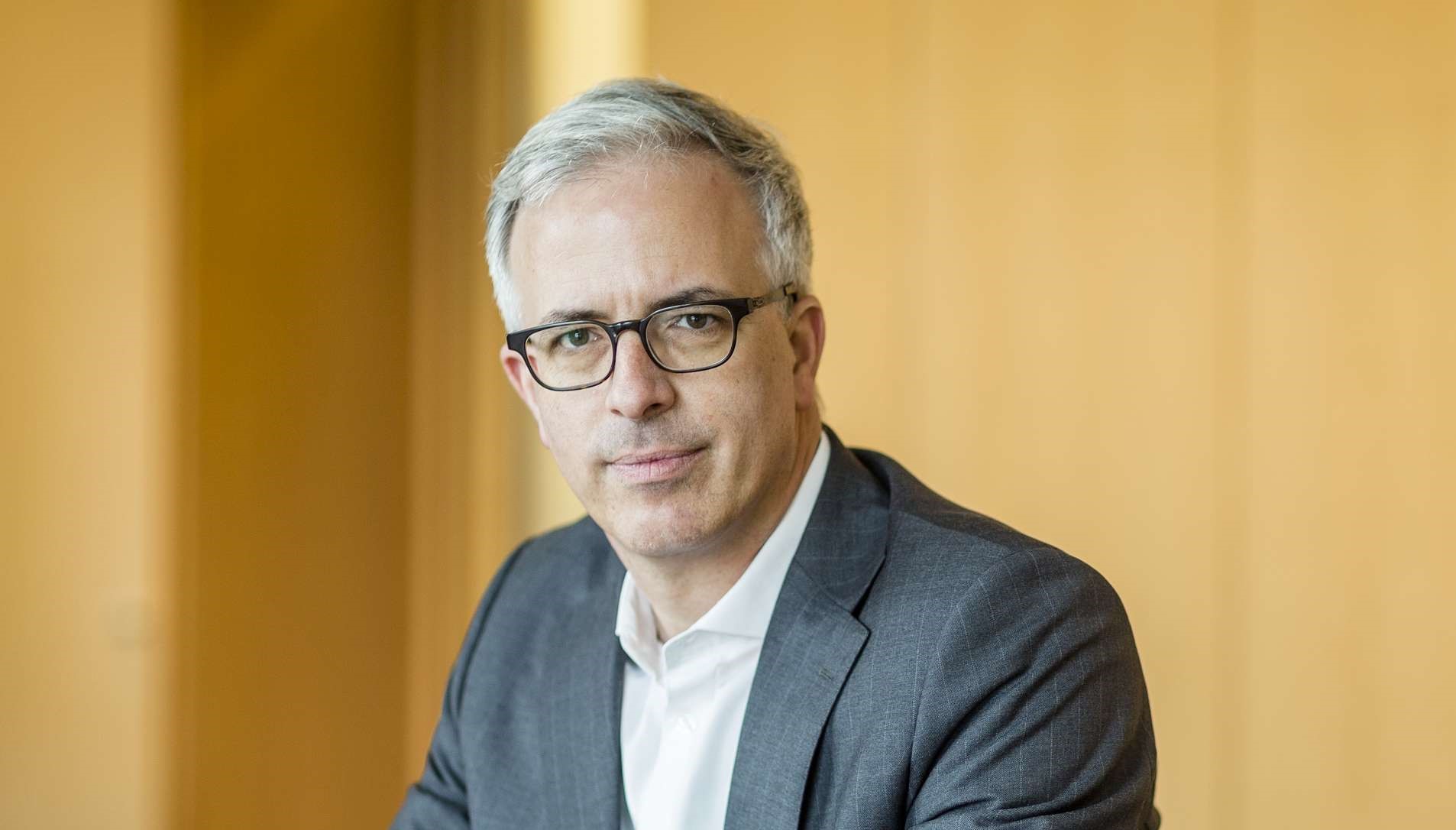
The well-known political expert and futurologist Daniel Dettling spoke in an interview with Kurier about the future of efficiency- and price-driven capitalism. Like FAW/n, he believes that this form of market economy has become outdated due to its inefficiency and will be replaced by an eco-social market economy.

In the interview, conducted as part of this year’s Municipal Summer Talks in Bad Aussee, Dettling commented on the policies of individual countries as well as on Africa and the EU. In his view, Europe will grow closer together as a result of the coronavirus crisis and evolve into a “solidary federation of states”. The EU’s advantage, he says, is that it is “freer than China and more social than the USA”. European data and property protection could also become globally attractive in the future and serve as an incentive for major companies. Dettling identifies India and Africa as the rising powers of the future, emphasizing that Europe must strengthen its engagement in these regions.

When asked what lessons can be learned from the current economic crisis, Dettling replied: “The solution can only come from a combination of health and environmental protection that leads toward innovation and new technologies”. FAW/n has likewise made it its mission to link research into new technical options with biological solutions to help overcome the current global energy and climate crisis.

You can read the full interview here.

Image source: Daniel Dettling

Kompass (Joshua Woroniecki (Pixabay))

Prof. Radermacher and Prof. Herlyn in the “Future of Leadership” Podcast

In three episodes of the Future of Leadership Initiative podcast, Prof. Dr. Dr. Dr. h.c. Franz Josef Radermacher and Prof. Dr. Estelle Herlyn discuss the impact of COVID-19 on society and politics, the measures taken by the German federal government, the role of big data in democratic societies, the effects of climate change on organizations and society, the question of responsible business practices, and the Development and Climate Alliance of the Federal Ministry for Economic Cooperation and Development

You can listen to the podcasts here:

Image source: Joshua Woroniecki (Pixabay)

Article by Prof. Herlyn in the “Rheinische Post” Newspaper

COVID-19 Pandemic Slows Down the Climate Debate

The COVID-19 pandemic has pushed important sustainability goals into the background. Private engagement is now more important than ever. In an article for the Rheinische Post, Prof. Dr. Estelle Herlyn, head of the Competence Center for Sustainable Development at FOM University Düsseldorf and freelance collaborator of FAW/n, discusses the opportunities and risks arising from the current crisis.

Image source: pixabay/MichaelGaida