
Posts

Eco-Social Market Economy: A Fresh Start?

In recent days, the term “eco-social market economy” has repeatedly come up. Rheinische Post examined what politicians mean by it and also asked Prof. Radermacher for his perspective.

The 22 working groups of the “traffic light” coalition negotiators recently presented their results on various policy topics, while unresolved issues are to be clarified in leadership rounds. A central concept in these negotiations is the “eco-social market economy,” which aims to combine ecological ambitions with social responsibility. This idea implies that the state must take on new tasks to finance technological transformation and promote investments. Critics argue that this may lead to increased state control, contrary to the original social state concept, which was intended to empower people rather than dictate to them.

The term “eco-social market economy” is not new; as early as the 1970s, there were discussions about integrating environmental protection into the market economy. Advocates of this approach argue that pollution must carry a cost and that the exploitation of natural resources should be limited. Franz Josef Radermacher, a leading thinker in this area, emphasizes that eco-social economic practices must also foster innovation to maintain prosperity.

A key challenge is the global dimension of the eco-social market economy. Pricing environmental costs is often circumvented by producing in countries with low environmental standards. Achieving a true eco-social market economy requires global agreements and financial transfers from wealthy to poorer countries. In Europe, “green projects” often remain confined to national borders, limiting their global impact. Radermacher criticizes that wealthy countries focus on their own problems while poorer countries struggle with existential challenges.

He advocates for a global approach to addressing the climate crisis, which would direct more resources and innovation toward solving these problems. Currently, environmental levies are used for projects that primarily benefit wealthy countries. Radermacher warns that a focus on national solutions alone is insufficient to meet global challenges, and that a broader, cooperative approach is necessary to effectively tackle the climate crisis.

The full article can be found here (Paywall).
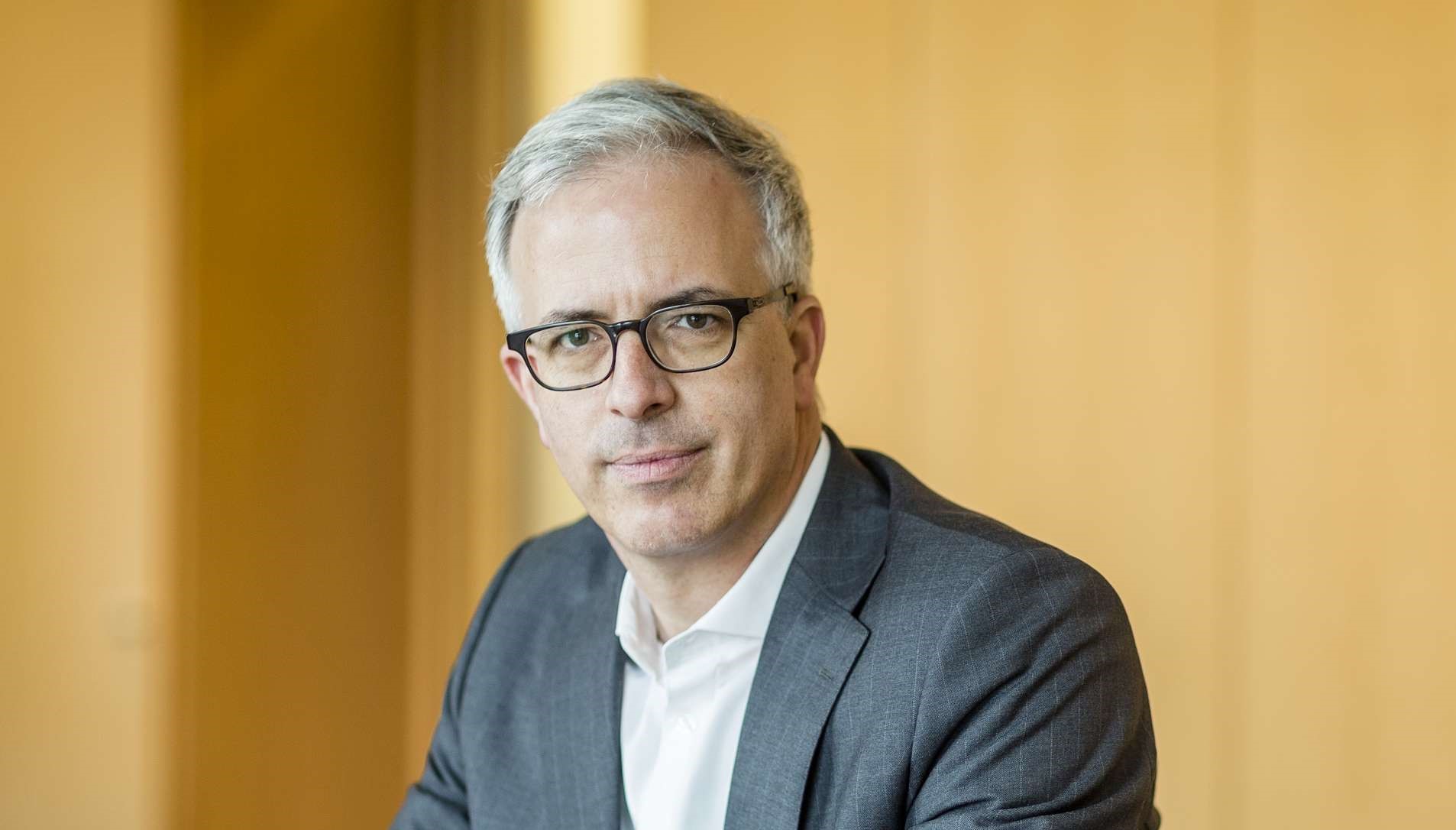
Image source: Dorothe (Pixabay)

Dettling: “The Future Will Belong to the Eco-Social Market Economy”

The well-known political expert and futurologist Daniel Dettling spoke in an interview with Kurier about the future of efficiency- and price-driven capitalism. Like FAW/n, he believes that this form of market economy has become outdated due to its inefficiency and will be replaced by an eco-social market economy.

In the interview, conducted as part of this year’s Municipal Summer Talks in Bad Aussee, Dettling commented on the policies of individual countries as well as on Africa and the EU. In his view, Europe will grow closer together as a result of the coronavirus crisis and evolve into a “solidary federation of states”. The EU’s advantage, he says, is that it is “freer than China and more social than the USA”. European data and property protection could also become globally attractive in the future and serve as an incentive for major companies. Dettling identifies India and Africa as the rising powers of the future, emphasizing that Europe must strengthen its engagement in these regions.

When asked what lessons can be learned from the current economic crisis, Dettling replied: “The solution can only come from a combination of health and environmental protection that leads toward innovation and new technologies”. FAW/n has likewise made it its mission to link research into new technical options with biological solutions to help overcome the current global energy and climate crisis.

You can read the full interview here.

Image source: Daniel Dettling

New Policy Paper from the Eco-Social Forum: A Guide for the Climate Change Generation

On the occasion of the 30th anniversary of the Eco-Social Market Economy, the Eco-Social Forum, together with a scientific advisory board, initiated a further development of the concept and outlined the major challenges of our time. The result is the “Guide for the Climate Change Generation”. Building on this foundation, concrete solutions and measures are to be developed that integrate ecological, economic, and social imperatives.

This Guide for the Climate Change Generation describes what the core principles of an Eco-Social Market Economy mean for addressing today’s challenges. It explores fundamental issues and key decisions that are crucial for the quality of life and sustainability of our society. Specifically, it examines topics such as internationality, growth, demography, work, distribution, resources, energy, spatial planning, nutrition and agriculture, science, education, digitalization, and governance. In doing so, it discusses the economic, social, and environmental areas of action that will shape the opportunities of the climate change generation. The paper clearly demonstrates the high relevance and contemporary importance of the Eco-Social Market Economy as a guiding model for the societal transformation toward sustainability.

Download and view the policy paper – 30 Years of the Eco-Social Market Economy

Image source© Shutterstock/3D-creation

Philosophical Conversations in Hagen

Interviews Following the Hagen Anniversary “Future” Event

On February 13, 2019, the Hagen City Hall hosted the 20th anniversary of the Hagen Future Events, initiated by philosopher Klaudius Gansczyk. Among the participants were Prof. Hartmut Graßl, Prof. Franz Josef Radermacher, and Prof. Ernst Ulrich von Weizsäcker, each attending their third official visit to Hagen in the context of these Future Events. On this occasion, the Mayor of Hagen honored the climate researchers by including them in the Golden Book of the City.

In a conversation with Klaudius Gansczyk, following the anniversary event, Prof. Radermacher discussed his works – “Balance or Destruction,” “World with a Future,” and “Der Milliarden-Joker (The Billionaire-Joker)” – and explored themes such as planetary consciousness, intercultural humanism, world ethics, global governance, worldwide eco-social market economy, and the Alliance for Development and Climate (AEK). He also reflected on values including global justice, peaceful conflict resolution, and sustainability. The interview is available on YouTube:

In the second interview, Klaudius Gansczyk spoke with Prof. Dr. Ernst Ulrich von Weizsäcker, Honorary President of the Club of Rome, also in the aftermath of the anniversary event, about the Club’s anniversary volume “Wir sind dran”. The interview addresses a new, sustainability-oriented enlightenment in light of planetary threats in the Anthropocene, taking into account the diversity of worldviews, ways of thinking, and logic systems worldwide, and is captured on video.

Image source: pixabay/wikiImages