Posts

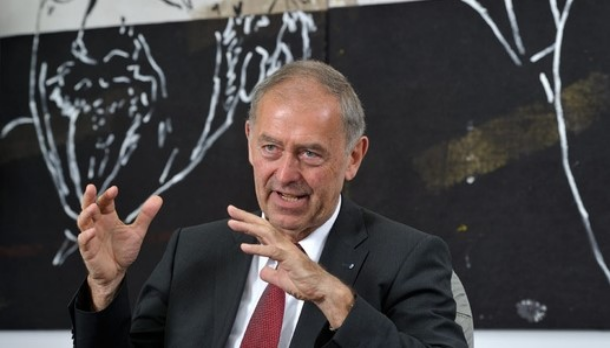
Prof. Herlyn: “The World Needs Many More Companies Like ALDI SÜD”

Recently, the media reported that four companies, including ALDI SÜD, had allegedly used the term “climate neutrality” in a misleading way. These reports are based on a complaint filed by the German Centre for Protection against Unfair Competition (Wettbewerbszentrale).

Prof. Dr. Estelle Herlyn addresses this issue in her article in UmweltDialog and clarifies what climate neutrality actually means: “CO₂ emissions that are generated can be offset or compensated by taking or enabling activities that, for example, remove CO₂ from the atmosphere through reforestation (negative emissions) or avoid CO₂ emissions by promoting renewable energy.”

She considers it incomprehensible that the Competition Center portrays achieving climate neutrality through CO₂ compensation as misleading. ALDI SÜD supports numerous international projects with positive climate impact and recognizes that this is the only way to make global sustainable development achievable. The company is also one of over 1,000 supporters of the Alliance for Development and Climate, whose projects demonstrably contribute to international climate protection

Den gesamten Beitrag von Prof. Herlyn finden Sie hier auf deutsch und auf englisch. You can find the full article by Prof. Herlyn here in German and English.

Image source: Alexas_Fotos (Pixabay)

Renovate Locally & Compensate Globally

Prof. Radermacher contributed a foreword to the 2019 Sustainability Report magazine of the Nassauische Heimstätte corporate group. Under the motto “more drive to take action,” he highlighted the themes of housing and the Alliance for Development and Climate.

Housing is a fundamental human need. Nevertheless, we must not overlook the impact of the building sector on the climate. From inadequate insulation to cement production, global CO₂ emissions must be drastically reduced if we are to achieve the climate goals set in Paris.

According to Prof. Radermacher, the most effective solutions are global in nature. This is why the Nassauische Heimstätte | Wohnstadt corporate group is a member of the Alliance for Development and Climate. Through this membership, the company temporarily offsets its CO₂ emissions – for example, by investing in a project in Nicaragua. You can learn more about this initiative here.

Das vollständige Vorwort von Prof. Radermacher finden Sie hier auf Seite 107. The full foreword by Prof. Radermacher can be found on page 107 of the report.

Image source: Larisa Koshkina (Pixabay)

CO2 (geralt (Pixabay))

SMEs, Corporations, Entire Countries: How Climate Neutrality Can Succeed

In an article for KLIMAzin by the climate-neutral Hessian state government, Prof. Dr. Dr. Dr. h.c. Franz Josef Radermacher introduces three members of the Alliance for Development and Climate and their exemplary concepts for achieving climate neutrality.

The full eMagazine can be downloaded here.

Image source: pixabay/geralt

Interviews with Prof. Radermacher in SENATE Magazine and the Südwest Presse

“Electromobility alone cannot be the solution – Reconciling climate neutrality and a prosperous society”

This is the headline of an interview conducted by Ernst Timur Diehn with Prof. Radermacher in SENATE magazine. The full interview (4 pages) can be found at the following link.

In another interview with David Nau for the Südwest Presse, Prof. Radermacher discusses the importance of new technologies and the role of individual restraint.

You can download the full interview here.

New Publications from FAW/n

All the points addressed in the special report of the Intergovernmental Panel on Climate Change (IPCC), “Global Warming of 1.5°C”, can be found in the new book “The Billionaire Joker”, published by Murmann Verlag, by the institute’s director. It can be read as a response to the latest global climate report.

A book full of surprising insights, information, and findings. Anyone who wants to participate knowledgeably in the current situation should definitely read this book.

Climate. Positive. Now.
Global warming is progressing relentlessly. The crucial question: Can the international community still prevent a climate catastrophe?
Franz Josef Radermacher is cautiously optimistic. His proposal is brilliantly simple and rigorously calculated: Non-state actors in Germany and Europe voluntarily and at their own expense offset their greenhouse gas emissions – beyond all legal requirements and other individual measures – through high-quality CO2 compensation projects in non-industrialized countries. At the same time, substantial co-benefits regarding the UN Sustainable Development Goals are achieved. Key elements of implementation include reforestation, humus formation, wetland restoration, use of renewable energies, and climate-neutral synthetic fuels.

Overcoming conflicts of objectives between ecology, economy, and social issues. For an ecologically and socially oriented economy and the valorization of degraded nature.

Der Milliarden-Joker.

Franz Josef Radermacher is one of the country’s leading economists and systems scientists. On the international stage, he advises governments, companies, associations, and NGOs.

Further Information

Books, that were also recently published on the same topic:

Climate Neutrality – Hessen 5 Years Ahead

Martin J. Worms, Franz Josef Radermacher

Springer Fachmedien Wiesbaden, 01.10.2018 – 308 pages

The climate issue is gaining increasing importance. Global CO2 emissions continue to rise. In this context, the state of Hessen has taken an important step as a mid-level political entity, which is beginning to exert significant leverage. Hessen is the first German federal state to declare its intention to make its own administration climate-neutral by 2030. The Hessian climate-neutrality project is embedded in the state’s overarching sustainability strategy and is a project of outstanding significance within this strategy.

Excerpt from the Foreword

The international community has committed to the 2°C target in climate protection. In 2015, in Paris, this target was even tightened to “well below 2°C.” This goal requires that average global temperatures rise in the future by significantly less than 2°C compared to pre-industrial times. According to scientific analyses by the Intergovernmental Panel on Climate Change (IPCC), there is still a good chance under this condition to manage climate changes without catastrophic consequences for humanity. According to the 1992 UN Climate Convention in Rio de Janeiro and the 2015 Paris Agreement, this involves jointly – but with shared responsibility among the states – controlling the risks of uncontrolled atmospheric change.

In this context, the state of Hessen decided in 2009 to achieve climate neutrality for its administration by 2030, going far beyond existing legal obligations. The state has systematically pursued this goal within its sustainability strategy, in connection with other activities, thereby setting an example and achieving strong influence. This mainly applies to its properties but also to employee business travel, and the state achieves much more through interactions with numerous actors in Hessen at all levels.

This volume presents the spectrum of climate-related activities achieved in Hessen, which is of particular interest to us as editors, documents the accomplishments, and places them in a global context. Who would have thought eight years ago that so much could be achieved in such a short time – or even five years ago, when the first edition of the now revised and newly published book “Climate Neutrality – Hessen Leads the Way” came out?


Sustainable Development

Book: “Voluntary Climate Neutrality of the Private Sector – Key to Achieving the 2°C Target”

Combating climate change is one of the major challenges for international politics. It is about far more than just an ecological issue. It concerns the protection of prosperity and freedom, and potentially even matters of war and peace. From our perspective at the Senate of Economy, it has always been clear that climate policy must overcome traditional frameworks of thinking. We need international solutions. In addition to political action, we must activate the private sector – especially the wealthy segment of it – and alongside all efforts to avoid and reduce greenhouse gas emissions, particularly CO2, we must also remove it from the atmosphere in the form of so-called negative emissions.

Research Project: “A Better Design of Globalization: Action Potentials from a Development Policy Perspective”

The project comprises two sub-projects: “Value Chains and Sustainability – Opportunities and Limits under WTO and EU Law”and “Implementation of the Sustainable Development Goals 2015-2030 – Requirements for Global Governance and Implementation Possibilities”.

Image source: Pixabay

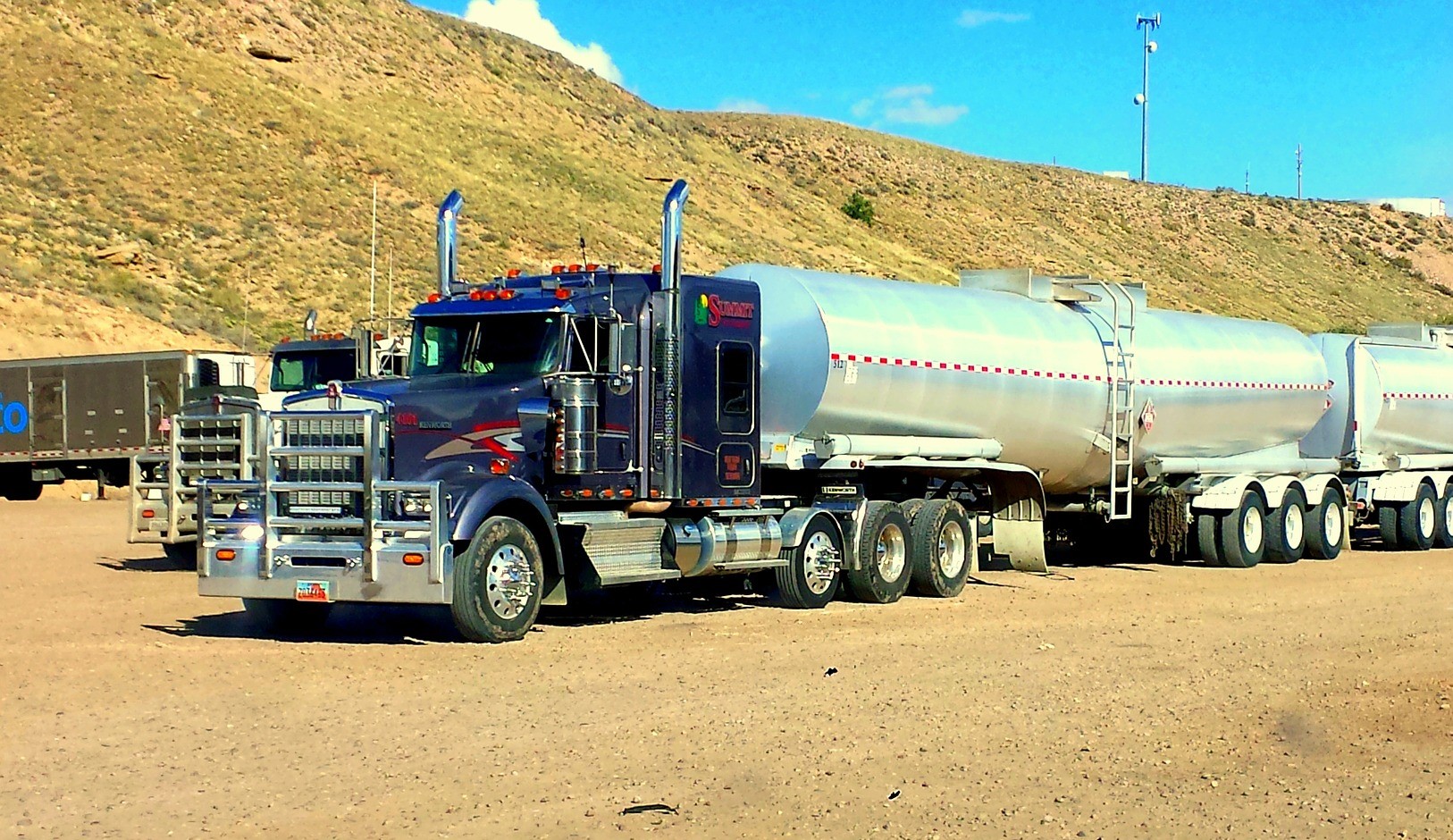
Heating Oil Doesn’t Have to Be Harmful to the Climate

AVIA has launched the first CO2-neutral heating oil on the market, with no extra cost to consumers for its environmental friendliness. The emissions generated from burning AVIA heating oil are now offset through effective climate protection projects.

Outside of Germany, AVIA invests in a total of four different projects in four countries. These include a run-of-river hydropower plant in the Himalayas in India, reforestation in Uruguay, investments in more efficient cooking stoves in Uganda, and improvements in energy efficiency in Mongolia. (Note: these projects are listed on AVIA’s website as of 2021.)

Prof. Franz Josef Radermacher commented on this positive development: “Limiting global warming will only succeed if the wealthier half of the world – and thus the economies in these countries – provides the funding for concrete CO2 reduction measures, both at home and worldwide. In this sense, AVIA’s initiative is truly groundbreaking.”

For AVIA, this investment is part of a business strategy that began 15 years ago, focusing on alternative and renewable sources for heating and energy supply. Overall, the project can save over one million tons of CO2-equivalent per year – equivalent to the consumption of approximately 185,000 households

The full press release can be found here.

Image source: John R Perry (pixabay)