The Nuremberg Chamber of Industry and Commerce for Middle Franconia (IHK Nürnberg für Mittelfranken) has joined the “Alliance for Development and Climate”, which was founded in autumn 2018 by the Federal Ministry for Economic Cooperation and Development (BMZ).
The Alliance now includes around 350 companies, associations, public authorities, project developers, compensation providers, and private individuals.
You can read the full article from IHK Nuremberg here.
https://www.fawn-ulm.de/wp-content/uploads/2021/07/Wald_Wiese.png9271626FAW/nhttps://www.fawn-ulm.de/wp-content/uploads/2017/10/Logo_oben-300x121.pngFAW/n2019-07-12 11:51:002025-10-30 14:30:56IHK Commitment: Active for Climate Protection
Finnish EU Council Presidency Offsets Flight Emissions
During its Presidency of the Council of the European Union, Finland is offsetting the flight emissions of participants and delegations by financing projects that reduce greenhouse gas emissions and promote the Sustainable Development Goals (SDGs). This offsetting measure is a concrete step in climate protection and forms part of the Finnish Presidency’s commitment to sustainable event management, reflecting the urgent need to counteract climate change.
https://www.fawn-ulm.de/wp-content/uploads/2020/05/flagge-der-europaeischen-union.jpg455810FAW/nhttps://www.fawn-ulm.de/wp-content/uploads/2017/10/Logo_oben-300x121.pngFAW/n2019-07-12 10:39:002025-10-30 14:31:30Finnish EU Council Presidency Offsets Flight Emissions
An Important Building Block of the Alliance for Development and Climate
At the official press conference held at the Federal Press Conference in Berlin, Federal Minister Dr. Gerd Müller, Plant-for-the-Planet, FAW/n, and the Senate of Economy Germany presented a study from ETH Zurich. The study demonstrates that large-scale global reforestation has the potential to reduce global warming by up to 1 degree Celsius.
Federal Press Conference on Reducing Global Warming through Forest Restoration, July 3, 2019
Reforestation and forest conservation are key project categories of the Alliance for Development and Climate, which was launched by the German Federal Ministry for Economic Cooperation and Development (BMZ), together with GIZ and FAW/n. Supporters of the Alliance contribute voluntarily to help preserve forest areas in developing countries and remove CO₂ from the atmosphere through reforestation. Projects that promote humus formation in agriculture, develop renewable energy sources, or expand the use of efficient cookstoves achieve the same effect. In addition, these projects generate enormous co-benefits for sustainable development and the United Nations’ Sustainable Development Goals (SDGs).
The fact that so much forest is still being lost, too little reforestation is taking place, and insufficient progress is being made in development is largely due to a lack of financial resources. Public funds alone are not enough to meet the challenges ahead. That is why the Alliance for Development and Climate brings together private-sector actors whose goal is to become climate neutral in the long term. Recently, Robert Bosch GmbH announced that it intends to operate climate-neutrally as of 2020. The company invests around one billion euros annually to achieve this goal, using high-quality climate protection and development projects in developing countries.
In July, Federal Minister Müller will travel to Brazil to discuss, among other things, the fastest measure against climate change — forest conservation — with the responsible ministers there.
The German Culture Award 2019 was presented to Dennis L. Meadows, author of the groundbreaking sustainability study “The Limits to Growth”, on May 24, 2019, in the Allerheiligen-Hofkirche (All Saints Court Church) of the Munich Residenz. The ceremony was held under the patronage of Minister President Dr. Markus Söder. The laudation was delivered by Prof. Dr. Dr. Dr. h.c. Franz Josef Radermacher, member of the Club of Rome.
https://www.fawn-ulm.de/wp-content/uploads/2020/05/2019-Verleihung_Deutscher_Kulturpreis_Meadows-845x321-1.jpg321845FAW/nhttps://www.fawn-ulm.de/wp-content/uploads/2017/10/Logo_oben-300x121.pngFAW/n2019-05-26 15:09:002025-10-30 15:18:47German Culture Award 2019 for Dennis L. Meadows
The question of the limits to growth, as posed by the Club of Rome back in 1972, remains as relevant today as ever. During the University Days on Ecological-Social Market Economy and Sustainability on Friday, May 24, renowned U.S. economist Professor Dennis Meadows once again assessed the situation. Meadows led the research team that produced the world-famous Club of Rome report and, in his lecture, presented updated scenarios addressing the current state of the world’s resource situation. Around 350 students and interested attendees participated in the event at the University of Ulm. You can find the presentation slides available for download here.
Professor Franz Josef Radermacher, Director of FAW/n and member of the Club of Rome, introduced the highly topical subject, and University President Professor Michael Weber delivered a welcoming address. The session was moderated by Tobias Orthen.
The scenarios described by Meadows range from a sustainable world to collapse. So where do we stand in 2019?
According to Meadows, the world is currently following the “Standard Scenario” outlined in the 1972 report – global population continues to grow, resource consumption keeps rising, and humanity is heading toward ecological collapse. The visible “symptoms” include climate change, water scarcity, and loss of biodiversity.
Welcoming – Prof. Michael Weber
Dennis Meadows | Club of Rome | Introduction – Prof. Franz Josef Radermacher
Keynote – Prof. Dennis Meadows
Overview of the Questions Asked
The Secret of the Lion Man – Presentation of the Gift
Humanity now faces two choices: either we steer our civilization toward sustainability, or these very symptoms will bring growth to an end.
But how close is the world we know to collapse? In his lecture, “Evaluating the Limits to Growth: Projections after 45 Years,” Professor Meadows did not spare his audience from uncomfortable truths.
The University Days on Ecological-Social Market Economy and Sustainability have been organized since 2010 by the Research Institute for Applied Knowledge Processing/n (FAW/n), the University of Ulm, and other partners including Club of Rome Germany and the Global Marshall Plan Initiative in the German-speaking world.
Fittingly for the occasion, Dennis L. Meadows was awarded the German Culture Prize 2019 in the Allerheiligen-Hofkirche of the Residenz in Munich earlier that morning. The ceremony was under the patronage of Prime Minister Dr. Markus Söder. The laudatory speech was delivered by Prof. Dr. Dr. Dr. h.c. Franz Josef Radermacher, member of the Club of Rome.
The speeches by Prof. Radermacher and Dennis L. Meadows can be accessed via the following links:
https://www.fawn-ulm.de/wp-content/uploads/2021/07/Plakat_Hochschultage.png9271626FAW/nhttps://www.fawn-ulm.de/wp-content/uploads/2017/10/Logo_oben-300x121.pngFAW/n2019-05-24 15:20:002025-10-30 16:28:27Dennis Meadows in Ulm and the Presentation of the German Culture Award in Munich
Overcoming the Global Energy and Climate Crisis – Methanol Economy and Soil Improvement Close the Carbon Cycle
Franz Josef Radermacher
Abstract
The global energy and climate crisis can be solved in a way that is compatible with growth and conducive to prosperity. The increasingly panicked public debates about an impending apocalypse, climate command economies, and the complete electrification of the mobility sector fail to do justice to the multidimensional nature of the challenge. In contrast, the approach described here allows Africa, India, and other emerging economies to follow China’s development path – without negative climate impacts. Using this approach, the Sustainable Development Goals (SDGs) can be achieved by 2050. Three key elements must be combined: (1) the methanol economy, (2) soils as carbon sinks, and (3) development-promoting CO₂ compensation projects to implement the 2030 Agenda.
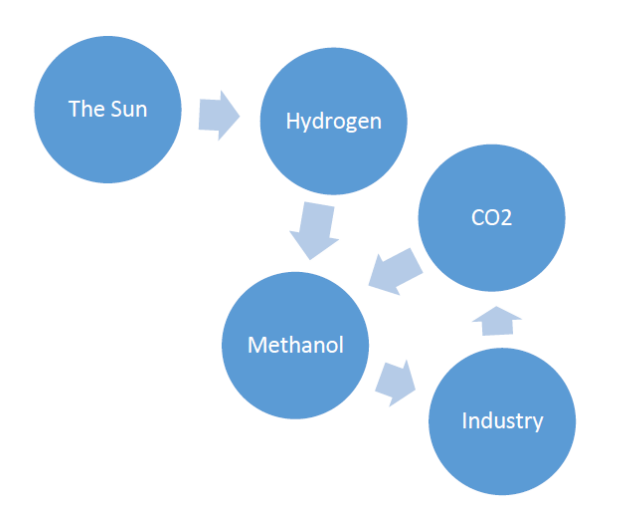
(Simplified overview)
The carbon-based liquid fuel segment of the economy could be expanded by 50% by 2050 under the proposed strategy. By recycling carbon four times within a hydrogen/methanol economy, CO₂ emissions could be reduced to about 10 billion tons per year (compared to 34 billion tons per year today), even amid strong economic growth. This investment and transformation program could be implemented by the fossil energy sector, one of the world’s most powerful industries, by 2050. Annual investments in the methanol sector are estimated at around €600 billion per year.
Through massive global reforestation, especially on marginalized land in the tropics, the promotion of humus formation in agriculture (particularly in semi-arid regions), and the use of biochar, soils could become a carbon sink for the remaining 10 billion tons of CO₂ per year. This would also increase agricultural productivity – a necessity given the rapidly growing global food demand in a prosperous world with 10 billion people. In this way, the carbon cycle can be closed. Forest and agricultural projects play a key role in the Alliance for Development and Climate, launched by the German Federal Ministry for Economic Cooperation and Development (BMZ) in 2018.
In addition to international climate protection, this initiative particularly promotes development, thus addressing the social dimension of a sustainable future. High-quality projects in developing countries simultaneously generate co-benefits across all SDGs (Agenda 2030) and achieve positive climate effects. This approach offers great potential for ensuring that the world’s population reaches its peak of 10 billion by 2050 and then begins to decline gradually.
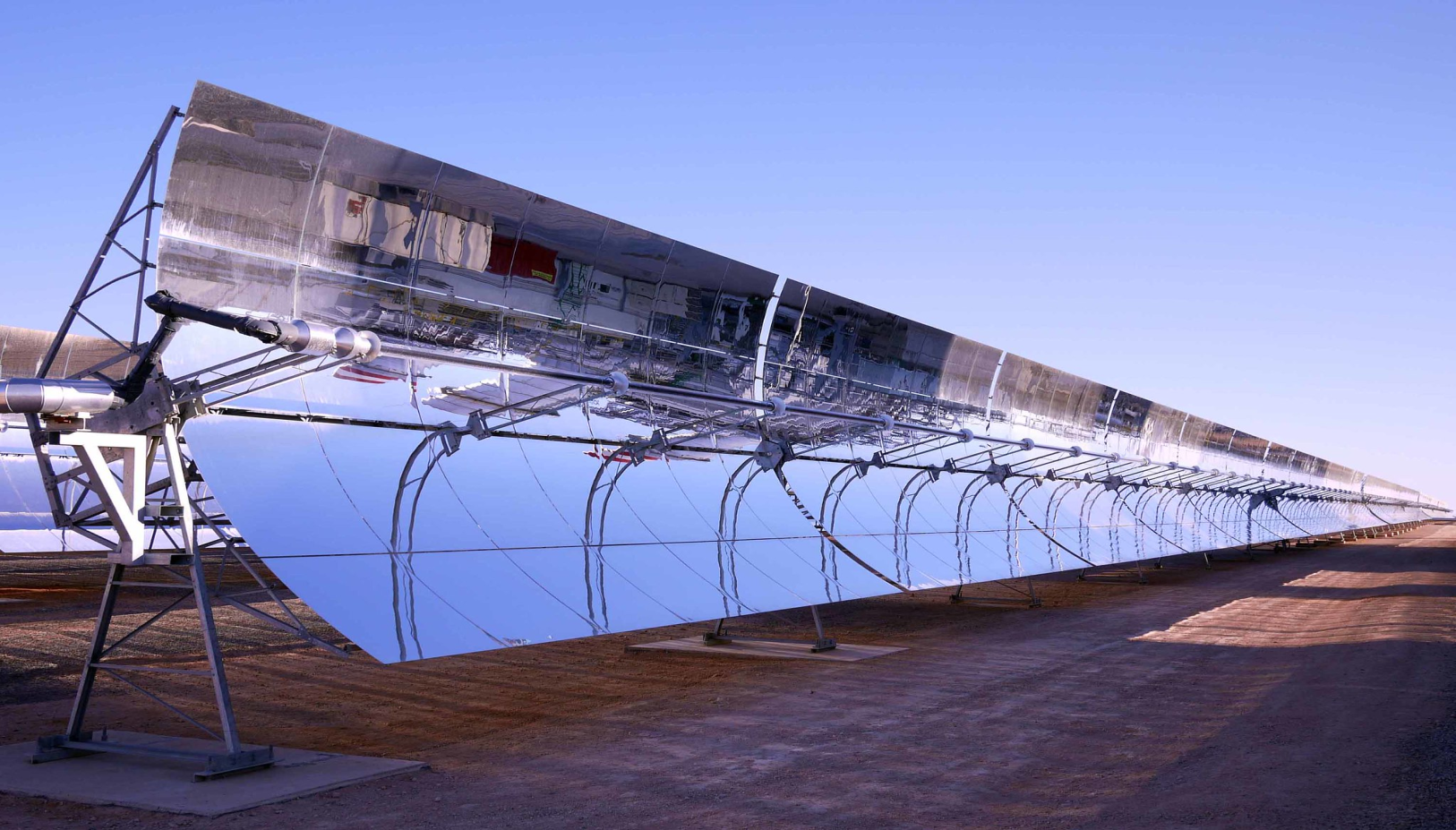
At the heart of this solution lies the methanol economy, powered by low-cost solar energy from the Earth’s sunbelt. Just as the invention of the steam engine 300 years ago unlocked the potential of coal for human prosperity, renewable energy combined with the solar potential of major deserts (Desertec 2.0) holds the key to leading humanity out of its current dead end in development, energy, and climate through a hydrogen/methanol economy.
Download: Methanol Economy and Soil Improvement (DE)
https://www.fawn-ulm.de/wp-content/uploads/2021/07/solar_power.png9271626FAW/nhttps://www.fawn-ulm.de/wp-content/uploads/2017/10/Logo_oben-300x121.pngFAW/n2019-05-09 16:43:002025-10-30 17:08:22Methanol Economy: New Article by Prof. F. J. Radermacher
Ulm / SWP, February 26, 2019 Over the weekend, the Scientific Advisory Board of the Federal Ministry of Transport and Digital Infrastructure held its meeting at the Maritim Hotel in Ulm – marking the board’s second session in the city since 2011. The meeting was organized by Prof. Franz Josef Radermacher, member of the board and Executive Director of FAW/n. Following his retirement from the university, Prof. Radermacher also concluded his long-standing service on the advisory board, which he had been part of since 2000.
A clear wake-up call to policymakers and businesses: “Voluntarily make yourselves climate neutral,” says economist Franz Josef Radermacher. “Only then can we prevent the overheating of the planet.”
Read the full interview by Ernst Timur Diehn with Prof. Dr. Dr. Dr. h.c. F. J. Radermacher on the Stifterverband website.
https://www.fawn-ulm.de/wp-content/uploads/2021/07/Schweinchen.png10201810FAW/nhttps://www.fawn-ulm.de/wp-content/uploads/2017/10/Logo_oben-300x121.pngFAW/n2019-01-22 17:09:002025-10-30 17:14:58Compensating for the Climate
Global challenges are growing. The United States is destabilizing the international order and breaking treaties, while China seeks to expand its influence in the South China Sea. Brexit, financial instability in Italy, and populist trends across many EU countries make smart policymaking increasingly difficult. As a result, the outlook for sustainable development is worrying.
Warnings from the IPCC and the Club of Rome, which recently celebrated its 50th anniversary, are clear: urgent action is needed. In response, FAW/n has been working with the Federal Ministry for Economic Cooperation and Development (BMZ) to establish the Alliance for Development and Climate, promoting non-governmental engagement in development and international climate protection. This initiative has the potential to drive significant change in climate policy, the 2030 Agenda, and global population trends – potentially a quantum leap forward. At the same time, we are collaborating with the Senate of Economy on a study to be released ahead of the European elections, presenting a vision for a stronger, more united Europe.
Through these and other initiatives, FAW/n continues to contribute to shaping a sustainable future, together with the Club of Rome, the Senate of Economy, the BMZ, and many other partners – including the University Days on Eco-Social Market Economy and Sustainability.
We are grateful for the opportunity to work closely with our partners and sincerely thank everyone for their broad support throughout the year.
Under the title “Tracking Megatrends” Prof. Franz Josef Radermacher gave a lecture in Langenau on November 15, 2018. The SWP reports the following:
Globalization, digitalization, sustainability, world population growth, urbanization, and the role of women beyond the household – according to the Ulm-based professor, these are the forces shaping our world.
On Thursday evening, 180 visitors attended the lecture at the Pfleghof in Langenau to hear the 68-year-old head of the Research Institute for Applied Knowledge Processing speak live. Harald Ostermeir from the organizing Trade and Business Association (GHV) described him as “one of the most distinguished speakers in the German-speaking world”.
For around an hour and a half, Radermacher offered a lively yet sobering lecture titled “Germany as a Business Location Amid Powerful Megatrends.” He warned, “Something truly alarming is happening that could affect us all”. He highlighted the explosive growth of the world population – projected to reach ten billion by 2050, especially in Africa. While many people there face food insecurity, they have access to smartphones and the internet, opening up “a world full of possibilities”. Many, he predicted, will seek opportunities in Europe.
We use a few cookies to give you the best possible online experience.
Funktional
Always active
Die technische Speicherung oder der Zugang ist unbedingt erforderlich für den rechtmäßigen Zweck, die Nutzung eines bestimmten Dienstes zu ermöglichen, der vom Teilnehmer oder Nutzer ausdrücklich gewünscht wird, oder für den alleinigen Zweck, die Übertragung einer Nachricht über ein elektronisches Kommunikationsnetz durchzuführen.
Vorlieben
Die technische Speicherung oder der Zugriff ist für den rechtmäßigen Zweck der Speicherung von Präferenzen erforderlich, die nicht vom Abonnenten oder Benutzer angefordert wurden.
Statistiken
Die technische Speicherung oder der Zugriff, der ausschließlich zu statistischen Zwecken erfolgt.Die technische Speicherung oder der Zugriff, der ausschließlich zu anonymen statistischen Zwecken verwendet wird. Ohne eine Vorladung, die freiwillige Zustimmung deines Internetdienstanbieters oder zusätzliche Aufzeichnungen von Dritten können die zu diesem Zweck gespeicherten oder abgerufenen Informationen allein in der Regel nicht dazu verwendet werden, dich zu identifizieren.
Marketing
Die technische Speicherung oder der Zugriff ist erforderlich, um Nutzerprofile zu erstellen, um Werbung zu versenden oder um den Nutzer auf einer Website oder über mehrere Websites hinweg zu ähnlichen Marketingzwecken zu verfolgen.