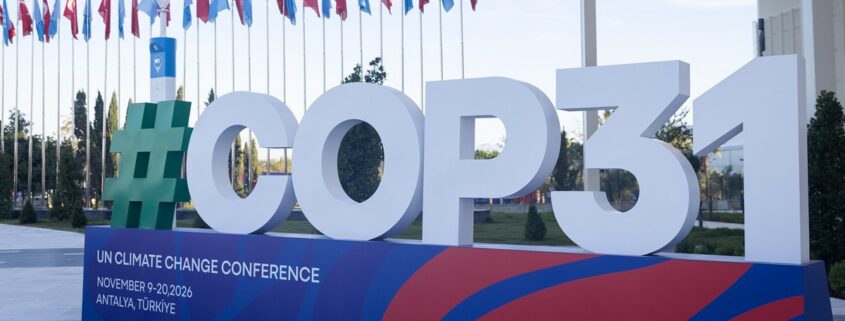
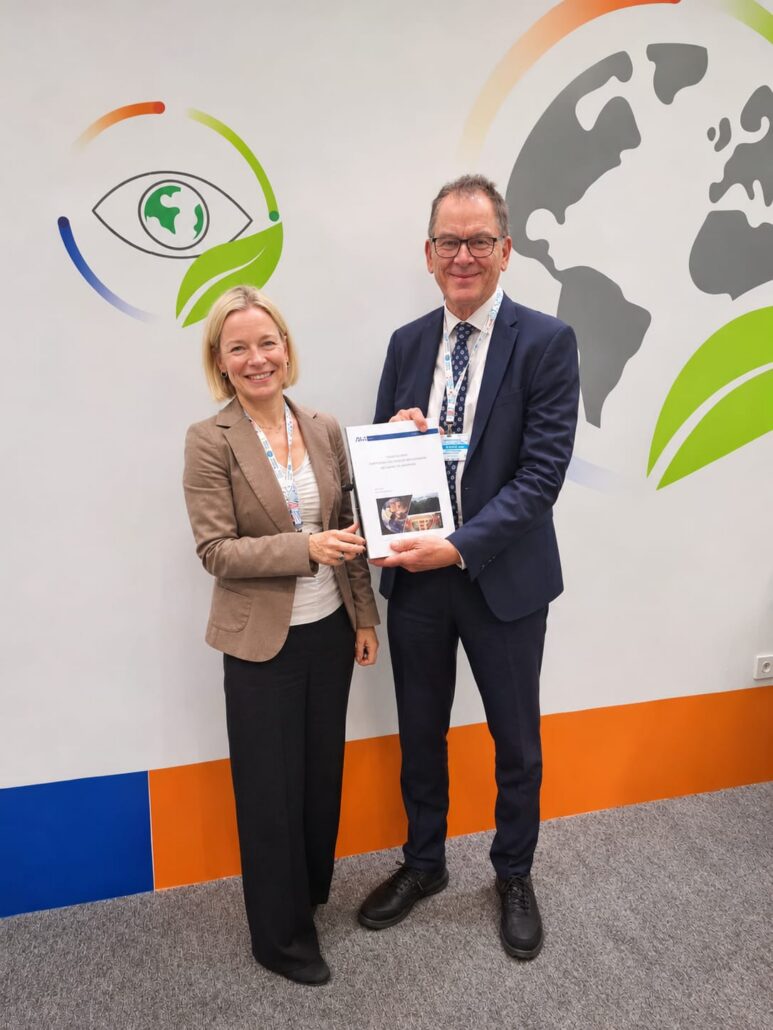
The FAW/n at the UN Climate Change Conference (COP31) in Antalya The FAW/n was prominently represented at the World Climate Conference by Prof. Estelle Herlyn. Among other things, Prof. Herlyn played a central role in the UNIDO opening event on 9 November 2026 at the UNIDO Pavilion. The event’s theme was “Industrial Solutions for People, Prosperity and Planet”. Immediately following the opening address by Director-General Dr Gerd Müller, Prof. Herlyn presented the FAW/n study “Climate Action through International Cooperation: A Win-Win-Win Potential”. The version of this study presented is available for download. It reflects the current focus of the FAW/n’s work in this area. A report on the opening can be found on the official UNIDO website.
Prof. Estelle Herlyn and Director-General Dr Gerd Müller
https://www.fawn-ulm.de/wp-content/uploads/2026/11/cop31-venue-unfccc.jpg6751200FAW/nhttps://www.fawn-ulm.de/wp-content/uploads/2017/10/Logo_oben-300x121.pngFAW/n2026-11-12 12:26:442026-11-12 13:14:28The FAW/n at the UN Climate Change Conference (COP31) in Antalya
Basel, 3 October 2026 – An evening dedicated to commitment, responsibility and international solidarity: on 3 October 2026, the historic Hotel Victoria in Basel hosted the fourth presentation of the José Rizal Heritage Award (JRHA). The prestigious award honours individuals whose work embodies the timeless ideals of the Philippine national hero and visionary, Dr José Rizal – courage, education, social responsibility, service to humanity and intercultural understanding.
The distinguished evening was hosted by the Award’s Co-Presidents, Lady Estrelleta Borda Ruppert, President of Las Damas de Rizal Switzerland, and Sir Stephan U. Breu, KGOR, Area Commander Switzerland of the Knights of Rizal. Under their leadership, the evening once again highlighted the important role the Award has come to play as a bridge between people, cultures and different areas of social responsibility. Among the guests were diplomats, academics, artists, community leaders, as well as representatives of the Philippine and Swiss communities.
Since 2023, the José Rizal Heritage Award has honoured individuals whose commitment extends far beyond their immediate personal or professional circles and, in particular, has an impact on an international level. Whether in education, social entrepreneurship, humanitarian work, the arts or social development, the Laureates share a common determination to assume responsibility and initiate lasting change.
In this way, the Award brings José Rizal’s legacy into the present day. Rizal regarded education and personal action as a responsibility towards society. The José Rizal Heritage Organization and the José Rizal Heritage Fund continue this principle, supporting projects that empower disadvantaged people and open up new opportunities and perspectives for them.
The José Rizal Heritage Award is therefore far more than a distinction. It is a tribute to exceptional commitment – and, at the same time, a powerful call to action: to help shape a fairer, more peaceful and more inclusive world with courage, compassion and a strong sense of responsibility. José Rizal’s legacy lives on wherever people are willing not merely to speak about change, but to take responsibility for bringing it about themselves.
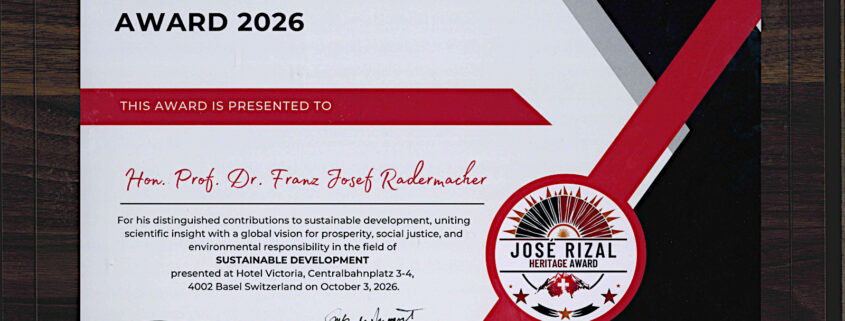
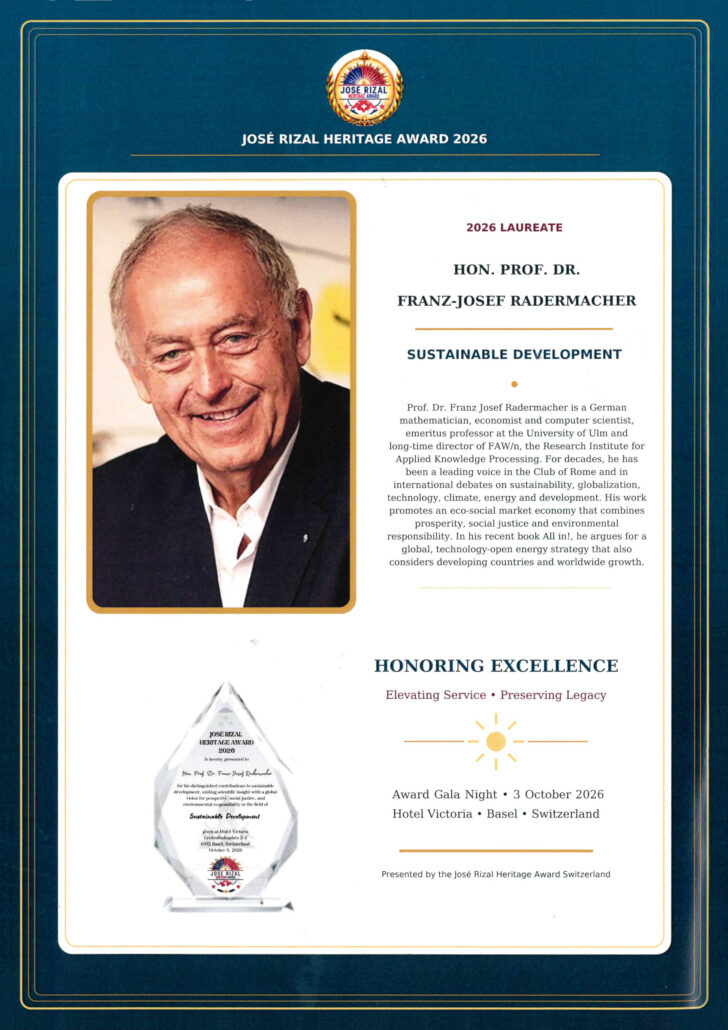
This year, among the other Laureates, Prof. Dr Dr Dr h.c. Franz Josef Radermacher was honoured with the José Rizal Heritage Award 2026 in recognition of his work in the field of sustainable development.
https://www.fawn-ulm.de/wp-content/uploads/2026/10/Jose_Rizal_Preis-Urkunde.jpg11731600FAW/nhttps://www.fawn-ulm.de/wp-content/uploads/2017/10/Logo_oben-300x121.pngFAW/n2026-10-08 11:54:122026-10-09 12:03:10José Rizal Heritage Award 2026 – A Legacy That Leaves Its Mark
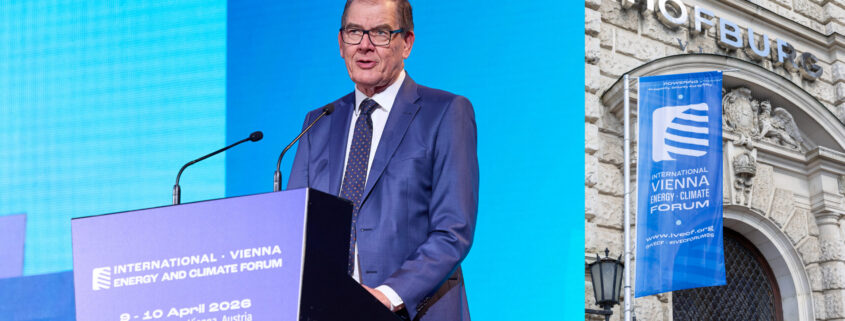
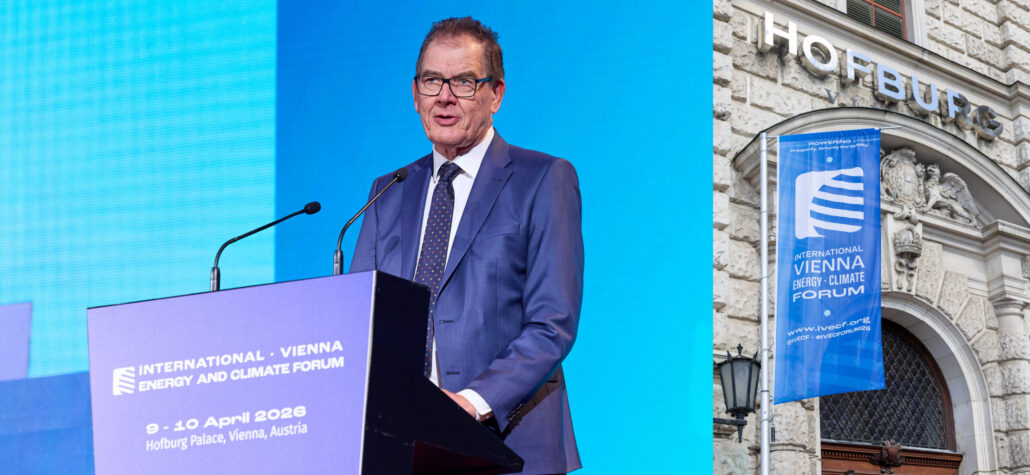
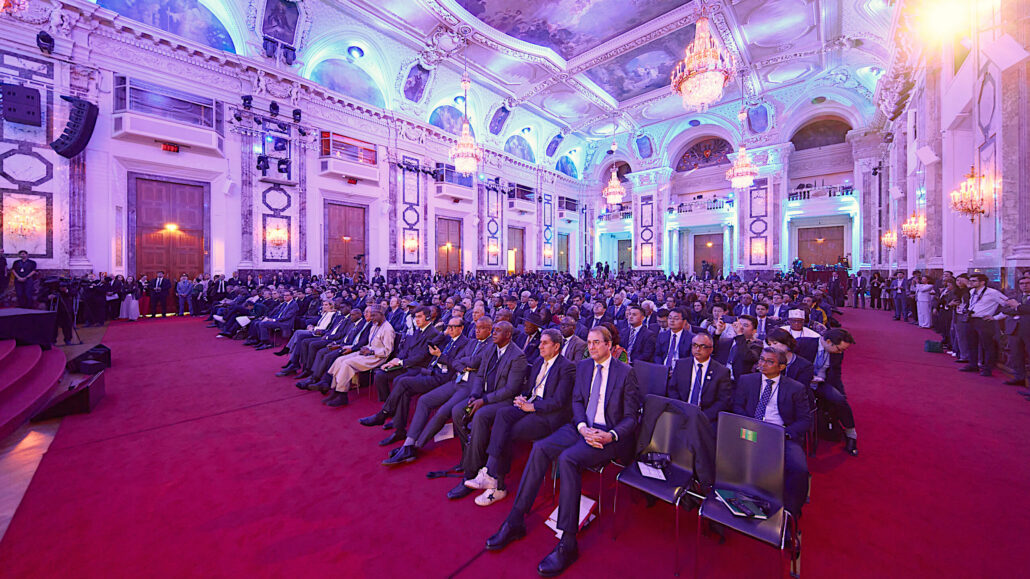
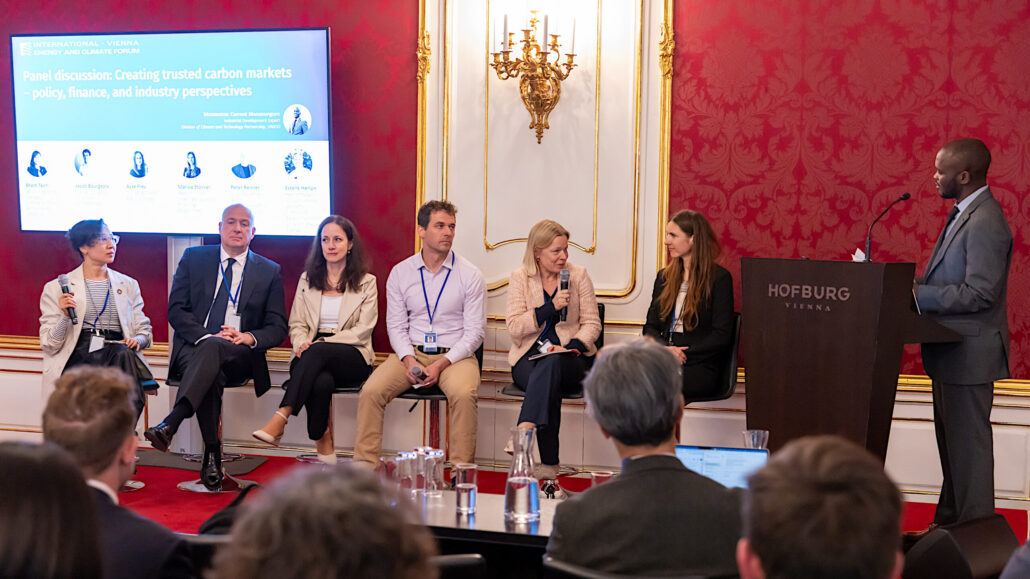
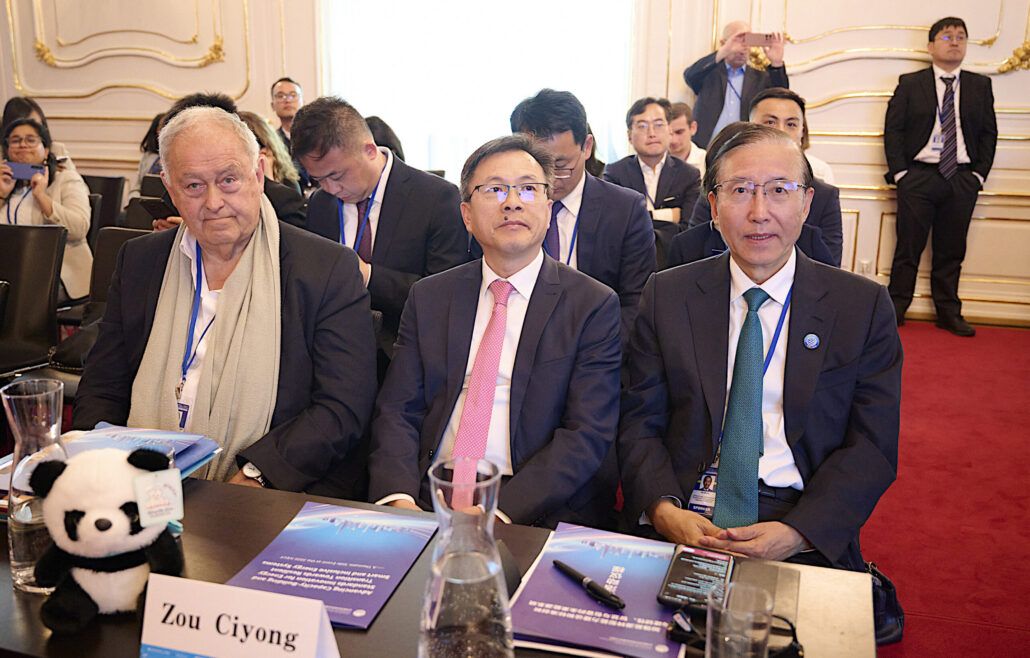
FAW/n was prominently represented at this year’s International Vienna Energy and Climate Forum (IVECF), held at Vienna’s historic Hofburg Palace. The high-level conference takes place approximately every two years and is organised, among others, by the United Nations Industrial Development Organization (UNIDO), the Austrian Federal Ministry for European and International Affairs, the Austrian Development Agency, and other international partners. This year, representatives from more than 145 countries attended the IVECF.
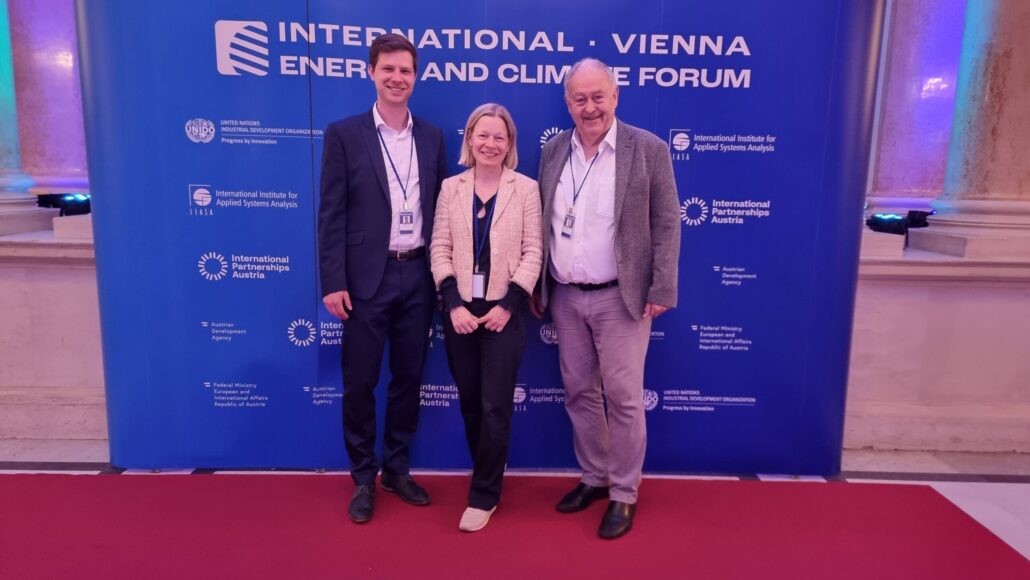
FAW/n was represented by Prof. Dr Estelle Herlyn, Prof. Dr Dr Dr h.c. Franz Josef Radermacher and Dr Tobias Orthen. Their participation underlines the Institute’s active role in key international debates on energy and climate policy, as well as its close network of relationships with leading global actors.
Strategic dialogue at the highest level
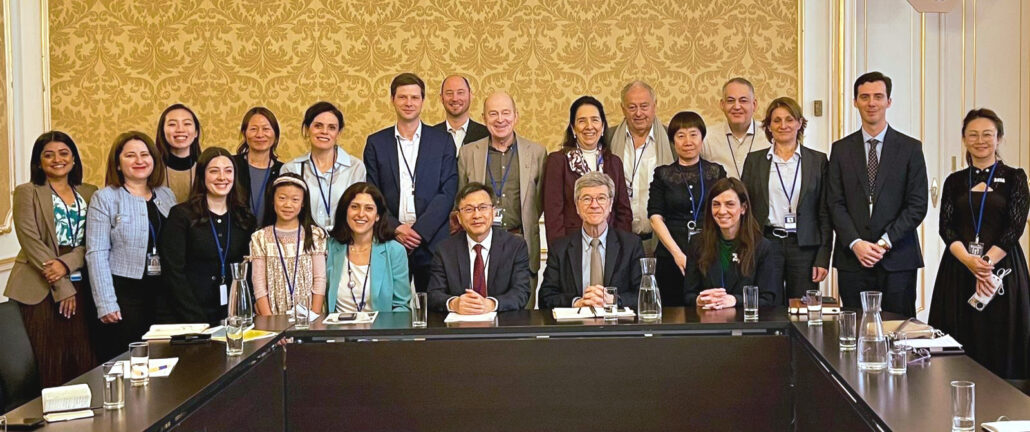
A particular focus of the visit to Vienna was an intensive exchange with Dr Gerd Müller, Director General of UNIDO and former German Federal Minister for Economic Cooperation and Development (BMZ). FAW/n has advised Dr Müller for many years. Key initiatives developed with Dr Müller include, for example, the establishment of the Alliance for Development and Climate and the Marshall Plan with Africa launched by the BMZ. Against the backdrop of current global turbulence, it is essential to align strategies and deepen effective partnerships.
Through Prof Franz Josef Radermacher and Dr Tobias Orthen, FAW/n has been involved in the work of the UN Council of Engineers for the Energy Transition (CEET) since its establishment. This high-level network brings technical expertise to bear on the work of the UN system and, in particular, advises UN Secretary-General António Guterres on issues relating to the global energy transition. Events such as the IVECF provide an important opportunity for the Council’s approximately 50 international experts to exchange views and, wherever possible, meet in person. In Vienna, the strategic direction of the CEET’s work for the coming months was discussed.
In addition, discussions were held with numerous international partners from academia, politics and international organisations, including Prof Jeffrey Sachs of Columbia University, President of the Sustainable Development Solutions Network (SDSN), as well as representatives of leading institutions working in the fields of sustainable development and energy transition.
Prof Estelle Herlyn: International carbon markets in focus
Prof Estelle Herlyn was invited to participate in a panel discussion entitled “From Integrity to Investment: Creating Trusted Carbon Markets that Mobilize Private Climate Finance”, jointly organised by UNIDO and the Paris Agreement Article 6 Implementation Partnership (A6IP).
The discussion with international experts focused in particular on the role of transparency, governance and solution-oriented narratives in scaling up effective global carbon markets. Participants included Peter Renner, Member of the Board of the Alliance for Development and Climate, and Jacob Bourgeois, Head of Carbon Strategies & Innovation at Volkswagen ClimatePartner.
The discussion made clear that international cooperation – including in the context of Article 6 of the Paris Agreement – is an essential prerequisite for effective climate action and the achievement of net-zero targets. Unfortunately, this is precisely the opposite of what leading industrialised nations, including Germany, are currently doing. Many prefer to try to “save the climate at home” rather than create international synergies and reduce costs through cooperation.
Prof Franz Josef Radermacher: Global capacity development and systemic solutions
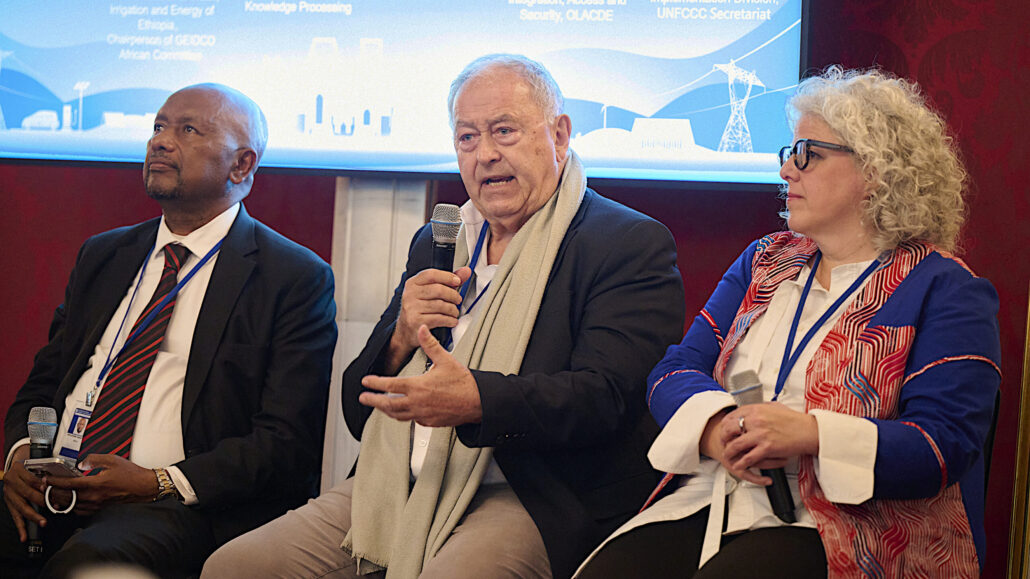
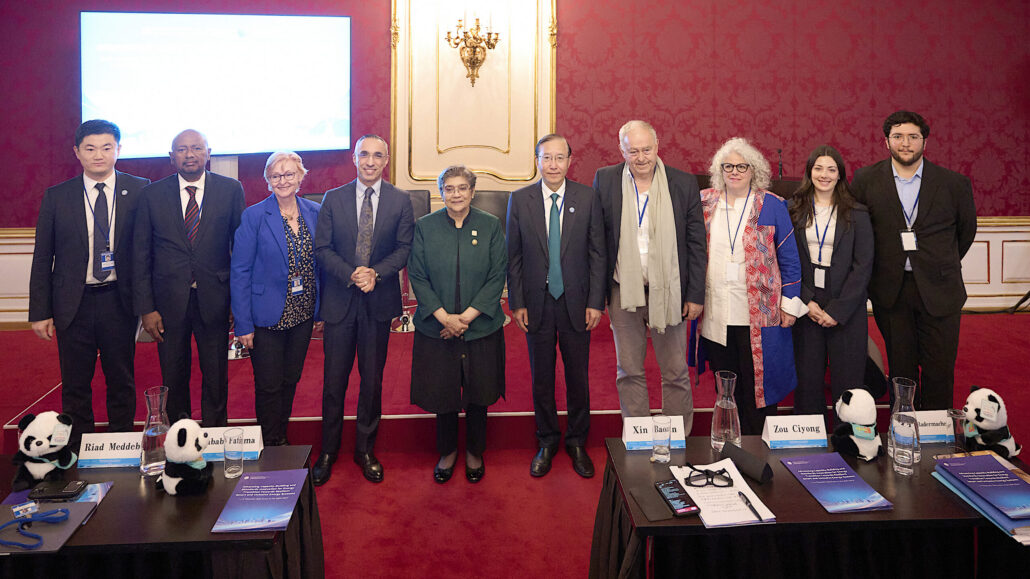
Prof Franz Josef Radermacher participated in a high-level side event addressing the importance of capacity building and international technical standards for the global energy transition. The event was organised by the Global Energy Interconnection Development and Cooperation Organization (GEIDCO) together with international partners. GEIDCO is one of the key organisations working on renewable energy in China.
The discussion focused on how systematic, scalable capacity building and international cooperation can accelerate the transition towards resilient, intelligent and inclusive energy systems. Topics included the establishment of the Global Energy Interconnection Academy as a platform for knowledge transfer, as well as initial findings from a global needs assessment examining capacity gaps in the energy sector.
Participants in the side event included Prof Xin Baoan, Chairman of GEIDCO and President of the China Electricity Council; Riad Meddeb, Head of the Decarbonization and Sustainable Energy Division at the UNDP; and H.E. Rabab Fatima, Under-Secretary-General and High Representative for the Least Developed Countries of the United Nations.
The discussion highlighted the central importance of evidence-based policy advice and internationally coordinated approaches to solutions – an area in which FAW/n has been actively engaged for many years.
Dr Tobias Orthen and the Council of Engineers for the Energy Transition (CEET)
Dr Tobias Orthen used the Forum in particular to advance the work of the Council of Engineers for the Energy Transition (CEET).
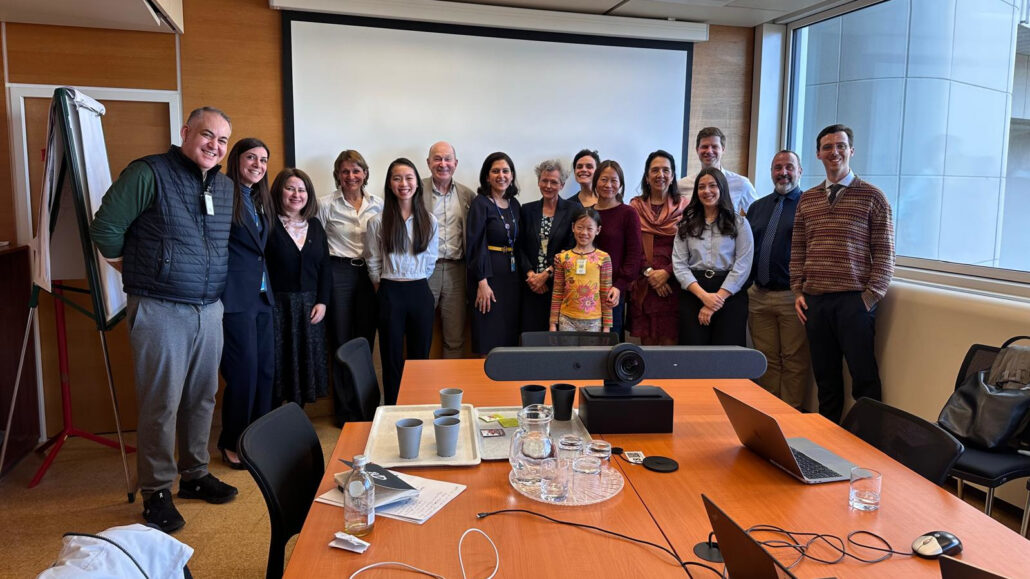
The focus was on further developing the Council’s work agenda, strengthening support for multilateral processes, and translating strategic recommendations into concrete implementation measures. The Council’s monthly meeting had already taken place the previous day at UNIDO’s headquarters in Vienna. Later, during the IVECF, further key stakeholders came together for a strategic dialogue and to set the direction for the CEET’s work over the coming months. They included Prof Jeffrey Sachs (SDSN), Co-Chair of the CEET, who leads the Council together with Dr Gerd Müller; Ciyong Zou, Managing Director and Deputy to the Director General of UNIDO; Rana Ghoneim, Director of the Energy and Climate Action Division at UNIDO; Georgia Iordanescu, Chief of the Sustainable Energy and Just Transitions Unit at UNIDO; as well as representatives of UN DESA and Sustainable Energy for All (SEforALL).
Particular emphasis was placed on the need for regionally differentiated approaches and systemic solutions to the energy transition. Dr Tobias Orthen proposed linking the discussions surrounding the EU Emissions Trading System (EU ETS-II) with the activities of the African Union, which is currently developing an energy strategy as well as an industrialisation and export strategy.
The EU is discussing the possibility that, in future, 5% of the emissions allowances under the EU ETS could be fulfilled through international certificates. From our perspective, this is clearly far too little. Nevertheless, it could represent a first step towards enabling African countries, for example, to supply climate-friendly hydrogen, steel and other industrial and energy products to the EU. The result could be effective climate action combined with industrial development at optimised cost.
https://www.fawn-ulm.de/wp-content/uploads/2026/10/IVECF-00-scaled-1.jpg11812560FAW/nhttps://www.fawn-ulm.de/wp-content/uploads/2017/10/Logo_oben-300x121.pngFAW/n2026-05-19 16:18:002026-10-08 16:29:02FAW/n at the International Vienna Energy and Climate Forum (IVECF) 2026 at Vienna’s Hofburg Palace
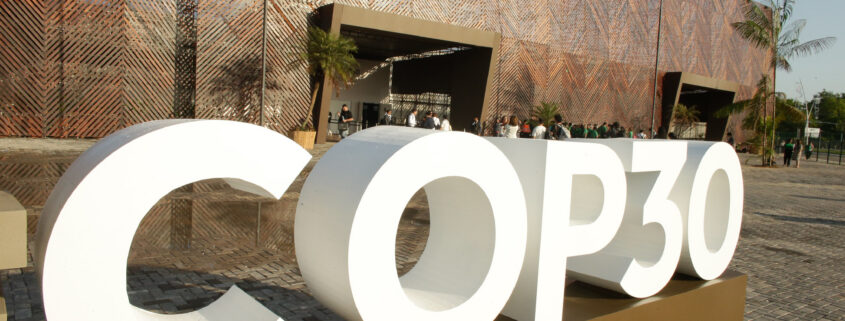
Belém was a historically and geographically fitting host city for COP30. Nevertheless, the atmosphere was less positive than at previous COPs: key heads of state were absent, the number of pavilions and the level of media presence were reduced, and the conference itself attracted little attention in Brazil. The outcomes have been widely regarded as disappointing. The one positive development was the commitment to triple funding for climate adaptation by 2035. Compared with COP29 in Baku, however, there was little progress on international climate finance.
UNFCCC Executive Secretary Simon Stiell strongly emphasised the need for international cooperation. National unilateral approaches, particularly those pursued by the EU, are regarded as ineffective. The final declaration remained largely devoid of substance and, for the most part, consistently failed to take account of changing global conditions and key political realities.
Prof. Dr Dr Dr h.c. F. J. Radermacher, Director of FAW/n, used his participation in COP30 as an opportunity to produce an extensive travel report containing a wealth of background information. Before publication, the text was further expanded and refined in a number of places. These additions include, for example, information on the situation concerning cannibalism in Brazil (see footnote 18), as well as an expanded and detailed account, in the concluding chapter, of Michael Evertz’s round-the-world journey by bicycle, undertaken as an ambassador for global cooperation.
The full report can be downloaded as a PDF via the link provided in the preceding paragraph.
https://www.fawn-ulm.de/wp-content/uploads/2026/10/COP30-Belem.jpg13652048FAW/nhttps://www.fawn-ulm.de/wp-content/uploads/2017/10/Logo_oben-300x121.pngFAW/n2026-01-23 15:08:002026-10-08 15:12:07Prof. Radermacher’s Travel Report on COP30 in Belém
who passed away on 24 November 2025 at the age of 88 in Hanau.
Heribert Offermanns was a great researcher and implementer, and also a respected entrepreneur during his many years on the board of Degussa AG. His areas of interest were very broad. He thought ‘big’ and did not get lost in the details. Without him, Global Energy Solutions e. V. would probably never have been founded. He helped initiate an entire tradition of thinking in Ulm.
We are deeply indebted to Heribert Offermanns and will honour his memory.
https://www.fawn-ulm.de/wp-content/uploads/2026/01/Grabstaette-picho-1.jpg12821920FAW/nhttps://www.fawn-ulm.de/wp-content/uploads/2017/10/Logo_oben-300x121.pngFAW/n2026-01-21 16:31:542026-01-21 16:45:51Obituary for Prof. Dr. Dr. h. c. HERIBERT OFFERMANNS
Cookie-Zustimmung verwalten
We use a few cookies to give you the best possible online experience.
Funktional
Always active
Die technische Speicherung oder der Zugang ist unbedingt erforderlich für den rechtmäßigen Zweck, die Nutzung eines bestimmten Dienstes zu ermöglichen, der vom Teilnehmer oder Nutzer ausdrücklich gewünscht wird, oder für den alleinigen Zweck, die Übertragung einer Nachricht über ein elektronisches Kommunikationsnetz durchzuführen.
Vorlieben
Die technische Speicherung oder der Zugriff ist für den rechtmäßigen Zweck der Speicherung von Präferenzen erforderlich, die nicht vom Abonnenten oder Benutzer angefordert wurden.
Statistiken
Die technische Speicherung oder der Zugriff, der ausschließlich zu statistischen Zwecken erfolgt.Die technische Speicherung oder der Zugriff, der ausschließlich zu anonymen statistischen Zwecken verwendet wird. Ohne eine Vorladung, die freiwillige Zustimmung deines Internetdienstanbieters oder zusätzliche Aufzeichnungen von Dritten können die zu diesem Zweck gespeicherten oder abgerufenen Informationen allein in der Regel nicht dazu verwendet werden, dich zu identifizieren.
Marketing
Die technische Speicherung oder der Zugriff ist erforderlich, um Nutzerprofile zu erstellen, um Werbung zu versenden oder um den Nutzer auf einer Website oder über mehrere Websites hinweg zu ähnlichen Marketingzwecken zu verfolgen.