Posts

Interview on Climate Nationalism in Welt am Sonntag, July 6, 2025

It’s Time to End Climate Nationalism

Energy expert and government advisor Franz Josef Radermacher delivers a sharp critique of German energy policy. He describes Germany as a “climate prison” that wastes vast sums of money while ignoring effective solutions – because certain actors profit from the current system

In the interview, Franz Josef Radermacher criticizes German climate policy as inefficient, overregulated, and expensive. He calls Germany a “climate prison” in which billions are spent on national measures that bring little global benefit. Instead, he advocates for an international climate policy: CO₂ emissions could be reduced much more cost-effectively in developing and emerging countries – through reforestation, CCS (carbon capture and storage), and CCU (carbon capture and utilization). These global approaches, he argues, are more effective and would also promote prosperity in poorer regions. Radermacher views Germany’s “all-electric” strategy – focused on wind and solar energy – critically, calling it costly and incomplete. He warns against degrowth and calls for the repeal of the Energy Efficiency Act. He considers the 2021 ruling by the Federal Constitutional Court a mistake, as it overburdens Germany while being globally ineffective. His appeal: cooperation instead of climate nationalism – for realistic and effective climate protection.

Due to numerous inquiries, Prof. Radermacher has also answered additional questions that arose in connection with the interview.

The original interview in Welt am Sonntag from July 6, 2025, and the additional questions and answers can be found at the links below:

List item
List item
List item

All Mere Facade? European Climate Policy from the Perspective of Nigeria’s Vice President

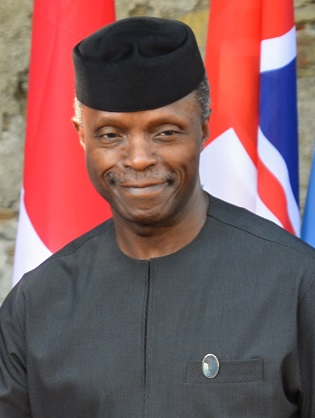
From Prof. Radermacher’s perspective, national climate policies alone are not effective. For this reason, he recommends looking beyond the German or European horizon and listening to what other heads of state, for example in Africa, have to say. Nigeria’s Vice President, Yemi Osinbajo, shared his views on the climate policies of wealthy nations in The Economist. His assessment invites reflection and reconsideration.

The focus is on energy – not simply lighting homes, but access to global energy, which is seen as essential for industry and progress. Nigeria’s growing population will also mean that by 2050, the country will require 15 times the energy currently needed. To meet this demand without harming the climate, wealthy nations call for exclusive reliance on renewable energy. However, achieving this without the support of the very nations making these demands is extremely difficult.

Osinbajo calls for support for Nigeria in areas such as renewable energy generation projects, data management systems, storage capacity, electric vehicles, and clean cooking solutions. At the same time, he argues that financing for fossil fuels in developing countries should not be entirely prohibited, since Europe itself continues to invest in gas.

You can read the full article recommended by Prof. Radermacher here.

Image source: Wikimedia, Tope A. Asokere (Pexels)

Climate Policy – A History of Missed Opportunities

In a new analysis, Prof. Dr. Dr. Dr. h.c. Franz Josef Radermacher examines the question of which opportunities international climate policy could have seized in the past to stabilize the climate situation at comparatively low costs. Ten, twenty, and thirty years ago, there were extensive political and scientific debates from which solutions could have emerged. Nevertheless, most of these opportunities went unused.

The new text explores these missed opportunities in depth, also considering what lessons we can draw from them for the future.

A shorter version of the text appears as an essay in Kursbuch 202: Donner, Wetter, Klima, Murmann Publishers, 2020, and is available online.

Klimapolitik_Eine-Geschichte-verpasster-Chancen – Download

Climate Policy and the 2°C Target

The present text analyzes, in the aftermath of the World Conference in Copenhagen, how much time remains to address the climate problem in line with the 2°C target – without a loss of prosperity and while maintaining prospects for growth – and which “jokers” (special measures or decisive actions) may already be necessary today. The text illustrates how narrow the remaining timeframe for achieving the target has become. The conclusions drawn here are even more striking than those derived from examining the development of the ecological footprint (see www.ecologicalfootprint.org), which also sends a clear message. However, since the ecological footprint excludes fossil energy sources, its implications are comparatively weaker.

Download: Global Climate Policy after Copenhagen

Image source: Geralt (Pixabay)