Posts

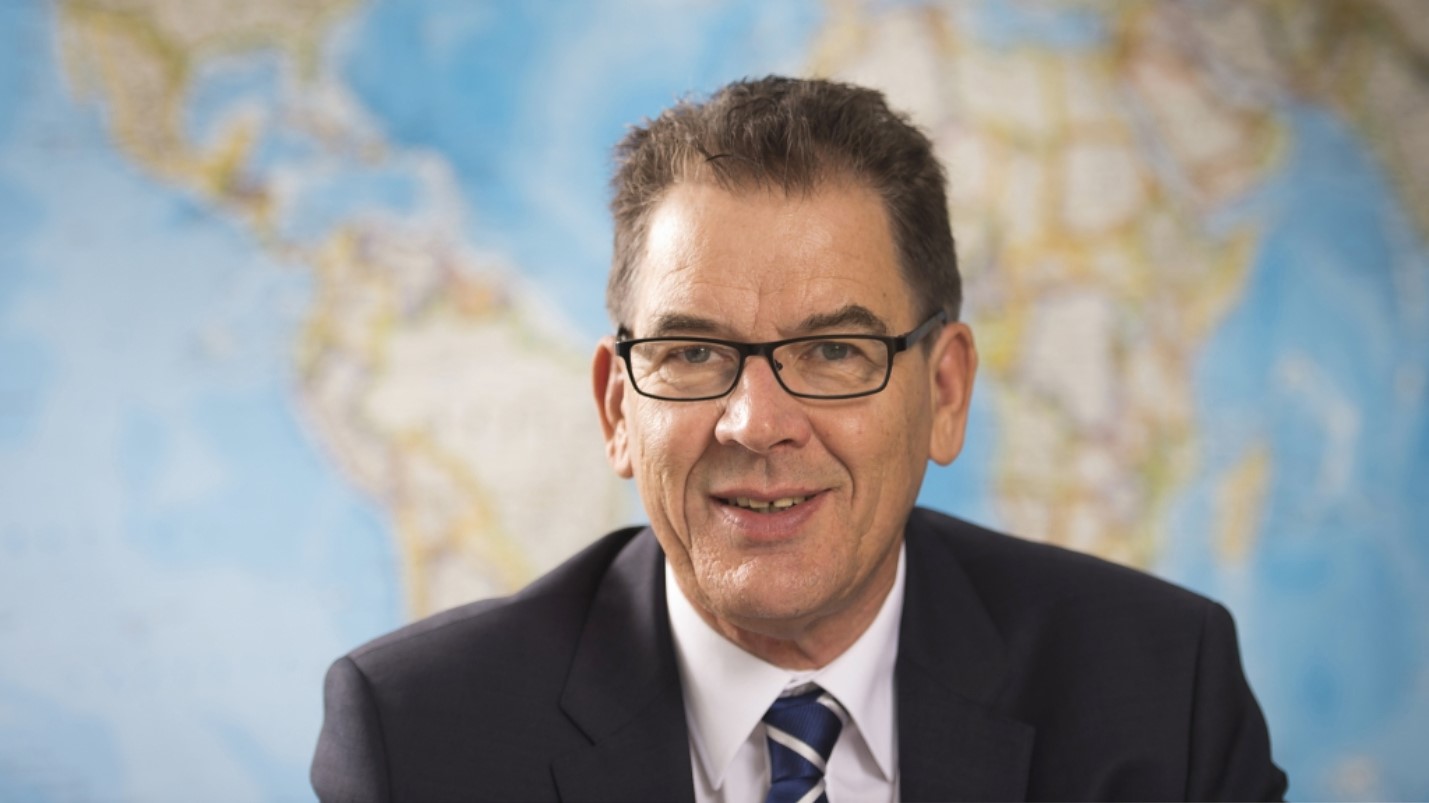
Federal Minister of Economic Cooperation and Development Dr. Gerd Müller Nominated as Candidate for UNIDO

On November 13, 2020, the Federal Minister of Economic Cooperation and Development Dr. Gerd Müller was nominated by the German Federal Cabinet as a candidate for the position of Director General of the United Nations Industrial Development Organization (UNIDO).

UNIDO promotes industrial development as a means of combating poverty, fostering globalization, and ensuring environmental sustainability. It is an important partner for Germany in promoting global development and creating new jobs in developing countries.

According to the German government, there are “other strong candidates for the election in November 2021.” However, no other candidates have yet been officially announced. So far, the position of Director General has always been held by men from developing or emerging countries. If elected, Dr. Gerd Müller would be the first European to assume this role.

Dr. Müller is highly familiar with international development cooperation and economic development. Since 2013, he has served as Federal Minister for Economic Cooperation and Development. Through his participation in parliamentary assemblies of African, Caribbean, and Pacific states, he has gained significant international experience. During his eight years as Parliamentary State Secretary, he placed particular emphasis on global food security and international agricultural development projects.

Among the most notable initiatives he launched are the Green Button (Grüner Knopf), the Alliance for Development and Climate, and the Marshall Plan with Africa. FAW/n played a key role in the conceptualization and implementation of the latter two initiatives.

Other major achievements of his tenure include the expansion of cooperation with Africa, the “One World – No Hunger” initiative, his commitment to international climate protection, and close collaboration with the private sector. During the COVID-19 pandemic, in addition to supporting immediate health responses, he also worked to preserve jobs in developing countries, as poorer nations and their populations have been hit hardest by the crisis — for them, the pandemic could result in a lost decade.

Further information

Website of the Federal Ministry for Economic Cooperation and Development (BMZ)

Website of UNIDO

Handelsblatt report

Image source: © Michael Gottschalk/photothek.net
IHK Commitment: Active for Climate Protection

The Nuremberg Chamber of Industry and Commerce for Middle Franconia (IHK Nürnberg für Mittelfranken) has joined the “Alliance for Development and Climate”, which was founded in autumn 2018 by the Federal Ministry for Economic Cooperation and Development (BMZ).

The Alliance now includes around 350 companies, associations, public authorities, project developers, compensation providers, and private individuals.

You can read the full article from IHK Nuremberg here.

Image source: akspic

More Forests, Less Climate Change

An Important Building Block of the Alliance for Development and Climate

At the official press conference held at the Federal Press Conference in Berlin, Federal Minister Dr. Gerd Müller, Plant-for-the-Planet, FAW/n, and the Senate of Economy Germany presented a study from ETH Zurich. The study demonstrates that large-scale global reforestation has the potential to reduce global warming by up to 1 degree Celsius.

Federal Press Conference on Reducing Global Warming through Forest Restoration, July 3, 2019

Reforestation and forest conservation are key project categories of the Alliance for Development and Climate, which was launched by the German Federal Ministry for Economic Cooperation and Development (BMZ), together with GIZ and FAW/n. Supporters of the Alliance contribute voluntarily to help preserve forest areas in developing countries and remove CO₂ from the atmosphere through reforestation. Projects that promote humus formation in agriculture, develop renewable energy sources, or expand the use of efficient cookstoves achieve the same effect. In addition, these projects generate enormous co-benefits for sustainable development and the United Nations’ Sustainable Development Goals (SDGs).

The fact that so much forest is still being lost, too little reforestation is taking place, and insufficient progress is being made in development is largely due to a lack of financial resources. Public funds alone are not enough to meet the challenges ahead. That is why the Alliance for Development and Climate brings together private-sector actors whose goal is to become climate neutral in the long term. Recently, Robert Bosch GmbH announced that it intends to operate climate-neutrally as of 2020. The company invests around one billion euros annually to achieve this goal, using high-quality climate protection and development projects in developing countries.

In July, Federal Minister Müller will travel to Brazil to discuss, among other things, the fastest measure against climate change — forest conservation — with the responsible ministers there.

Image source: pixabay/Bergadder

End-of-Year Message

Global challenges are growing. The United States is destabilizing the international order and breaking treaties, while China seeks to expand its influence in the South China Sea. Brexit, financial instability in Italy, and populist trends across many EU countries make smart policymaking increasingly difficult. As a result, the outlook for sustainable development is worrying.

Warnings from the IPCC and the Club of Rome, which recently celebrated its 50th anniversary, are clear: urgent action is needed. In response, FAW/n has been working with the Federal Ministry for Economic Cooperation and Development (BMZ) to establish the Alliance for Development and Climate, promoting non-governmental engagement in development and international climate protection. This initiative has the potential to drive significant change in climate policy, the 2030 Agenda, and global population trends – potentially a quantum leap forward. At the same time, we are collaborating with the Senate of Economy on a study to be released ahead of the European elections, presenting a vision for a stronger, more united Europe.

Through these and other initiatives, FAW/n continues to contribute to shaping a sustainable future, together with the Club of Rome, the Senate of Economy, the BMZ, and many other partners – including the University Days on Eco-Social Market Economy and Sustainability.

We are grateful for the opportunity to work closely with our partners and sincerely thank everyone for their broad support throughout the year.

Image source: pixabay/Free-Photos

New FAW/n Research Project in Cooperation with the BMZ

FAW/n is working with partners in interaction with the BMZ on an exciting new mandate. Research Project: “A Better Design of Globalization: Action Potentials from a Development Policy Perspective”.

The project comprises two sub-projects: “Value Chains and Sustainability – Opportunities and Limits under WTO and EU Law” and “Implementation of the Sustainable Development Goals 2015-2030 – Requirements for Global Governance and Implementation Possibilities”.

Sub-project I of the Research Project:

“A Better Design of Globalization: Action Potentials from a Development Policy Perspective”. Study: “Value Chains and Sustainability – Opportunities and Limits under WTO and EU Law”. The topic of sustainability is gaining increasing international significance in the context of global value chains. The BMZ is particularly active in this field and, following major accidents in textile production facilities in Bangladesh and Pakistan, has launched initiatives with high public visibility. Among other outcomes, this has led to the establishment of the label “Alliance for Sustainable Textiles”, which has since been joined by a large number of German manufacturers and retail chains in the sector. The study will specifically examine six approaches of varying degrees of impact:

  1. Use of labeling instruments
  2. Subsidies via a trade levy
  3. Value-added tax options and customs preferences
  4. Public procurement
  5. Economy for the Common Good
  6. Changes at the WTO level

Sub-project II of the Research Project:

“A Better Design of Globalization: Action Potentials from a Development Policy Perspective”. Study: “Implementation of the Sustainable Development Goals 2015–2030 – Requirements for Global Governance and Implementation Possibilities”.

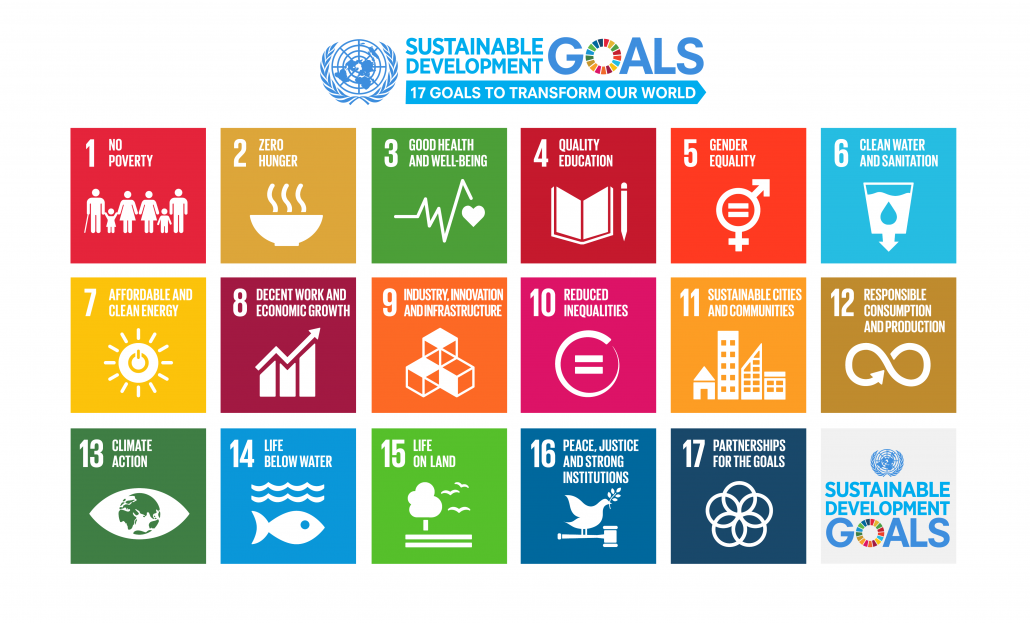
This study takes the recent adoption of the 17 so-called Sustainable Development Goals (SDGs) as its starting point. Behind the 17 SDGs lie 169 sub-goals. As with the earlier MDGs, these goals are legally non-binding, there is no dedicated budget, and the exact implementation responsibility is unclear, aside from each government’s obligation to implement them within its own territory. The absolutely necessary international interaction, without which many goals cannot be achieved, is far less clearly defined. This particularly applies to essential financing instruments, which must ultimately be borne directly or indirectly by wealthy countries if development is to succeed – similar to the newly agreed Green Climate Fund and other instruments providing at least USD 100 billion per year in support of activities in poorer countries in the climate sector.

However, providing these funds will be challenging, and many obstacles stand in the way of implementing the goals. This is especially true as some goals contradict each other, at least given current technology. Clearly, the goal of increasing prosperity for more and more people alongside rapidly growing global populations is not compatible with the formulated environmental protection goals under today’s technologies and current global market regulations. The study seeks to identify which immediate, implementable measures are still possible. It also discusses what a global governance structure with a real chance of implementation should look like – one that can potentially achieve the goals. Such a structure must also induce the development of other technical solutions that enable increased prosperity with low resource consumption while avoiding a climate catastrophe for people worldwide. This can build on the recent international reorientation toward sustainable economic systems, shifting the perspective from free markets to ecologically and socially regulated markets (green and inclusive markets as well as green and inclusive growth).